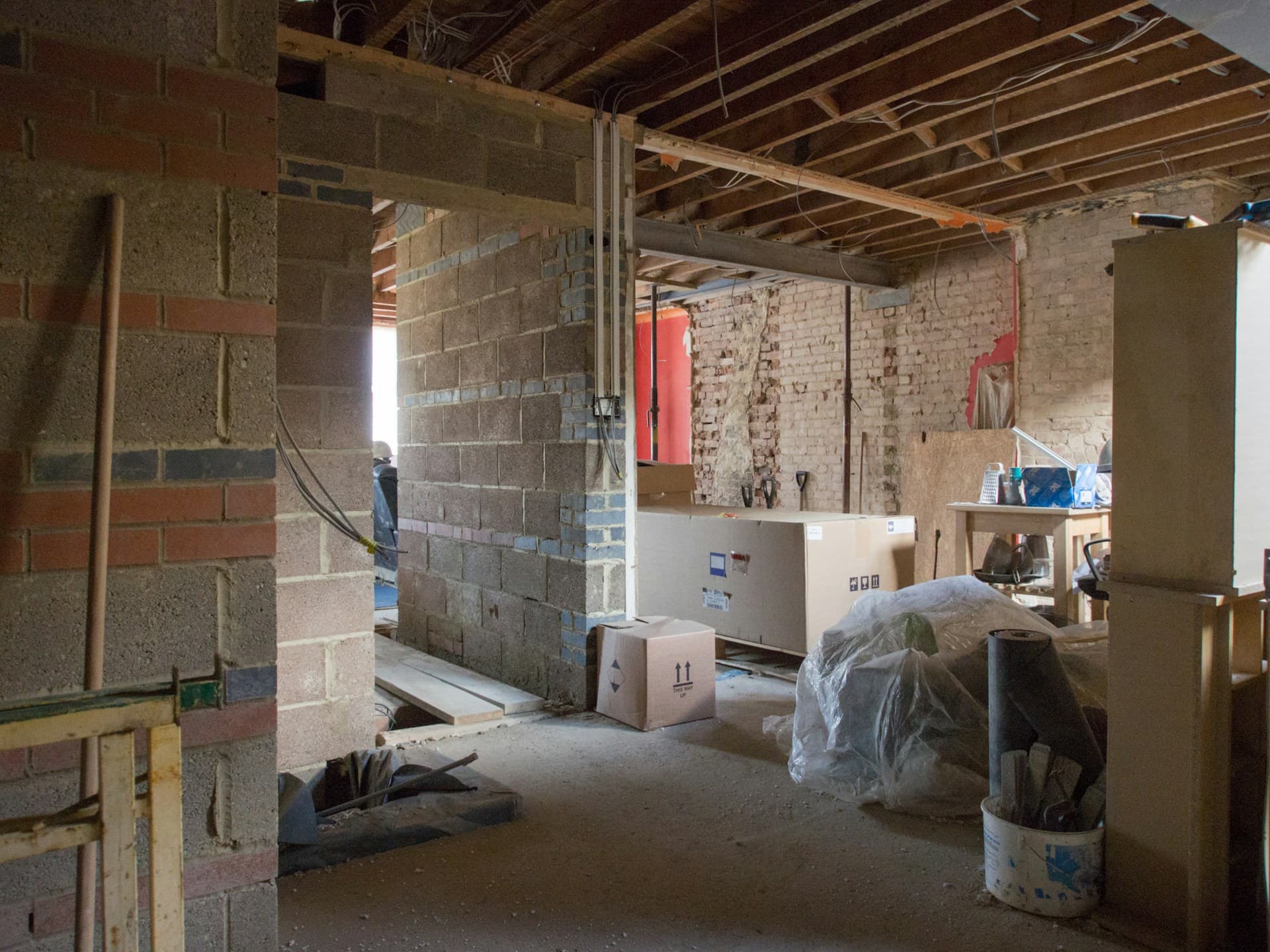
Bathroom Strip-Out and Demolition
Complete strip-out and demolition of bathroom including removal of tiles, fixtures (vanity, toilet, bath, shower), wall linings, and flooring. Covers asbestos identification for pre-1990 buildings, silica dust controls during tile removal, electrical and plumbing isolation, and hazardous waste disposal. Pre-filled hazards, controls, and risk ratings.
A principal contractor walking onto a residential bathroom strip-out is checking three documents before anyone swings a hammer. The first is the asbestos register, or — if the building pre-dates 1990 and no register exists — the assessor's report. Tilux wall sheeting, vinyl floor tiles, tile adhesive and pipe lagging from that era are all suspect, and the 10m² rule under the model asbestos removal Code of Practice decides who picks up the tools. Below 10m² of non-friable material, a competent person with a CPCCDE3014 ticket (and a Class B licence where the state requires one) can remove it. Above 10m², or any friable material, work stops and a Class A licensed removalist takes over. Builders skipping the register check is how asbestos ends up across an occupied house.
The other two documents are about silica and electrical isolation. Tile, cement sheet and screed breaking generates respirable crystalline silica at the workplace exposure standard of 0.05 mg/m³, reached quickly in a tiled, enclosed, hard-surfaced room — wet methods, an M-class HEPA vacuum, and zip-wall containment with a negative-air machine separate a clean strip-out from one that drops dust into the next bedroom. Concealed cables to lights, exhaust fans and heated towel rails run through the same walls about to come out; the LOTO-and-test sequence at the switchboard before any prying is the recurring control. Gas joins the list where the bathroom adjoins a gas hot water system — a struck supply line in a confined wet area is the explosion pattern that makes the news.
What the strip-out crew wears under those documents is heavier than people expect: P3 respirator for asbestos, P2 minimum for silica, full coveralls disposed at the boundary, hearing protection because a demolition hammer hits 100+ dB amplified by tile, and a hard hat for falling debris. AS 2601:2025 covers demolition method and AS/NZS 3012:2019 governs site electrical. The job ends when rubble is bagged, dust captured and the bathroom handed to the waterproofer — that handover is where strip-out planning either pays back or turns into a contamination claim.
What's In Your SWMS
9 Hazards & Controls
Mesothelioma, asbestosis, lung cancer, death
If asbestos confirmed >10m²: engage licensed asbestos removalist. Do not proceed with demolition until asbestos removed.
For <10m² non-friable: competent person with asbestos awareness training may remove using correct methods
Isolate work area with plastic sheeting and warning signs. Restrict access to trained workers only.
- Check asbestos register before starting any work
- If no register exists: competent person must inspect for ACMs
- Asbestos must be removed BEFORE demolition work can disturb it
- Wet down ACMs before removal to prevent fibre release
- HEPA vacuum (H-class) for cleanup - never sweep dry
- Negative air unit to maintain contained work area
- Asbestos awareness training mandatory for all workers on pre-1990 buildings
- 10m² rule: licensed removal required for >10m² non-friable or ANY friable asbestos
- Stop work immediately if unexpected ACMs found - do not disturb
- No eating, drinking, or smoking in work area
- Decontamination before leaving work area
- Dispose of asbestos waste at licensed facility only
- Double-wrap in 200 micron plastic, clearly labelled
P3 half-face respirator minimum for asbestos. Disposable coveralls (Type 5/6). Remove PPE in contamination zone.
18-Step Work Procedure
Equipment & PPE
Equipment (15)
- Electric demolition hammer / jackhammer
For tile and screed removal. Causes vibration - limit continuous use. Use dust extraction attachment.
- Angle grinder with diamond blade
For cutting tiles and cement sheet. Must use water suppression or dust extraction.
- Reciprocating saw
For cutting pipes, wall framing, and fixtures. Verify no asbestos before cutting.
- Pry bars and wrecking bars
For removing tiles, wall linings, and fixtures.
- Bolster chisels and cold chisels
For tile removal and breaking up screed.
- Lump hammer (club hammer)
For use with bolster chisel and general demolition.
- HEPA vacuum (H-class for asbestos)
Essential for dust control. H-class required if asbestos suspected. M-class minimum for silica.
- Heavy-duty plastic sheeting (200 micron)
For containment barriers and wrapping asbestos waste. Minimum 200 micron for asbestos.
- Zip wall / dust barrier system
For isolating work area from occupied spaces. Essential in occupied buildings.
- Water spray bottle / pump sprayer
For wetting surfaces during tile removal to suppress dust.
- Wheelbarrow or rubble trolley
For moving debris to skip bin.
- Skip bin (general waste)
For non-hazardous demolition waste. Asbestos requires separate licensed disposal.
- Lock-out/tag-out kit
For electrical and water isolation. Personal locks required.
- Pipe wrenches and plumbing tools
For disconnecting plumbing fixtures.
- First aid kit
Include wound dressings, eye wash, and burn treatment.
PPE (7)
- P2 half-face respirator (minimum)AS/NZS 1716:2012 (device); AS/NZS 1715:2009 (selection/use/maintenance/fit testing)
Minimum for silica dust. P3 half-face or powered air for asbestos work. Fit tested per AS/NZS 1715:2009.
- Safety glasses or gogglesAS/NZS 1337.1:2010
Goggles preferred for demolition - full seal against dust and debris.
- Hard hat (Type 1)AS/NZS 1801:2024
Required for demolition work - falling debris hazard.
- Hearing protection (Class 5)AS/NZS 1270:2002
Required when using demolition hammer, angle grinder, and reciprocating saw.
- Disposable coveralls (Type 5/6)AS/NZS 4501.1:2008 (selection/use); Type 5/6 performance per EN ISO 13982-1 / EN 13034
For dust and asbestos work. Remove before leaving work area. Dispose of as contaminated waste. Note: AS/NZS 4501 is a guideline for selection/use - the Type 5/6 designation is from European EN ISO standards.
- Heavy-duty work glovesAS/NZS 2161.3:2020
Cut-resistant for handling debris. Dispose after asbestos work.
- Safety footwear (steel cap, puncture resistant)AS 2210.3:2019
Steel cap and puncture-resistant sole. Decontaminate after asbestos work.
Training & Emergency
Competency Requirements
- Construction Induction Card (White Card)training
Required for all workers on construction sites
- Asbestos Awareness Trainingtraining
General awareness training for identification and safe handling of asbestos. Required for all workers on pre-1990 buildings. Delivered by RTOs and asbestos-licensed assessors - not a single national unit of competency. (CPCCDE3014 is a separate, more specific competency for actively removing non-friable asbestos - listed separately below.)
- Crystalline Silica Exposure Prevention Trainingtraining
10830NAT Course in Crystalline Silica Exposure Prevention. Nationally accredited; mandatory in ACT (since 1 Oct 2023) for specified silica-exposed occupations. Required for tile, screed and cement-sheet removal work.
- Demolition Work Competencycertificate
Experience in demolition work. May hold Certificate II in Demolition (CPC20220).
- Remove non-friable asbestos (Class B) - CPCCDE3014
CPCCDE3014 Remove non-friable asbestos (current unit code; CPCCDE3014A was superseded). Required for workers actively removing non-friable ACMs (e.g. wall sheeting, vinyl tiles, tile adhesive) during strip-out. The 10 m² unlicensed threshold applies; for >10 m² of non-friable ACM, a Class B Asbestos Removal Licence is also required.
- Asbestos Removal Licence (Class A or B)
Required if removing >10m² non-friable asbestos or any friable asbestos. Class A licence for friable asbestos (any quantity). Class B licence for >10m² of non-friable asbestos. Threshold and licensing per Safe Work Australia model Code of Practice: How to Safely Remove Asbestos.
- First Aid Certificate
Recommended for at least one team member. HLTAID011 Provide First Aid.
Emergency Procedures
ASBESTOS DISTURBANCE: Stop work immediately. Do not disturb further. Wet down area if safe. Evacuate non-essential persons. Contact licensed assessor. Workers may require health monitoring.
ELECTRIC SHOCK: Do not touch person if still in contact with power. Isolate power at switchboard. Call 000. Begin CPR if not breathing.
WATER LEAK/FLOODING: Isolate water supply at meter. Remove electrical equipment from water. Contain water spread.
STRUCTURAL CONCERN: If any cracking, movement, or structural concern during demolition - stop work immediately, evacuate, engage structural engineer.
UNEXPECTED HAZMAT: If unknown substance discovered (chemicals, biological, other) - stop work, isolate area, ventilate, seek specialist advice.
Everything above, included in your SWMS document.
Get This TemplateWriting a SWMS from scratch?
That's 2-4 hours of research, formatting, and cross-referencing regulations.
We've done the starting work — pick your template, add your details, review.
Or just do this:
- Unlimited documents
- All 70+ templates
- Instant PDF & DOCX
- Cancel anytime
High-Risk Construction Work Categories
Under Australian WHS Regulations (Chapter 8 - Asbestos, Chapter 7 - Hazardous Chemicals, Chapter 6 Part 6.1 - Construction Work), this work is classified as high-risk due to:
- Work involving crystalline silica (Removing ceramic and porcelain tiles generates respirable crystalline silica dust. WES 0.05 mg/m³. Wet methods and dust extraction required.)
- Disturbance of hazardous materials (Demolition may disturb lead paint, mould, and other hazardous materials. Assessment required before work commences.)
Australian Standards Referenced
Who Needs This SWMS?
This template is designed for the following trades and roles performing bathroom strip-out and demolition work.
Frequently Asked Questions
Do I need an asbestos assessment before bathroom demolition?
If the building was constructed before 1990, an asbestos assessment is required before any demolition work. Bathrooms commonly contain asbestos in wall sheeting (fibro, Tilux), floor tiles, tile adhesive, vinyl flooring, and pipe lagging. A competent person must inspect for ACMs, or samples must be taken for testing. Asbestos must be removed BEFORE demolition can proceed.
What is the 10m² rule for asbestos removal?
Non-friable asbestos under 10m² can be removed by a competent person with asbestos awareness training using correct controls. Over 10m² of non-friable asbestos, or ANY amount of friable asbestos, requires a licensed asbestos removalist. 10m² is approximately one wall of an average bathroom or four sheets of asbestos cement sheeting.
What training is required for bathroom demolition?
At minimum: White Card (construction induction) and Asbestos Awareness Training for pre-1990 buildings. Workers actively removing non-friable asbestos (e.g. wall sheeting, tile adhesive, vinyl tiles) also need CPCCDE3014 Remove non-friable asbestos. Tile and screed removal requires the 10830NAT Course in Crystalline Silica Exposure Prevention. If removing >10m² of non-friable asbestos, a Class B asbestos removal licence is required (Class A for any friable asbestos).
How do I control silica dust during tile removal?
Multiple controls are required: wet down tiles before and during removal, use demolition equipment with dust extraction, isolate the work area with plastic sheeting, use HEPA vacuum (M-class minimum) for cleanup, never dry sweep. Workers must wear P2 respirator minimum, fit tested. Respirators alone are not sufficient - engineering controls are mandatory.
Do I need to isolate electrical before bathroom demolition?
Yes. All electrical circuits serving the bathroom must be isolated at the switchboard before demolition begins. A licensed electrician should perform the isolation. Lock-out/tag-out must be applied, and isolation must be verified with a voltage tester. Never cut into walls without confirming electrical is isolated and cables have been located.
How should asbestos waste be disposed of?
Asbestos waste must be double-wrapped in heavy-duty plastic (200 micron minimum), sealed with tape, and clearly labelled "Caution Asbestos". It can only be disposed of at licensed asbestos waste facilities - never in general skip bins or landfill. Contact your local council or use the ASEA disposal facility map to find licensed facilities.
What if I find unexpected asbestos during demolition?
Stop work immediately. Do not disturb the material further. Wet down the area if safe to do so. Evacuate non-essential personnel. The area should be isolated and a licensed asbestos assessor engaged to confirm the material and advise on removal. Workers who may have been exposed should be recorded for health monitoring.
Can I do bathroom demolition in an occupied building?
Yes, but additional controls are required. The bathroom must be isolated from occupied areas using plastic sheeting and zip walls. A negative air machine with HEPA filter should maintain negative pressure to prevent dust migration. Occupants should be notified of work duration and potential for noise/dust. Regular checks of containment barriers are essential.
Get Your Bathroom Strip-Out and Demolition SWMS
Pre-filled. Risk-rated. Ready in 5 minutes.
Get Your SWMS PDFNo credit card required. First SWMS is free.
