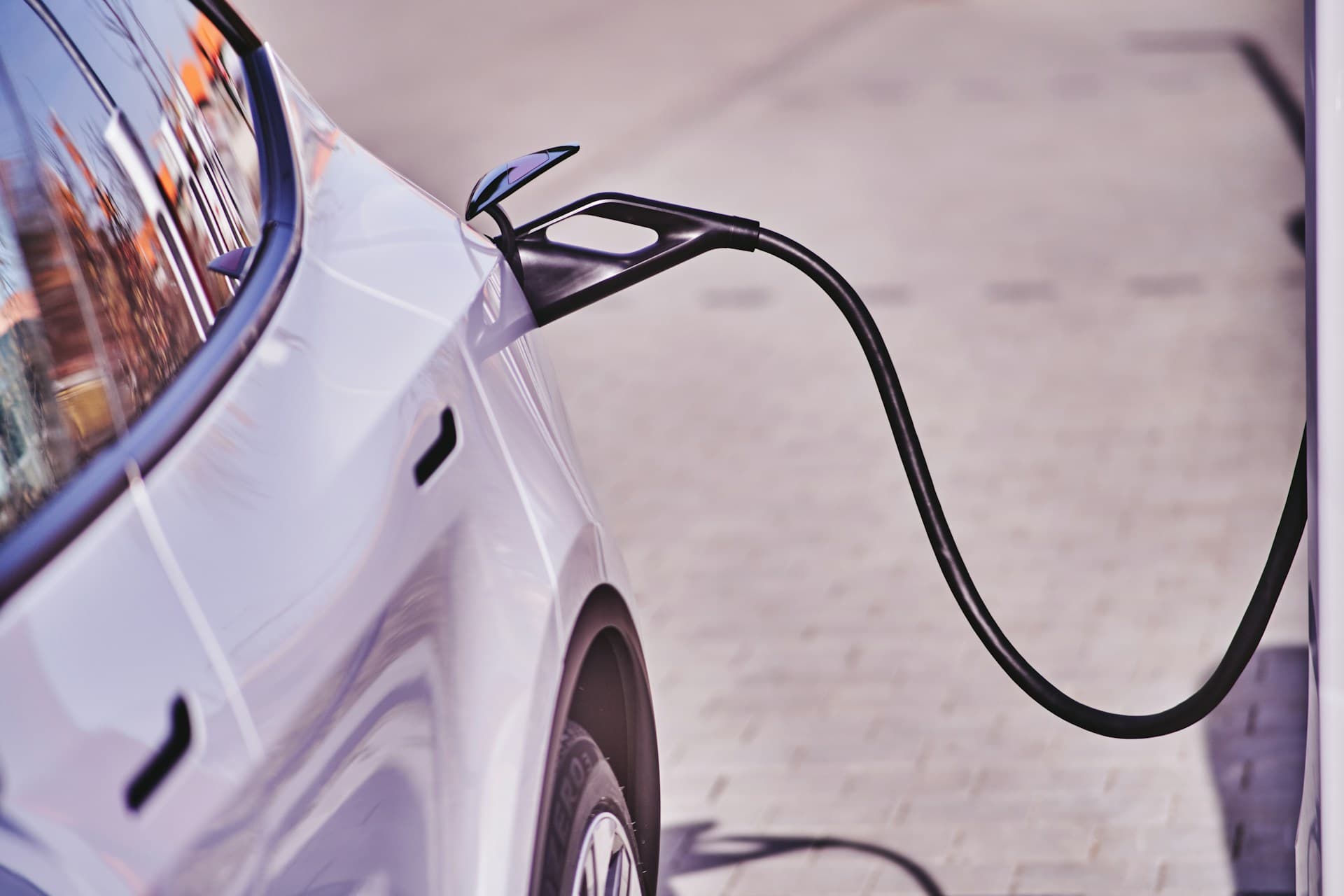
EV Charger Installation
Installation of electric vehicle charging equipment (EVSE) including wall-mounted and pedestal units for residential and commercial applications. Covers Level 2 AC chargers (7kW-22kW) requiring dedicated circuit installation from switchboard. Pre-filled hazards, controls, and risk ratings.
EV charger installs look like a normal sub-circuit job until you read AS/NZS 3000:2018 Appendix P. A 7kW or 22kW Level 2 charger drawing for hours at a time isn't a power point — it's a continuous load with its own RCD type requirements (Type B, or Type A paired with EVSE-side 6mA DC fault detection), a dedicated circuit, and a certificate of compliance that ties back to a manufacturer-trained installer. Generic A-grade work isn't enough on its own; most EVSE warranties and several state CCEW or eCoC processes require product-specific certification before sign-off.
Three risk areas push this work past a standard wiring SWMS. First, the switchboard: most homes built before 2010 don't carry spare capacity for a 32A circuit, and the upgrade decision drags arc-flash, LOTO and Level 2 ASP service-mains work onto the daily plan. Second, the cable run: pedestal installs in driveways or carparks need underground conduit, which means a BYDA enquiry then manual cable detection — straight machine trenching across an unconfirmed corridor is the well-known strike pattern. Third, commissioning: Appendix P sets specific verification (RCD type, earthing continuity, EV-mode test using a commissioning analyser) that a generic lighting or socket circuit doesn't trigger.
A competent EVSE document captures vehicle-traffic control during driveway work, asbestos awareness for chasing through pre-2003 walls, and the residential EV charger guidance Standards Australia released in 2024 — the emerging technical specification the smarter installers are already aligning to. Single-phase capacity caps differ state by state — Ausgrid in NSW and Energex in Queensland both publish their notification thresholds and active-device-management requirements, and the same pattern applies in every other distribution area, so check your DNSP before quoting. Roof-tied installs that piggyback off existing solar PV bring harness work to AS/NZS 1891.1:2020, anchor selection and a written rescue plan into the picture; "use ladder safely" is not a control, and skipping the genuine fall-arrest plan is the gap that turns a clean install into an incident report.
What's In Your SWMS
8 Hazards & Controls
Electrocution (death), cardiac arrest, severe burns, neurological damage, muscle contractions causing secondary injuries from falls
Complete isolation of circuit before commencing work. Use whole current isolation at main switch where practicable. Implement safe isolation procedure per AS/NZS 4836:2023. Apply personal locks and danger tags at all isolation points. Secure isolation so switches cannot be operated.
- Use approved voltage tester to verify de-energised state (Live-Dead-Live test)
- Install RCD/RCBO protection on new circuit (30mA, <300ms trip time)
- Ensure adequate working space around switchboard per AS/NZS 3000
- Follow the safe isolation procedure set out in AS/NZS 4836:2023: consult and permit, identify all energy sources and isolation points, verify the tester on a known live source, isolate, secure with personal lock and danger tag, test dead at the point of work, re-verify the tester on a known live source.
- Only remove locks/tags by person who applied them
- Treat all conductors as live until proven dead at each work point
Class 0 insulated gloves (AS/NZS IEC 60903), safety glasses, EH-rated footwear. Arc-rated clothing when working on live switchboards.
15-Step Work Procedure
Equipment & PPE
Equipment (12)
- EV charger unit (EVSE)
Must comply with AS/NZS 3820, IEC 61851. Verify Type 2 connector for Australian market.
- Multifunction installation tester
For continuity, insulation resistance (≥1MΩ at 500V DC), earth loop impedance, and RCD testing per AS/NZS 3017.
- Non-contact voltage tester
CAT III/IV rated, 12V-1000V range. Test on known live source before and after each use.
- Proving unit
To verify voltage tester operation before and after isolation checks.
- Insulated tool set
IEC/EN 60900 compliant, rated 1000V AC / 1500V DC. Double-triangle 1000V marking required.
- Electrical cable
Minimum 6mm² CSA for 32A installations. Size per AS/NZS 3008.1.1 for cable run length.
- RCD/RCBO
Type A (30mA) if EVSE has DC fault detection ≥6mA; Type B (30mA) if EVSE lacks DC fault detection or capability unknown.
- Circuit breaker (MCB)
Rating matched to charger current draw and cable capacity. Typically 32A for 7kW single-phase.
- Conduit and cable management
WSX3 mechanical protection rating (per AS/NZS 3013:2005) required for vehicle-accessible cable runs — typically achieved by 1.6 mm sheet steel coverage with unsupported width <=100 mm, or 3.2 mm galvanised steel tube, or very-heavy-duty conduit complying with AS/NZS 2053.
- Lock out/tag out kit
Personal isolation locks (red), danger tags with worker information. Non-conductive plastic body locks.
- Power drill and mounting fixings
Appropriate fixings for mounting surface (masonry anchors, coach screws for timber).
- EVSE commissioning tester
Type 2 connector adapter for control pilot simulation and vehicle state testing. Required to verify charger-vehicle communication. E.g., Metrel A1532, Fluke FEV300.
PPE (5)
- Insulated gloves (Class 0 minimum)AS/NZS IEC 60903:2020
Class 0 provides 1000V AC / 1500V DC protection. Wear leather protectors over rubber gloves. Visual and air test before each use.
- Safety glassesAS/NZS 1337.1:2010
Medium impact protection minimum. Clear lens for indoor work, tinted for outdoor.
- Safety footwear (EH-rated)AS 2210.3:2019
Electrical hazard rated, composite or steel toe, slip-resistant sole. EH rating provides secondary protection.
- Hard hatAS/NZS 1801:2024
Required when working at heights, in active construction sites, or near overhead hazards. Older AS/NZS 1801:1997 helmets may still be in use.
- High visibility clothingAS 4602.1:2024
Class D or D/N for traffic areas, car parks, or low-light conditions.
Training & Emergency
Competency Requirements
- Electrical Licence (Unrestricted/Full)licence
Full/unrestricted electrical licence required. Restricted licences are NOT sufficient for EV charger installation as work involves fixed wiring from switchboard. Verify via state electrical licensing portal (refer to state guidance for verification links).
- Qualified Supervisor Certificate (if contractor)
Required for electrical contractors in most states. Specific requirements and names vary by jurisdiction (e.g., QSC in NSW, Supervisor Registration in QLD). Refer to state guidance.
- Construction Induction (White Card)
Required for active construction sites. Not typically required for residential garage installations or completed commercial buildings.
- Working at Heights (RIIWHS204E)
Required when fall risk exceeds 2 metres. Nationally recognised unit of competency. Applies to ladder work accessing elevated areas.
- EV Charger Installation Training
Recommended but not legally mandated. Options include TAFE NSW EV course, Holmesglen 22609VIC, SkillBuild accreditation, or manufacturer training.
- Manufacturer Certification
Required by some manufacturers (e.g., Tesla Certified Installer program). Check specific product requirements. May be required for warranty purposes.
- First Aid Certificate
HLTAID011 Provide First Aid. Recommended for all workers. At least one person on site should hold current certificate for electrical work.
- CPR Certificate
HLTAID009 Provide CPR. Critical skill for electrical workers due to cardiac arrest risk from electric shock.
Emergency Procedures
ELECTRICAL SHOCK: Do NOT touch victim if still in contact with electrical source. Isolate power at main switch if safe. Call 000 immediately. Begin CPR if unresponsive and not breathing normally. Use AED if available - safe for electrocution victims. Continue CPR until paramedics arrive.
ARC FLASH BURNS: Remove victim from danger area only if power isolated. Call 000 for severe burns. Cool burns with cool running water for 20 minutes minimum. Cover loosely with clean non-adherent dressing. Do not apply ice, butter, or ointments. Monitor for shock.
ASBESTOS EXPOSURE: Stop work immediately if suspect material disturbed. Leave area and prevent others entering. Do not attempt to clean up. Notify supervisor and client. Seek medical advice. Engage licensed asbestos assessor.
FALL FROM HEIGHT: Do not move casualty unless in immediate danger. Call 000. Check for breathing and consciousness. Control any bleeding with direct pressure. Keep casualty warm and still until paramedics arrive.
Everything above, included in your SWMS document.
Get This TemplateWriting a SWMS from scratch?
That's 2-4 hours of research, formatting, and cross-referencing regulations.
We've done the starting work — pick your template, add your details, review.
Or just do this:
- Unlimited documents
- All 70+ templates
- Instant PDF & DOCX
- Cancel anytime
High-Risk Construction Work Categories
Under Australian WHS Regulations (Section 291 - High Risk Construction Work (specifically 291(l) - energised electrical installations)), this work is classified as high-risk due to:
- Work on/near energised electrical installations (Primary category - all EV charger installations involve work near existing switchboards and mains supply. Safe isolation procedures per AS/NZS 4836 required.)
- Work at height (>2m) with risk of fall (May apply for wall-mounted installations requiring ladder access or installations in commercial car parks with elevated mounting positions.)
- Work on/near traffic or adjacent to road (Applies to public charging station installations or work in active car parks with vehicle movements.)
- Work in confined spaces (May apply for commercial installations in electrical rooms, ceiling spaces, or underground car parks with limited ventilation.)
Australian Standards Referenced
Who Needs This SWMS?
This template is designed for the following trades and roles performing ev charger installation work.
Frequently Asked Questions
Is a SWMS required for all EV charger installations?
Yes, for most installations. EV charger installation is classified as high-risk construction work under WHS Regulation 2017 Section 291(l) because it involves work on or near energised electrical installations. A SWMS must be prepared before work commences, be kept accessible at the workplace, and workers must carry out work in accordance with the SWMS.
What electrical licence is required to install EV chargers?
An unrestricted/full electrical licence is required in all Australian states. Restricted licences are NOT sufficient because EV charger installation involves fixed wiring from the switchboard, which is prescribed electrical work requiring a full licence. If you operate as a contractor, you will also need appropriate supervisor registration (requirements vary by state - refer to state guidance).
Do I need special EV-specific training or certification?
There is no mandatory EV-specific certification required by law in Australia, unlike solar PV installation which requires CEC accreditation. However, EV-specific training is strongly recommended for quality and safety. Options include TAFE NSW courses, the Holmesglen 22609VIC Certificate, SkillBuild accreditation, or manufacturer programs like Tesla Certified Installer. Some manufacturers may require specific training for warranty purposes.
What certificate must be issued after installing an EV charger?
A Certificate of Compliance must be issued for all electrical installation work in Australia. The exact certificate name and lodgement requirements vary by state: NSW (CCEW, 7 days), VIC (COES, 2 business days), QLD (Certificate of Testing, via DNSP), WA (NOC 3 days + ESC 28 days), SA (eCoC, 30 days electronic), TAS (CEC, 3 days), NT (CoC, 20 business days), ACT (CES, 14 days). Refer to state guidance for specific requirements.
What type of RCD is required for EV charger circuits?
The RCD type depends on the charger capabilities. If the EVSE has built-in DC fault detection (detects ≥6mA DC), a Type A RCD (30mA) is sufficient. If the EVSE lacks DC fault detection or the capability is unknown, a Type B RCD (30mA) is required. Type B RCDs can detect both AC and DC residual currents, providing additional protection against DC fault currents that can blind Type A devices.
What is the maximum single-phase EV charger size allowed?
Single-phase EV charger limits vary significantly by state: NSW/VIC/TAS allow 32A (7.4kW), WA allows up to 63A, QLD and SA limit to 20A without active device management or DNSP approval, NT limits to 25A, and ACT typically allows 32A. Chargers above these limits typically require DNSP notification or approval. Check with your local DNSP and refer to state guidance for specific requirements.
Get Your EV Charger Installation SWMS
Pre-filled. Risk-rated. Ready in 5 minutes.
Get Your SWMS PDFNo credit card required. First SWMS is free.
