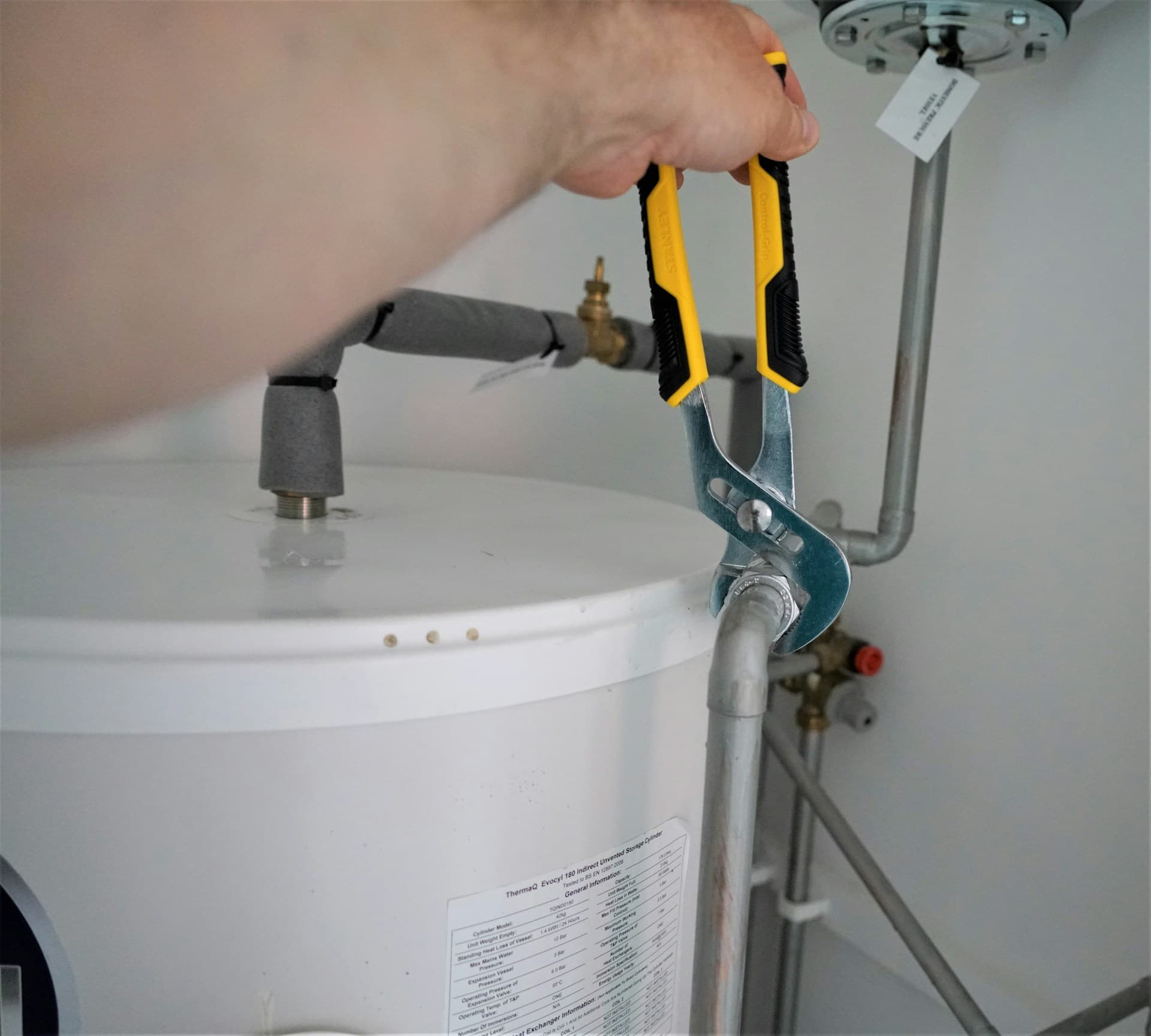
Hot Water System Installation
Installation, replacement, and connection of domestic hot water systems including electric, gas, heat pump, and solar thermal units. Covers plumbing connections, tempering valves, pressure relief devices, and commissioning. Pre-filled hazards, controls, and risk ratings.
Heat pump and storage tank installs send more workers to physiotherapy than electrical or gas events combined. A modern heat pump unit can clear 100kg, an electric storage tank lands between 30 and 80kg empty, and the cupboard or eaves space the unit goes into rarely lends itself to a clean lift. Removing the old unit before drain-down — with sediment that may have sat for fifteen years — adds another twenty kilos at the bottom of the tank. The work has to be planned before the new unit leaves its packaging: appliance trolley, second person, drain-down sequence, route survey through the wet area or roof access. Treating it as general plumbing risk is how injuries land.
The compliance failure that runs alongside is the missing thermostatic mixing valve. AS 4032.1:2024 sets out the design and performance for thermostatic mixing valves, and many like-for-like replacements skip the TMV because the old unit didn't carry one — the new HWS gets the blame for the scalding that follows, and the installer carries the liability. Pressure and temperature relief discharge under AS/NZS 3500.4:2021 needs a clear path to a safe location, with insulated piping for the first metre of hot water outlet; expansion control valves or vessels handle closed-system pressure rise on mains-pressure tanks. The work crosses three trades — gas units pull in AS/NZS 5601.1:2022 and a Type A endorsement, electric and heat pump units pull in AS/NZS 3000:2018 and a state electrical licence, solar thermal roof units pull in AS/NZS 1891.1:2020 harness work and RIIWHS204E heights — and most generic HWS templates under-scope at least one of the three. Commissioning (delivery temperature test, PTR discharge check, gas leak or earth continuity test, depending on unit type) is the deliverable that closes the loop, not the bit that gets ticked from the van on the way to the next call.
What's In Your SWMS
7 Hazards & Controls
Burns, scalding injuries requiring hospitalisation, permanent scarring
Allow system to cool before draining where time permits (minimum 2 hours since last heating cycle)
Close hot water taps throughout property before draining to prevent accidental discharge
- Use drain valve with hose to direct hot water away from workers
- Install tempering valve to limit delivery temperature to 50°C maximum at outlets
- Verify PTR valve discharge is piped to safe location (outside, away from foot traffic)
- Test water temperature before handling or draining
- Brief occupants not to use hot water during installation
- Allow drained water to cool before disposing
- Post warning signage during commissioning when testing at elevated temperatures
Heat-resistant gloves when handling hot pipes or draining water above 45°C
20-Step Work Procedure
Equipment & PPE
Equipment (11)
- Pipe wrenches and adjustable spanners
Various sizes for water connections (15mm, 20mm, 25mm fittings)
- Pipe cutter (copper/PEX)
Appropriate for pipe material being installed
- Tempering valve or thermostatic mixing valve (TMV)
AS 4032.1 compliant, sized for flow rate
- Pressure and temperature relief valve (PTR valve)
Matched to water heater pressure rating, typically 850kPa/99°C
- Expansion control valve or expansion vessel
Required where mains pressure exceeds 500kPa or where check valves installed
- Isolation valves (cold inlet, hot outlet)
Ball valves or gate valves for isolation
- Multimeter (for electric units)
CAT III rated minimum for verifying isolation
- Digital thermometer (probe or infrared)
For verifying delivery temperatures during commissioning
- Appliance trolley or hand truck
For moving heavy water heater units (typically 30-80kg)
- Pipe insulation (first 1m of hot water outlet)
Required under AS/NZS 3500.4 for heat retention
- First aid kit with burn treatment supplies
Include burn gel and sterile dressings for scald injuries
PPE (4)
- Safety glassesAS/NZS 1337.1:2010
Clear lens for indoor work, protection from water spray and debris
- Work glovesAS/NZS 2161.1:2016 (general). For soldering use leather gauntlets per AS/NZS 2161.1 with EN 407 thermal performance rating.
General purpose for pipe work, heat-resistant for soldering
- Safety bootsAS 2210.3:2019
Steel cap, water-resistant preferred for plumbing work
- Knee pads
For comfort when working at floor level connections
Training & Emergency
Competency Requirements
- Plumbing Licence (state-issued)licence
Required for all plumbing work. Licence class must cover water supply and sanitary plumbing.
- Construction Induction Card (White Card)training
Required when working on construction sites
- Site-Specific Inductiontraining
Required before commencing work on construction sites
- Gas Fitting Licence/Permit
Required for gas hot water system installations. Separate licence required in most states.
- Electrical Licence
Required for electrical connection of electric water heaters. Electrician must connect and issue compliance certificate.
- Working at Heights Training (RIIWHS204E)
Required for solar hot water installations on roofs with fall risk >2m
- First Aid Certificate
Recommended - includes burn treatment procedures
Emergency Procedures
SCALD INJURY: Immediately cool affected area under running cold water for minimum 20 minutes. Do not use ice. Remove clothing/jewellery from affected area unless stuck to skin. Cover with clean, non-stick dressing. Seek medical attention for burns larger than a 20 cent coin or on face/hands/joints.
GAS LEAK: Evacuate all persons from area. Do not operate any electrical switches or create sparks. Open windows/doors for ventilation. Turn off gas at meter if safe to do so. Call gas emergency line from outside the building. Do not re-enter until cleared by emergency services.
ELECTRIC SHOCK: Do not touch victim if still in contact with power source. Isolate power at switchboard. Call 000. Commence CPR if victim not breathing. Treat for shock - lay flat, elevate legs if no spinal injury suspected.
BURST PIPE/FLOODING: Isolate water supply at meter. Turn off power to affected areas to prevent electrical hazards. Contain water spread with towels/barriers. Notify customer of water damage.
Everything above, included in your SWMS document.
Get This TemplateWriting a SWMS from scratch?
That's 2-4 hours of research, formatting, and cross-referencing regulations.
We've done the starting work — pick your template, add your details, review.
Or just do this:
- Unlimited documents
- All 70+ templates
- Instant PDF & DOCX
- Cancel anytime
High-Risk Construction Work Categories
Under Australian WHS Regulations (291 - High Risk Construction Work (electrical, gas, heights)), this work is classified as high-risk due to:
- Work on/near energised electrical installations (Electric hot water systems require electrical connection work. Gas units may have electric ignition.)
- Work on/near pressurised gas mains or piping (Gas hot water systems require gas fitting work on pressurised supply lines.)
- Work at height (>2m) with risk of fall (Solar hot water systems and some roof-mounted storage tanks require work at heights.)
Australian Standards Referenced
Who Needs This SWMS?
This template is designed for the following trades and roles performing hot water system installation work.
Frequently Asked Questions
Do I need a SWMS for hot water system installation?
A SWMS is required when the installation involves high-risk construction work such as electrical work, gas fitting, or work at heights (for roof-mounted solar systems). Even if not legally required, a SWMS is best practice for documenting hazards and controls for this multi-trade activity.
What licences are required to install a hot water system in Australia?
A licensed plumber must complete all water connections. For electric water heaters, a licensed electrician must complete the electrical connection. For gas water heaters, a licensed gas fitter must complete the gas connection. In some states, plumbers hold combined plumbing/gas fitting licences.
What temperature must hot water be stored at and delivered at?
Under AS/NZS 3500.4, hot water must be stored at 60°C or above to prevent Legionella bacteria growth. However, water must be delivered at no more than 50°C to personal hygiene outlets (showers, baths, basins) to prevent scalding. A tempering valve or TMV achieves this by mixing cold water with hot water.
What is a tempering valve and when is it required?
A tempering valve (or thermostatic mixing valve) blends hot and cold water to deliver water at a safe temperature (≤50°C). Australian plumbing standards require a tempering valve on all hot water systems supplying personal hygiene outlets. It must be accessible for testing and maintenance.
What is a PTR valve and why is it important?
A Pressure and Temperature Relief (PTR) valve is a safety device that releases water if the tank pressure or temperature exceeds safe limits. It prevents tank rupture or explosion. The PTR valve must be connected to a discharge pipe that safely directs released water away from people.
Who can sign off on a hot water system installation?
The licensed plumber issues a Certificate of Compliance for the plumbing work. If electrical work is involved, the electrician issues a separate electrical compliance certificate. For gas installations, the gas fitter issues a gas compliance certificate. All certificates may be required for the installation to be lawfully complete.
Why does a like-for-like HWS replacement carry a TMV compliance trap?
Many older HWS installations don't have a thermostatic mixing valve, and a like-for-like replacement that doesn't add one inherits the same gap. AS 4032.1:2024 sets the delivery temperature limits — 50°C at sanitary fixtures, 45°C in childcare and aged-care premises — to prevent scalding while the storage tank stays above 60°C for Legionella control. The new HWS gets the blame for the scalding that follows, and the installer carries the liability. Practical workflow: verify the existing TMV before removing the old unit, install or replace the TMV on the same callout if it's missing or non-compliant, and document the delivery temperature reading on the certificate of compliance before leaving site.
Are there state-specific requirements for hot water installations?
Yes, each state has specific plumbing codes and practice notes. For example, Victoria has specific requirements for tempering valves (VBA Practice Note HW-01), and South Australia has unique water heater requirements through the Office of Technical Regulator. Always check your state regulator's guidance.
Get Your Hot Water System Installation SWMS
Pre-filled. Risk-rated. Ready in 5 minutes.
Get Your SWMS PDFNo credit card required. First SWMS is free.
