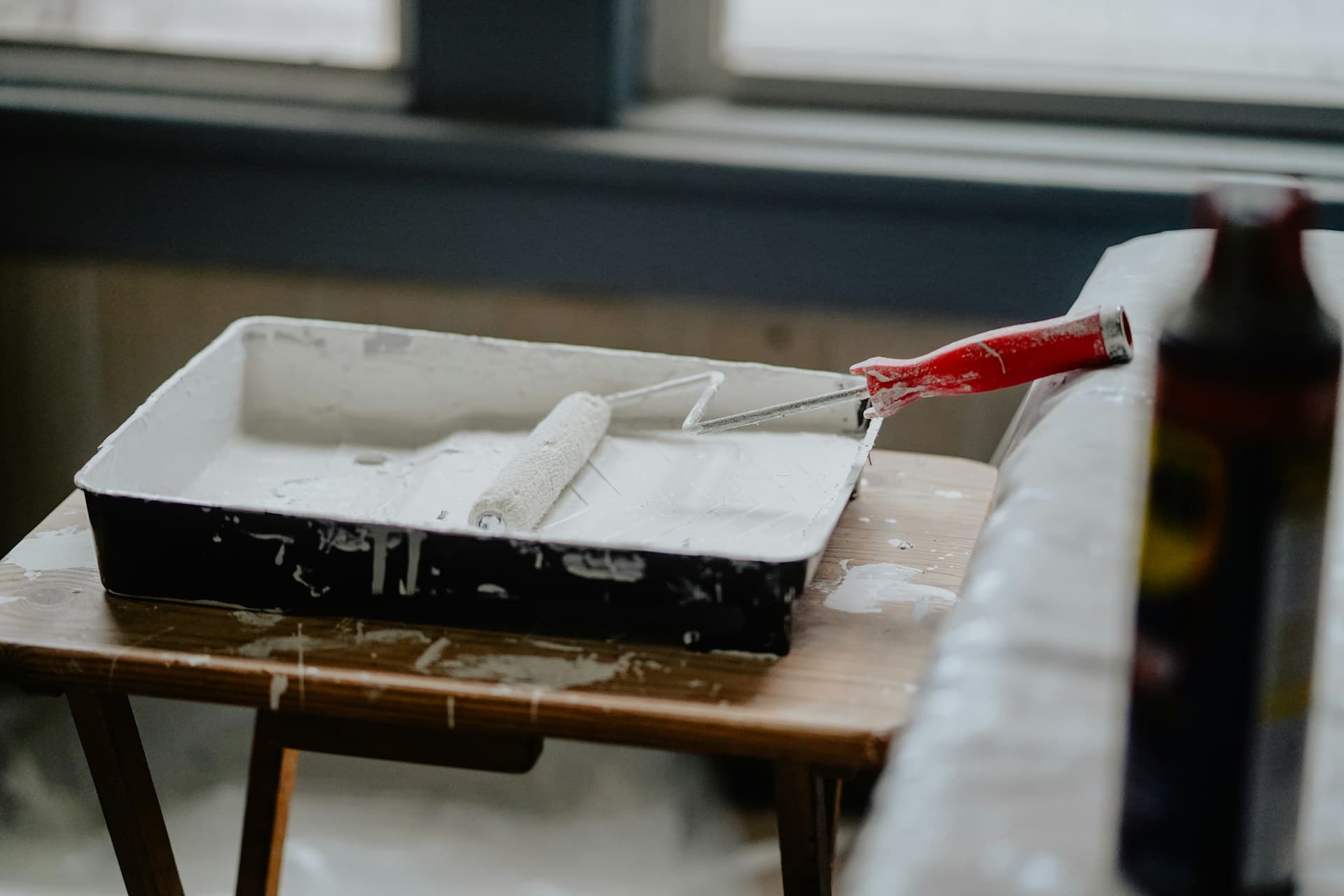
Interior Painting
Interior painting of walls, ceilings, doors, and trim including surface preparation, priming, and finish coat application. Covers brush, roller, and spray application methods. Includes lead paint considerations for pre-1970 buildings. Pre-filled hazards, controls, and risk ratings.
Pre-1970 lead paint is the silent compliance trap on residential interior work. Houses built before 1970 commonly carry lead in window frames, doors, skirting boards and ceiling cornices, and the moment a sander hits old paint it generates lead-bearing dust at concentrations a P2 mask alone doesn't handle. AS/NZS 4361.1:2017 is the controlling standard — wet sanding, HEPA-filtered vacuum, containment of sanding dust, plus a separate disposal pathway for the waste. The painter who sands a 1960s window frame dry on a customer's living-room floor is creating a lead exposure event for the household, not just the operator.
Solvent vapour is the second risk in tight rooms. Mineral turps, methylated spirits and the MEK or toluene in some paint thinners and cleaners reach hazardous concentrations in an unventilated bedroom within minutes; the Model Code of Practice on Managing Risks of Hazardous Chemicals in the Workplace drives the substitution to water-based products where the spec allows, and mechanical extraction with a portable fan exhausting outside where it doesn't. An A-class organic-vapour respirator selected to AS/NZS 1716:2012 covers the breathing-zone gap.
Stepladder use is the third — overreach for ceiling cutting-in is the most common interior-painting fall mechanism. An industrial stepladder selected to AS 1892.1:2018, three points of contact, no standing on the top two rungs, and a long-handled roller for the centre of the ceiling rather than walking the ladder are the daily controls. White Card, painting trade competency, lead paint awareness training (separate to a generic White Card induction), and a current first aid round out what the painter holds. Test the paint before sanding starts; that's the test that prevents the exposure.
What's In Your SWMS
7 Hazards & Controls
Fractures, head injuries, sprains, concussion, death
Use extension pole for roller work to avoid ladder use where possible
Use mobile scaffold or platform instead of ladder for extended work
Clear area below ladder of trip hazards and other workers
- Use industrial-rated ladders designed to support compliance with AS 1892.1:2018 (minimum 120 kg)
- Position ladder at 1:4 angle ratio (1m out per 4m height)
- Ensure all four legs on stable, level surface
- Use ladder stay or stabiliser for extension ladders
- Inspect ladder before each use - reject if damaged
- Maintain three points of contact at all times
- Do not overreach - keep belt buckle within ladder rails
- Never stand on top two rungs of stepladder
- Face ladder when climbing, not side-on
- Do not carry paint can while climbing - use hook or shelf
Non-slip safety footwear essential
20-Step Work Procedure
Equipment & PPE
Equipment (10)
- Stepladder (industrial rated)
Minimum 120kg load rating. Designed to support compliance with AS 1892.1:2018 (portable ladders — performance and safety requirements; Australian-only). Inspect before each use.
- Paint brushes (various sizes)
50mm, 75mm for cutting in. Quality brushes for clean edge lines.
- Paint rollers and trays
Roller covers appropriate for surface texture. Extension pole for reach.
- Extension pole for roller
Reduces ladder use for walls and ceilings. 1.2m to 3m adjustable.
- Drop sheets (canvas or plastic)
Canvas for floors, plastic for furniture. Secure to prevent trips.
- Painter's masking tape
For clean edge lines. Remove within 24 hours of final coat.
- Sanding equipment (pole sander, hand blocks)
For surface preparation. Use dust extraction where possible.
- Filler, putty knife, and sanding blocks
For patching holes, cracks, and imperfections
- Cleaning supplies (rags, mineral turps, water)
For equipment cleaning and spill management
- First aid kit
Include eye wash, burn treatment, and wound dressings
PPE (7)
- Safety glasses or gogglesAS/NZS 1337.1:2010
Essential for overhead work and spray painting. Splash protection goggles recommended.
- Dust mask (P2) for sandingAS/NZS 1716:2012
Required during surface preparation and sanding operations. AS/NZS 1716 uses the P1/P2/P3 particulate-filter classification; U.S. NIOSH N95/N99 and European EN 149 FFP2/FFP3 are different national schemes. P2 is the minimum for nuisance dust; P3 preferred where lead or crystalline silica (plasterboard joint compound) is suspected.
- Chemical-resistant glovesAS/NZS 2161.10.1:2024 (chemical/microorganism risks); AS/NZS 2161.1:2016 (general requirements)
For handling solvents, oil-based paints, and cleaning chemicals. AS/NZS 2161.10.1:2024 is the chemical-resistance standard (aligned to ISO 374-1:2024); the older "AS/NZS 2161.2" cite was Part 2 (sampling and testing methodology), not the chemical-resistance part.
- Work gloves (general)
For ladder handling and general work. Remove for fine brush work.
- Safety footwear (non-slip)AS 2210.3:2019
Non-slip soles essential for ladder work and drop sheet surfaces. AS 2210.3 is now AS-only (no longer joint NZ since the 2019 revision).
- Coveralls or protective clothing
Protect skin from paint contact. Long sleeves for overhead work.
- Cap or hat
Protects hair from paint drips during ceiling work
Training & Emergency
Competency Requirements
- Construction Induction Card (White Card)training
Required if working on construction sites
- Painting Trade Competencycertificate
Experience in surface preparation and paint application. May hold Certificate III in Painting and Decorating.
- Ladder Safety Trainingtraining
Training in safe ladder selection, inspection, and use
- Lead Paint Awareness
Required if working on pre-1970 buildings. Covers identification, risks, and controls.
- Licensed Lead Paint Removalist
Required for lead paint removal work. PCCP Class 5 minimum.
- Spray Painting Competency
Required if using airless spray equipment
- First Aid Certificate
Recommended for at least one team member on site
Emergency Procedures
FALL FROM LADDER: Do not move injured person unless immediate danger. Call 000 if suspected spinal injury. Keep person warm and calm.
PAINT IN EYES: Immediately irrigate with clean water for minimum 15 minutes. Hold eyelids open. Do not rub. Seek medical attention.
SOLVENT INHALATION: Move person to fresh air immediately. If unconscious, call 000. If breathing difficulty persists, seek medical attention.
LEAD PAINT EXPOSURE: If lead paint disturbed without controls, stop work immediately. Isolate area. Notify supervisor. Workers may require blood lead testing.
ELECTRIC SHOCK: Do not touch person if still in contact with power. Turn off power at switchboard. Call 000. Begin CPR if not breathing.
Everything above, included in your SWMS document.
Get This TemplateWriting a SWMS from scratch?
That's 2-4 hours of research, formatting, and cross-referencing regulations.
We've done the starting work — pick your template, add your details, review.
Or just do this:
- Unlimited documents
- All 70+ templates
- Instant PDF & DOCX
- Cancel anytime
High-Risk Construction Work Categories
Under Australian WHS Regulations (Chapter 7 Part 7.1 - Hazardous Chemicals (Reg 328-378, including Reg 351 - Health monitoring); Chapter 7 Part 7.2 - Lead (Reg 392-438); Schedule 10 - Prohibited Carcinogens, Restricted Carcinogens and Restricted Hazardous Chemicals), this work is classified as high-risk due to:
- Work involving hazardous chemicals (Paints contain VOCs (volatile organic compounds) and solvents. Ventilation and respiratory protection required.)
Australian Standards Referenced
Who Needs This SWMS?
This template is designed for the following trades and roles performing interior painting work.
Frequently Asked Questions
Do painters need a White Card?
A White Card (Construction Induction Card) is required if working on a construction site. For residential renovation or maintenance painting in occupied homes, a White Card is generally not required, but is recommended best practice.
When is lead paint testing required?
Lead paint testing is required before any surface preparation (sanding, scraping) in buildings constructed before 1970. Lead paint cannot be identified by appearance - testing is the only reliable method. Simple test kits are available from paint suppliers.
What ventilation is required for interior painting?
For water-based paints applied by brush/roller, natural ventilation (open windows and doors) is usually sufficient. Oil-based paints require enhanced ventilation. Spray painting requires mechanical ventilation or local exhaust. Enclosed spaces may need continuous forced ventilation.
What PPE is required for interior painting?
Minimum PPE includes safety glasses (especially for overhead work), P2 dust mask for sanding, chemical-resistant gloves for handling solvents, non-slip footwear, and protective clothing. Add half-face respirator with organic vapour cartridges for oil-based paints or spray applications.
What are the ladder safety requirements for painters?
Ladders are designed to support compliance with AS 1892.1:2018 (Australian-only) and should carry a minimum 120 kg industrial rating. Position at 1:4 angle ratio. Maintain three points of contact. Never stand on top two rungs of a stepladder. Do not overreach. Carry paint using ladder hooks, not in hand while climbing.
What are VOCs and why do they matter?
VOCs (Volatile Organic Compounds) are chemicals that evaporate from paints and solvents. They can cause headaches, dizziness, and respiratory irritation. Long-term exposure may cause organ damage. Low-VOC water-based paints are recommended. Adequate ventilation reduces exposure.
Can I paint over lead paint?
Yes, intact lead paint in good condition can be safely encapsulated by painting over it. Do not sand, scrape, or disturb the surface. If the paint is flaking, peeling, or needs preparation work, engage a licensed lead paint removalist. Never dry sand lead paint.
How should paint waste be disposed of?
Never pour paint down drains. Leftover water-based paint can be dried out and disposed of in household waste. Oil-based paints, solvents, and empty solvent containers must be taken to a licensed waste facility or council chemical collection point.
Get Your Interior Painting SWMS
Pre-filled. Risk-rated. Ready in 5 minutes.
Get Your SWMS PDFNo credit card required. First SWMS is free.
