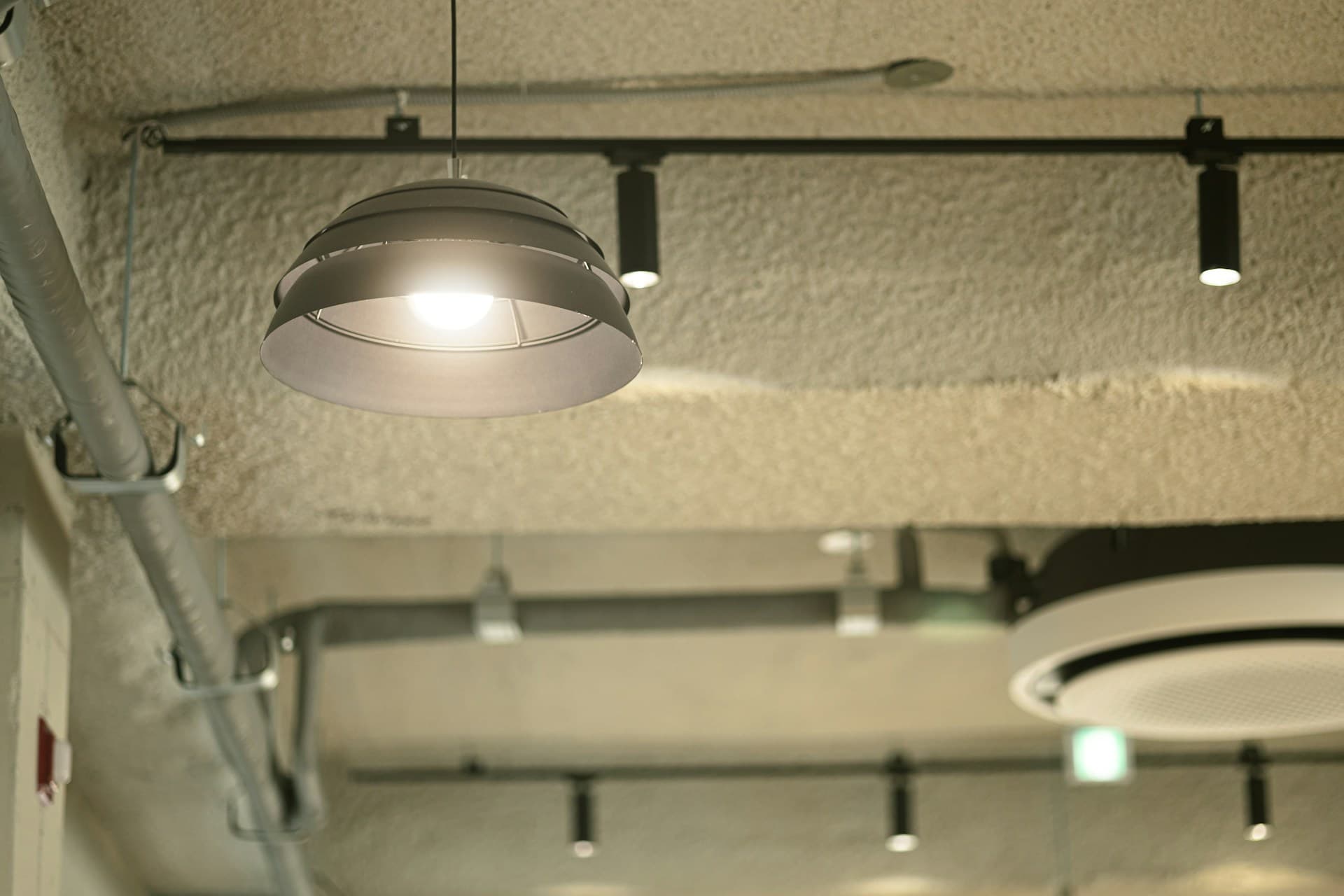
Light Fitting Installation
Installation, replacement, and maintenance of light fittings including downlights, ceiling fixtures, pendant lights, and commercial luminaires. Covers domestic, commercial, and industrial settings. Pre-filled hazards, controls, and risk ratings.
Restricted electrical licences are the trap on this kind of work. A handyman or restricted disconnect-reconnect ticket does not cover full luminaire installation, and Energy Safe Victoria, NSW Fair Trading and the Queensland Electrical Safety Office have all run prosecutions on it. A light-fitting SWMS has to start with proof of an unrestricted state electrical licence on every operator, current LV rescue (annually renewable, not biennial) under UETDRMP018, and CPR under HLTAID009, also annual. One lapsed ticket on a four-sparky crew is the gap that turns a clean install into a notifiable incident.
Above the ceiling, the work changes character depending on the building and the state. Queensland's 1 January 2025 domestic roof-space de-energisation rule requires the entire roof-space circuit to be isolated before entry — not just the lighting circuit — and the document has to capture the isolation point, the LOTO padlock and the three-point test-before-touch (proving unit confirmed on a known live source, conductor tested, proving unit re-confirmed) using a CAT III 600V instrument. Pre-1990 buildings still hide asbestos batten-holder backing in pendant fixtures and around recessed cans; AS 60903:2022 insulating gloves and a P2 respirator are the baseline before disturbance. Cavity heat stress under a Colorbond roof can push past 50°C in February, with a 15–20 minute work limit and a stop-work above 35°C — drinks, cool-down rotation and a buddy below are the on-site practice. Falls through plasterboard happen when an electrician steps off a truss into a sheet; a crawl board across joists is what audit looks for. AS/NZS 1891.1:2020 governs harness selection where heights apply, AS 1892.1:2018 covers the industrial step ladder, and an EWP HRWL is required for boom heights above 11m. None of those are line items — they're what separates a fixture swap from a write-up.
What's In Your SWMS
16 Hazards & Controls
Electrocution (death), cardiac arrest, severe burns, muscle contractions causing secondary injuries from falls
Work de-energised wherever reasonably practicable - this is the default approach
Use extra low voltage (ELV) lighting systems where design permits
Implement full LOTO procedure: identify circuit, isolate at switchboard, apply personal lock and danger tag, verify de-energised using test-before-touch method
- Use CAT III rated voltage tester - test on known live source, test circuit, re-test on known live source
- Install RCD protection on all circuits being worked on
- Use insulated tools rated to 1000V (IEC 60900)
- Maintain minimum approach distances from live parts
- Only licensed electricians to perform electrical work
- Complete isolation permit before commencing work
- Never assume circuit is dead - always test
- Remove all metallic jewellery before work
- Inform all site personnel of isolation
Class 0 or 00 insulating gloves (AS 60903:2022), safety glasses, non-conductive safety footwear
17-Step Work Procedure
Equipment & PPE
Equipment (12)
- Voltage tester (CAT III 600V minimum)
Required for test-before-touch verification. CAT III-1000V preferred for distribution board work
- Digital multimeter (CAT III rated)
For continuity, insulation resistance, and polarity testing
- Insulated screwdriver set (1000V rated)
Must comply with IEC 60900:2018, look for double triangle symbol
- Insulated pliers set (1000V rated)
Side cutters, combination pliers, long nose pliers - all IEC 60900 compliant
- Wire strippers
Insulated handles preferred
- Cordless drill/driver
Cordless preferred to reduce shock risk. If corded, must be double insulated (Class II) with RCD
- Hole saw kit
For downlight cutouts - various sizes 70mm-120mm typical
- Step ladder (industrial rated)
AS 1892.1:2018 compliant, rated 120kg minimum. Platform ladder preferred for extended work.
- Lock Out Tag Out (LOTO) kit
Personal padlock, danger tags, and hasps for electrical isolation
- LED torch/headlamp
For working in ceiling cavities and poorly lit areas
- First aid kit
Stocked and checked, including burns dressings
- Fire extinguisher (CO2 or dry powder)
Suitable for electrical fires - never use water
PPE (6)
- Safety glassesAS/NZS 1337.1:2010
Medium impact (F marking) minimum. Required when drilling, cutting, or working overhead
- Safety footwear (anti-static)AS 2210.3:2019
Steel or composite toe cap with anti-static (A) properties for electrical work
- Insulating glovesAS 60903:2022
Class 0 or Class 00 for low voltage work (<=1000V). AS 60903:2022 supersedes AS/NZS IEC 60903:2020. Test before each use.
- Hard hat (non-conductive)AS/NZS 1801:2024
Type 1 non-vented for electrical work. Required on construction sites and when overhead hazards present
- High visibility clothingAS 4602.1:2024
Class D/N for construction sites. Long sleeves recommended
- P2/N95 respiratorAS/NZS 1716:2012
Required for ceiling cavity work (dust, insulation fibres) and pre-1990 buildings (asbestos risk)
Training & Emergency
Competency Requirements
- Electrical Licence (Full)licence
NSW Fair Trading electrical contractor or tradesperson licence. Restricted electrical licences do NOT permit light fitting installation
- Construction Induction Card (White Card)training
CPCWHS1001 - Required for all work on construction sites. No expiry but must be current at time of work
- CPR Trainingcertificate
HLTAID009 Provide cardiopulmonary resuscitation. Must be renewed every 12 months
- Low Voltage Rescue Trainingcertificate
UETDRMP018 Perform rescue from a live LV panel. Must be renewed every 12 months. Required for all electrical work
- Working at Heights Trainingtraining
RIIWHS204E Work safely at heights. Required when fall risk >2m. Best practice renewal every 2-3 years
- Asbestos Awareness Trainingtraining
11084NAT Course in Asbestos Awareness. Required for any work in pre-1990 buildings where asbestos may be present
- EWP High Risk Work Licence (WP)
Required to operate boom-type EWP with boom length >11m. Not required for scissor lifts
- First Aid Certificate
HLTAID011 Provide first aid. At least one person on site should hold current certificate
Emergency Procedures
ELECTRIC SHOCK RESPONSE: 1) Danger - do not touch victim if still in contact with power. Isolate power at source if safe to do so. 2) Use dry non-conductive object to separate victim from power source if power cannot be isolated. 3) Call 000 immediately. 4) Check response - if unconscious, commence DRSABCD. 5) Begin CPR if not breathing: 30 compressions at 100-120/min, 2 breaths. Continue until help arrives or AED available. 6) If conscious, monitor for delayed cardiac effects - medical assessment required even if appears okay.
ELECTRICAL BURN RESPONSE: Cool burn under clean running water for 20 minutes. Do not apply ice, creams, or ointments. Cover with sterile non-adhesive dressing. Seek immediate medical attention for all electrical burns.
FALL FROM HEIGHT RESPONSE: Do not move injured person unless in immediate danger. Call 000. Keep victim warm and still. If suspended in harness, rescue must be initiated within 15 minutes (suspension trauma risk). Follow documented rescue plan.
SUSPECTED ASBESTOS DISTURBANCE: Stop work immediately. Leave area without disturbing material further. Isolate area and prevent access. Report to supervisor immediately. Contact SafeWork NSW for guidance.
Everything above, included in your SWMS document.
Get This TemplateWriting a SWMS from scratch?
That's 2-4 hours of research, formatting, and cross-referencing regulations.
We've done the starting work — pick your template, add your details, review.
Or just do this:
- Unlimited documents
- All 70+ templates
- Instant PDF & DOCX
- Cancel anytime
High-Risk Construction Work Categories
Under Australian WHS Regulations (291 - High Risk Construction Work), this work is classified as high-risk due to:
- Work at height (>2m) with risk of fall (Ceiling fixtures typically require ladder, scaffold, or EWP access above 2 metres)
- Work on/near energised electrical installations (All light fitting installation involves electrical circuits - isolation required before work commences)
- Use of powered mobile plant (EWPs, scissor lifts, or boom lifts may be required for commercial/industrial installations)
- Work in confined spaces (Ceiling cavities and roof spaces may constitute confined spaces with restricted access and ventilation)
Australian Standards Referenced
National Guidance Documents
- Safe Work Australia - Model Code of Practice: Managing Electrical Risks in the Workplace
- Safe Work Australia - Model Code of Practice: Managing the Risk of Falls at Workplaces
- Safe Work Australia - Model Code of Practice: How to Manage Work Health and Safety Risks
- Safe Work Australia - WHS Profile: Electricians
Who Needs This SWMS?
This template is designed for the following trades and roles performing light fitting installation work.
Frequently Asked Questions
Do I need a SWMS for light fitting installation?
Yes. Light fitting installation is classified as high-risk construction work under WHS Regulation 2017 because it involves work on or near electrical installations (which could become energised) and typically involves work at heights greater than 2 metres. A SWMS must be prepared before work commences, all workers must be trained in the SWMS, and it must be kept accessible during the work.
Can I install light fittings without an electrical licence?
No. In all Australian states and territories, installing, replacing, or altering light fittings connected to 240V mains power requires a full electrical licence. The only task universally permitted without a licence is changing a light bulb. Restricted electrical licences (RELs) do NOT permit light fitting installation - they only allow disconnection and reconnection of like-for-like equipment incidental to another trade.
What is the test-before-touch procedure?
Test-before-touch is a mandatory verification procedure to confirm a circuit is de-energised before work begins. The procedure has three steps: (1) Test your voltage tester on a known live source to confirm the tester is working, (2) Test the circuit you believe is isolated to confirm zero voltage, (3) Re-test your voltage tester on the known live source again to confirm the tester is still working correctly. This must be done every time you return to work on a circuit.
What training do I need for light fitting installation?
At minimum, you need: Full electrical licence (not restricted), White Card for construction sites, CPR training renewed annually, Low Voltage Rescue training renewed annually, Working at Heights training if work involves fall risk over 2 metres, and Asbestos Awareness training if working in pre-1990 buildings. If using boom-type EWPs over 11m, you also need an EWP High Risk Work Licence.
What should I do if I suspect asbestos in a ceiling cavity?
Stop work immediately and leave the area without disturbing the suspected material further. Isolate the area and prevent anyone from entering. Report to the site supervisor immediately. Do not attempt to remove or test the material yourself. For buildings constructed before 1990, an asbestos register must be reviewed before any ceiling work begins. If no register exists, an asbestos inspection should be completed before proceeding.
When can I use a ladder instead of a scaffold or EWP?
Ladders are only appropriate for short-duration work (less than 30 minutes), light work that does not require significant force or two hands, at heights under 4 metres for work tasks, and where the ground is stable and level. For work over 4 metres, extended duration tasks, or work requiring two hands, scaffolding or an EWP should be used instead. Always follow the hierarchy of controls - working at ground level or using passive fall prevention (scaffolds, EWPs with guardrails) is preferred over ladders.
Get Your Light Fitting Installation SWMS
Pre-filled. Risk-rated. Ready in 5 minutes.
Get Your SWMS PDFNo credit card required. First SWMS is free.
