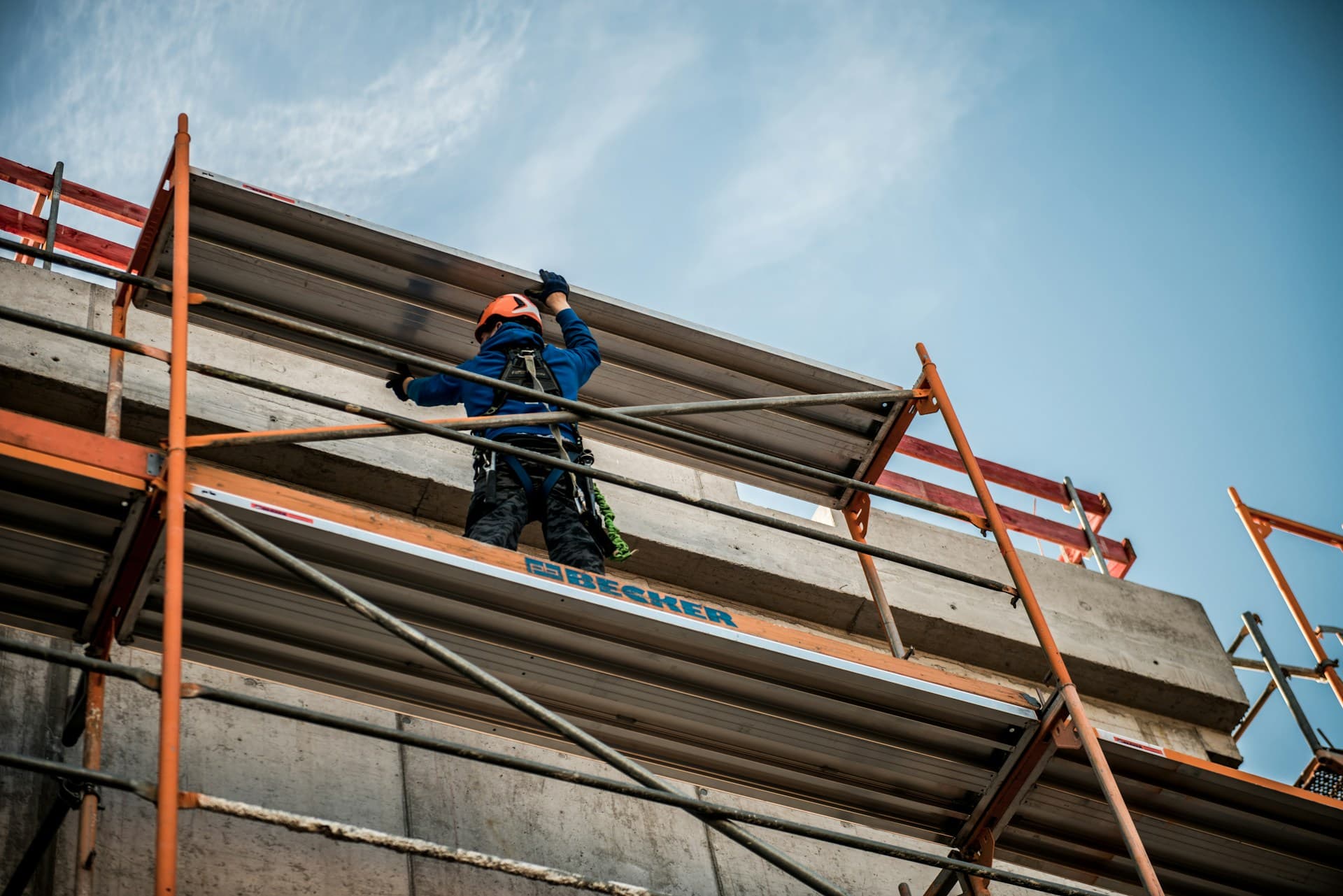
Scaffold Erection - Prefabricated Steel Modular Scaffolding
Erection, alteration and dismantling of prefabricated steel modular scaffolding systems including Kwikstage, Cuplock, and similar systems for residential and commercial roofing projects. Pre-filled hazards, controls, and risk ratings.
The scaffolding licence class on the SWMS has to match the actual scaffold being erected, and the audit finding most often raised against scaffolding contractors is exactly that mismatch. Basic Scaffolding (SB) covers up to 4 metres; Intermediate (SI) covers prefabricated, cup-lock, ring-lock and tube-and-coupler scaffolds and similar; Advanced (SA) covers hung, suspended and mast-climbing systems. Sending a basic-licensed crew to erect a five-storey perimeter scaffold is not a paperwork issue — it's an offence. The trade-name confusion happens because "scaffolder" reads as one role; the licence class is what determines the legal limit.
AS/NZS 1576.1:2019 sets the general scaffolding requirements, with later parts covering couplers, prefabricated and tube-and-coupler components. The ScafTag system — a competent person's daily and weekly inspection signed off on the tag, as outlined in the SWA Scaffolds and Scaffolding Work general guide — is mandatory through erection, use and dismantle. Many sites tag once at handover and treat the inspection as completed forever, which invalidates the tag and any insurance position around it. A dismantling crew working past a removed mid-rail is what the trade calls a "leading edge" fatality, and the harness-without-an-anchor problem haunts this trade for the same reason it haunts roof-truss installation.
The mass-handling profile carries its own claims column. Eighteen-to-twenty-two-kilo standards lifted overhead, four-to-six-metre planks moved single-person across uneven ground, and cup-lock joints that pinch fingers and crush hands across an eight-hour shift all show up in workers' comp data. Fall arrest harnesses to AS/NZS 1891.1:2020 are the personal control; planning, sequencing and exclusion zones are the project control. WorkSafe Victoria's December 2024 Scaffolding Industry Standard tightened load and bracing rules — Victorian SWMSs that pre-date that update need a refresh.
What's In Your SWMS
7 Hazards & Controls
Serious injury or death from impact with ground or lower levels
Consider prefabricated stair towers or EWPs for initial access where practicable
Erect exclusion zone below work area to prevent unauthorised access during erection
- Install guardrails, mid-rails and toeboards progressively as each lift is completed
- Use temporary installation platform (min 450mm wide) to install edge protection for next lift
- Install internal ladder access with trap doors at each working level
- Ensure platform is fully planked at each lift before progressing to next level
- Follow SafeWork NSW approved erection sequence - work from below using temporary platform method
- Only licensed scaffolders to erect scaffold above 4m
- Red tag scaffold during erection to prevent unauthorised access
- Pre-start briefing covering fall hazards and controls
- Maximum 2m vertical distance between working platforms during erection
Full body harness with shock-absorbing lanyard connected to suitable anchor when complete edge protection not yet installed (AS/NZS 1891.1:2020 device; AS/NZS 1891.4:2025 selection/use)
14-Step Work Procedure
Equipment & PPE
Equipment (11)
- Scaffold standards (verticals)
Prefabricated steel modular system - inspect for damage, corrosion, missing components
- Scaffold ledgers (horizontals)
Must comply with AS/NZS 1576 series
- Scaffold transoms and bracing
Diagonal bracing for stability
- Scaffold planks/platforms
Scaffold-grade timber or aluminium planks - minimum 225mm wide, check for splits/cracks
- Base plates and sole boards
Base plates minimum 150mm x 150mm, sole boards for load distribution on soft ground
- Guardrails, mid-rails and toeboards
Top rail 900-1100mm, mid-rail 450-500mm, toeboard minimum 150mm height
- Access ladders with trap doors
Internal ladder access with self-closing trap doors
- Scaffold ties and anchors
Tie tubes, ring bolts, through-ties as per design requirements
- Scaffold inspection tags (green/red)
Green tag for safe use, red tag for incomplete/unsafe scaffold
- Spirit level and tape measure
For checking plumb and level during erection
- Scaffold spanners and podger bars
For tightening couplers and adjusting components
PPE (7)
- Safety helmet with chin strapAS/NZS 1801:2024
Type 1 industrial safety helmet - chin strap mandatory when working at height
- Steel-capped safety bootsAS 2210.3:2019
Non-slip sole, ankle support recommended for scaffolding work
- High-visibility vest or clothingAS 4602.1:2024
Class D/N if working near traffic or mobile plant
- Riggers glovesAS/NZS 2161.3:2020
Leather palm gloves for grip and protection from pinch points and sharp edges
- Safety glassesAS/NZS 1337.1:2010
Clear lens, side shields for protection from debris
- Full body fall arrest harnessAS/NZS 1891.1:2020 (harness/equipment); AS/NZS 1891.4:2025 (selection/use/maintenance)
Required when erecting first lift or working without complete edge protection
- Shock-absorbing lanyardAS/NZS 1891.1:2020
Maximum 2m length, energy absorber rated for user weight, connect to suitable anchor point
Training & Emergency
Competency Requirements
- Construction Induction (White Card)training
Required for all workers on construction sites in NSW
- Scaffolding Licence - Basic (SB)licence
CPCCLSF2001 - Required for scaffold erection up to 4 metres deck height. Issued by SafeWork NSW, valid 5 years.
- Working at Heights Trainingtraining
RIIWHS204E - Required for all workers performing work at heights above 2 metres
- Fall Arrest Harness Trainingtraining
Training in correct fitting, use and inspection of harness and lanyard systems
- Scaffolding Licence - Intermediate (SI)
CPCCLSF3001 - Required for scaffold erection 4-15 metres. Prerequisite: Basic licence.
- Scaffolding Licence - Advanced (SA)
CPCCLSF4001 - Required for complex scaffolds, suspended scaffolds, cantilevered hoists. Prerequisite: Intermediate licence.
- First Aid Certificate
HLTAID011 - Recommended to have at least one first aid trained person in the crew
- Forklift Licence (LF)
Required if operating forklift to unload/transport scaffold components
Emergency Procedures
FALL FROM HEIGHT: Do not move injured person unless in immediate danger. Call 000 immediately. If person suspended in harness, initiate rescue within 15 minutes due to suspension trauma risk. Once rescued, place the worker in a flat / supine position (or recovery position if unconscious and breathing) per ANZCOR Guideline 9.1.5. Earlier advice to keep the rescued worker in a legs-bent / upright position to prevent orthostatic shock has been retracted as it lacks evidence and may be harmful. Keep person warm, monitor breathing. Seek medical attention even if the worker appears uninjured.
SCAFFOLD COLLAPSE: Evacuate all personnel from area immediately. Call 000. Account for all workers. Do not attempt rescue unless safe to do so. Establish exclusion zone and preserve scene.
ELECTRICAL CONTACT: Do not touch person in contact with electricity. Call 000. Isolate power supply if possible. Once power isolated, commence CPR if not breathing. Treat for burns.
FALLING OBJECT INJURY: Call 000 if serious injury. Apply pressure to wounds, immobilise fractures. Do not remove objects embedded in wound. Monitor for shock.
Everything above, included in your SWMS document.
Get This TemplateWriting a SWMS from scratch?
That's 2-4 hours of research, formatting, and cross-referencing regulations.
We've done the starting work — pick your template, add your details, review.
Or just do this:
- Unlimited documents
- All 70+ templates
- Instant PDF & DOCX
- Cancel anytime
High-Risk Construction Work Categories
Under Australian WHS Regulations (Part 4.5 - High Risk Work Licences; Part 6.4 - Construction Work; Schedule 3 - High Risk Work), this work is classified as high-risk due to:
- Work at height (>2m) with risk of fall (Scaffolding work involves working at heights above 2 metres during erection, alteration and dismantling)
- Use of powered mobile plant (Forklifts, telehandlers or cranes may be used to transport and lift scaffold components)
- Work on/near energised electrical installations (Scaffold may be erected near overhead power lines or electrical services - minimum safe approach distances must be maintained)
- Temporary support for structural alterations (Scaffold provides temporary structural support during construction works)
Australian Standards Referenced
Who Needs This SWMS?
This template is designed for the following trades and roles performing scaffold erection - prefabricated steel modular scaffolding work.
Frequently Asked Questions
When is a scaffolding licence required in NSW?
A High Risk Work Licence for scaffolding is required when erecting, altering or dismantling scaffold from which a person or object could fall more than 4 metres. Basic (SB) licence covers up to 4m, Intermediate (SI) covers 4-15m, and Advanced (SA) is required for complex scaffolds over 15m, suspended scaffolds and cantilevered hoists.
What Australian Standards apply to scaffold erection?
The AS/NZS 1576 series is the primary scaffolding standard: Part 1 (AS/NZS 1576.1:2019) covers general requirements, Part 2 (AS/NZS 1576.2:2016) covers couplers and accessories, and Part 3 (AS/NZS 1576.3:2015) covers prefabricated and tube-and-coupler scaffolding. AS 4576:2020 (Australian-only redesignation; supersedes the older AS/NZS 4576:1995) provides overall guidelines for scaffolding safety.
What PPE is required for scaffold erection?
Mandatory PPE includes safety helmet with chin strap (AS/NZS 1801:2024), steel-capped safety boots (AS 2210.3:2019), high-visibility clothing (AS 4602.1:2024), riggers gloves (AS/NZS 2161.3:2020), and safety glasses (AS/NZS 1337.1:2010). Fall arrest harness with shock-absorbing lanyard (AS/NZS 1891.1:2020 device + AS/NZS 1891.4:2025 selection/use) is required when working without complete edge protection.
How often must scaffolds be inspected?
Scaffolds must be inspected by a competent person before first use, after any incident that could affect stability, after alterations, and at least every 30 days while in use. Where a person could fall more than 4 metres, written confirmation from a licensed scaffolder is required before use.
What is the correct method for erecting scaffold to prevent falls?
SafeWork NSW requires scaffolders to work from below using a temporary installation platform (minimum 450mm wide) to install edge protection for the next lift. Platforms must be fully planked at each lift with guardrails, mid-rails and toeboards installed before progressing. Maximum vertical distance between platforms during erection is 2 metres.
What are the safe approach distances for overhead power lines?
The minimum safe approach distance is 3 metres for voltages up to 132kV, with greater distances for higher voltages. If work is required within these distances, contact the electricity network provider for guidance on de-energisation, insulation or other controls. A spotter should be used when working near power lines.
Get Your Scaffold Erection - Prefabricated Steel Modular Scaffolding SWMS
Pre-filled. Risk-rated. Ready in 5 minutes.
Get Your SWMS PDFNo credit card required. First SWMS is free.
