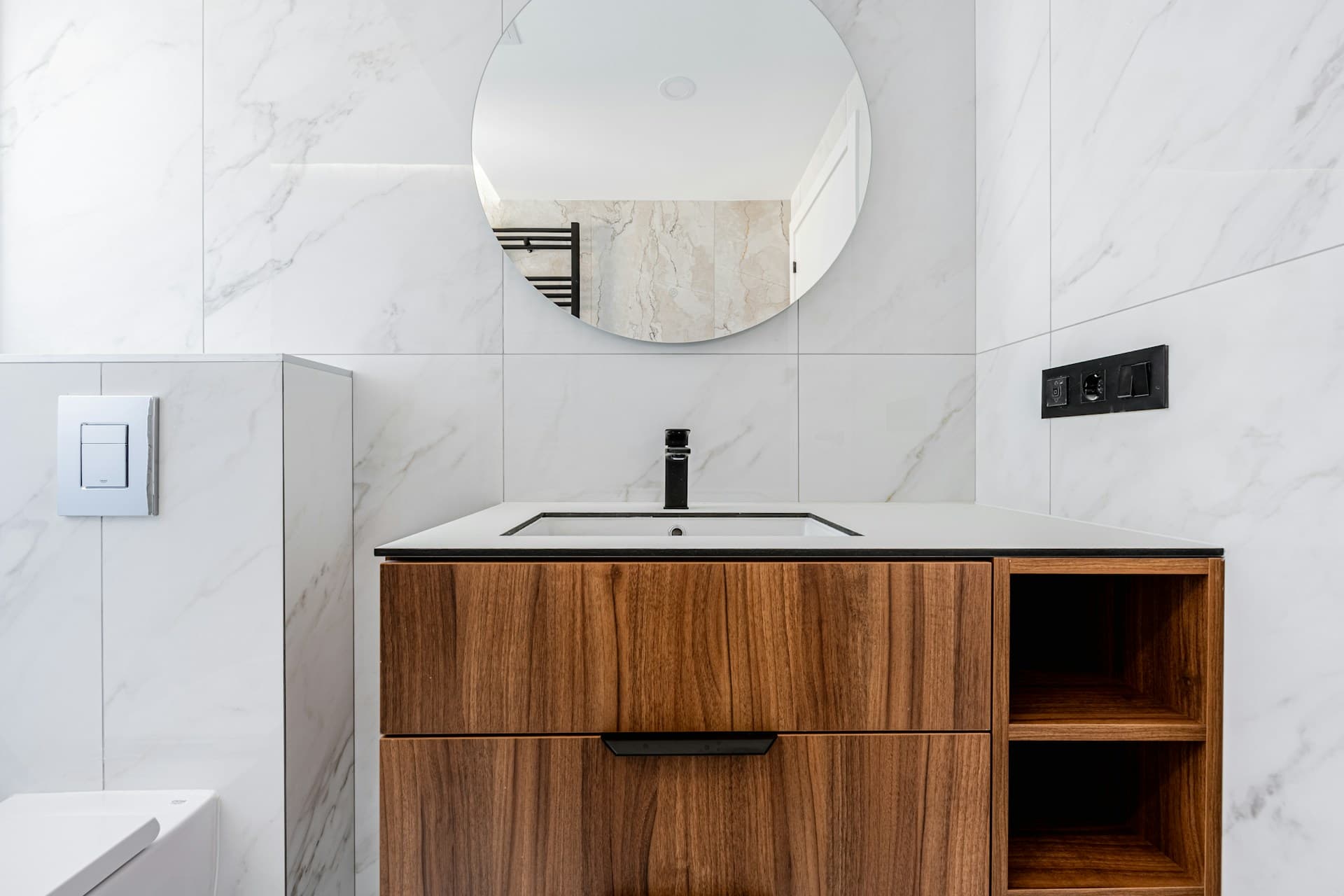
Wall Tiling (Bathrooms)
Installation of ceramic, porcelain, and stone wall tiles in bathrooms and wet areas including surface preparation, waterproofing verification, adhesive application, tile fixing, grouting, and sealing. Covers work in confined bathroom spaces with silica dust controls and wet area compliance. Pre-filled hazards, controls, and risk ratings.
A bathroom wall tiler walks onto a job that already has a waterproofer's signature on it — and that signature is the precondition for any tile going up. AS 3740:2021 requires the waterproofing membrane complete and certified before tiling commences, and most states require a separately-licensed waterproofer for the membrane work. Tilers laying over un-waterproofed substrate, or worse, attempting to repair a failed membrane themselves without the licence, is the recurring builder-warranty trigger that turns a clean job into a dispute eighteen months later.
Cutting porcelain is the silica column. Porcelain runs 30 to 50 percent silica content, and the SafeWork Australia respirable crystalline silica WES sits at 0.05 mg/m³ over an eight-hour day — wet cutting on a wet tile saw with a P2 respirator and an M-class HEPA vacuum for cleanup is the working spec, and dry cutting is what regulators record as a compliance failure. The 1 July 2024 engineered stone ban covers benchtops; porcelain "engineered-stone-look" tiles are still legal and need the same wet-cut discipline regardless. Cement-based adhesives at pH 12-13 burn skin on knee contact through cotton during prolonged kneeling — knee boards and alkali-resistant pads beat foam.
The bathroom space itself amplifies chemical risk: epoxy grouts sensitise like the membrane systems above them, sealants accumulate fumes in confined ventilation, and acid-based grout cleaners (HCl, sulfamic acid) sit in the most-confined room of the house. Mechanical extraction during application, neutralisation of acid grout-haze cleaners, and full eye and face protection during overhead grout removal cover the chemical column. AS 3958.1-2007 is the installation guide for ceramic tiles; AS 4586 covers the slip resistance class on the finished surface. White Card, wall and floor tiling competency, silica awareness, and a current first aid round out the trade ticket. Membrane signed, saw wet, ventilation on — that's the morning check.
What's In Your SWMS
8 Hazards & Controls
Silicosis, lung cancer, chronic obstructive pulmonary disease, death
Use pre-cut tiles where possible. Order tiles cut to size from supplier.
Use manual score-and-snap cutter for straight cuts (minimal dust). Use tiles with lower silica content.
Establish designated cutting area away from other workers. Cut outside or in well-ventilated area.
- Controlled processing mandatory per 1 September 2024 SWA Crystalline Silica Substances Regulation — any of: wet suppression (wet tile saw with continuous water feed), on-tool extraction, local exhaust ventilation (LEV), isolation, or enclosed cabin with HEPA filtration. Uncontrolled dry cutting is prohibited.
- Wet tile saw with continuous water feed to blade (most common compliant control for on-site tile cutting)
- Angle grinder must have water suppression attachment or on-tool dust extraction
- Diamond hole saws with water feed for penetrations
- HEPA vacuum (M-class minimum) for cleanup
- Ensure adequate ventilation in cutting area
- Complete 10830NAT Course in Crystalline Silica Exposure Prevention training (4-hour nationally accredited)
- Never perform uncontrolled dry cutting of ceramic, porcelain, or stone tiles
- Change water in tile saw regularly to maintain suppression
- Clean up wet slurry before it dries - dried slurry releases dust
- Do not sweep dry dust - wet clean or HEPA vacuum only
- Wash hands before eating, drinking, or smoking
- No eating, drinking, or smoking in cutting area
P2 respirator minimum (fit tested). Safety glasses or goggles. Hearing protection during cutting.
19-Step Work Procedure
Equipment & PPE
Equipment (18)
- Wet tile saw (continuous water feed)
Electric tile saw with integrated water reservoir. Essential for silica dust control. No dry cutting permitted.
- Angle grinder with wet cutting attachment
For detailed cuts. Must have water suppression. Never use dry on tiles.
- Manual tile cutter (score and snap)
For straight cuts on standard ceramic tiles. Does not generate significant dust.
- Tile nibblers and nippers
For small cuts and shaping around pipes and fittings.
- Diamond hole saw set (wet use)
For pipe penetrations. Use with water suppression to control dust.
- Notched trowels (various sizes)
6mm, 10mm, 12mm notch sizes. Select based on tile size and adhesive type.
- Flat trowel
For applying adhesive to substrate and back-buttering tiles.
- Rubber grout float
For applying and working grout into joints.
- Tile spacers and levelling system
Maintain consistent grout lines. Levelling clips prevent lippage.
- Spirit level (600mm and 1200mm)
Essential for maintaining level and plumb tile alignment.
- Laser level
For establishing horizontal datum lines on walls.
- Mixing drill with paddle attachment
For mixing adhesive and grout. Low speed to avoid air bubbles.
- Mixing buckets (20L)
Clean buckets for adhesive, grout, and wash water.
- Tile sponges and wash buckets
For cleaning grout residue from tile faces.
- Step platform or hop-up scaffold
For reaching upper wall areas. Platform must be stable on bathroom floor.
- Drop sheets (non-slip)
Protect floor surfaces. Use non-slip material to prevent accidents.
- HEPA vacuum (M-class minimum)
For dust cleanup. H-class required if any dry cutting occurs.
- First aid kit
Include eye wash, wound dressings, and burn treatment.
PPE (7)
- Safety glasses or gogglesAS/NZS 1337.1:2010
Essential for tile cutting. Goggles preferred for wet cutting splash protection.
- P2 respirator (minimum)AS/NZS 1716:2012
Required during any tile cutting. Fit tested. Replace filters as recommended.
- Nitrile gloves (chemical resistant)AS/NZS 2161.10.1:2024
For handling adhesives, grouts, and sealants. Chemical/microorganism risks (AS/NZS 2161.10.1:2024); general requirements per AS/NZS 2161.1:2016. Replace when damaged.
- Knee pads (gel or foam)
Essential for floor-level work and protecting knees on hard surfaces.
- Safety footwear (non-slip, steel cap)AS 2210.3:2019
Non-slip soles essential for wet bathroom floors. Steel cap for dropped tiles. Note: AS-only (no longer joint NZ).
- Coveralls or work clothing
Protect skin from adhesive and grout. Long sleeves recommended.
- Hearing protection (Class 4)AS/NZS 1270:2002
Required when using tile saw or angle grinder for extended periods.
Training & Emergency
Competency Requirements
- Construction Induction Card (White Card)training
Required for all workers on construction sites
- Wall and Floor Tiling Competencycertificate
Experience in tile installation. May hold Certificate III in Wall and Floor Tiling (CPC31420).
- Crystalline Silica Exposure Prevention Trainingtraining
10830NAT Course in Crystalline Silica Exposure Prevention. Mandatory for workers who cut silica-containing materials.
- Waterproofing Awareness
Understanding of AS 3740 wet area waterproofing requirements. Recognise waterproofing membrane and avoid damage.
- Asbestos Awareness Training
Required for renovation work on buildings constructed before 1990. Note: no national CPCC unit code exists for awareness alone; jurisdiction-specific options include 11084NAT (ACT-owned Course in Asbestos Awareness) and free SafeWork e-learning. CPCCDE3014 covers active non-friable asbestos removal (Class B) — not awareness — so it should NOT be cited as the awareness training code.
- First Aid Certificate
Recommended for at least one team member on site. HLTAID011 Provide First Aid.
Emergency Procedures
SILICA DUST EXPOSURE: If significant exposure occurs (e.g., dry cutting, vacuum failure), stop work, move to fresh air, report to supervisor. Worker may require health monitoring.
EYE INJURY FROM CHEMICALS: Immediately irrigate eye with clean water for minimum 15 minutes. Hold eyelids open. Do not rub. Seek medical attention. Show SDS to doctor.
DEEP CUT FROM TILE: Apply firm pressure with clean dressing. Elevate if possible. Seek medical attention for cuts that may require stitches or involve tendons.
ELECTRIC SHOCK: Do not touch person if still in contact with power. Isolate power. Call 000. If safe, check breathing and begin CPR if needed.
FALL FROM PLATFORM: Do not move injured person if suspected spinal injury. Call 000. Keep person warm and calm.
Everything above, included in your SWMS document.
Get This TemplateWriting a SWMS from scratch?
That's 2-4 hours of research, formatting, and cross-referencing regulations.
We've done the starting work — pick your template, add your details, review.
Or just do this:
- Unlimited documents
- All 70+ templates
- Instant PDF & DOCX
- Cancel anytime
High-Risk Construction Work Categories
Under Australian WHS Regulations (Chapter 7 Part 7.1 - Hazardous Chemicals (Reg 49-50 workplace exposure standards; Reg 529CA-529CB crystalline silica obligations); 1 September 2024 Crystalline Silica Substances Regulation 2024), this work is classified as high-risk due to:
- Work involving crystalline silica (Cutting ceramic and porcelain tiles generates respirable crystalline silica dust. WES 0.05 mg/m³ 8-hour TWA (transitioning to enforceable Workplace Exposure Limit from December 2026). Controlled processing required per 1 September 2024 SWA regulation — any of: wet suppression, on-tool extraction, LEV, isolation, or enclosed cabin with HEPA filtration.)
- Work involving hazardous chemicals (Tile adhesives, grouts, sealants, and cleaning chemicals may contain hazardous substances. Consult SDS for each product.)
Australian Standards Referenced
Who Needs This SWMS?
This template is designed for the following trades and roles performing wall tiling (bathrooms) work.
Frequently Asked Questions
Can tiles be cut dry in bathrooms?
No. Dry cutting of ceramic, porcelain, or stone tiles is prohibited under WHS regulations. Cutting these materials generates respirable crystalline silica dust, which causes silicosis and lung cancer. Wet cutting with continuous water suppression is mandatory. The workplace exposure standard for silica is 0.05 mg/m³.
What training is required for tilers cutting tiles?
From 2024, workers who cut silica-containing materials must complete the 10830NAT Course in Crystalline Silica Exposure Prevention. This training covers the health risks of silica, control measures, and correct use of wet cutting equipment. A White Card (construction induction) is also required on construction sites.
Do I need to check waterproofing before tiling a bathroom?
Yes. Waterproofing must be complete and certified before wall tiling begins. AS 3740:2021 sets the requirements for wet area waterproofing. The tiler should verify the waterproofing certificate is available and inspect the membrane for damage. Do not proceed with tiling if waterproofing is incomplete or damaged.
What PPE is required for bathroom wall tiling?
Minimum PPE includes: P2 respirator (fit tested) during any tile cutting, safety glasses or goggles, nitrile chemical-resistant gloves for handling adhesives and grouts, knee pads, non-slip safety footwear, and hearing protection (Class 4) when using power tools. Long sleeves are recommended to protect skin from adhesive contact.
How should tile cutting dust and slurry be cleaned up?
Wet slurry from tile cutting should be cleaned up before it dries. Once dried, tile dust can become airborne. Never sweep dry tile dust - use a HEPA vacuum (M-class minimum, H-class preferred) for any dry residue. Wet cleaning with mop and bucket is acceptable for slurry. Dispose of waste according to local regulations.
What adhesive coverage is required for wall tiles?
Per AS 3958.1, wall tiles should have minimum 80% adhesive coverage (90% in wet areas). Large format tiles and natural stone should be back-buttered in addition to wall application. The notched trowel size should match the tile size - larger tiles require larger notches (10-12mm).
Is asbestos awareness training required for bathroom renovations?
Asbestos awareness training (CPCCDE3014) is required for renovation work on buildings constructed before 1990. Asbestos may be present in bathroom walls, flooring, or ceiling materials. If asbestos is suspected, stop work and engage a licensed asbestos assessor before proceeding.
How long before tiles can be grouted after installation?
Tiles should not be grouted until the adhesive has cured - typically 24 hours for standard adhesives, though this varies by product and conditions. Check the adhesive manufacturer instructions. Grouting too early can disturb tile adhesion and cause tiles to hollow or fail.
Get Your Wall Tiling (Bathrooms) SWMS
Pre-filled. Risk-rated. Ready in 5 minutes.
Get Your SWMS PDFNo credit card required. First SWMS is free.
