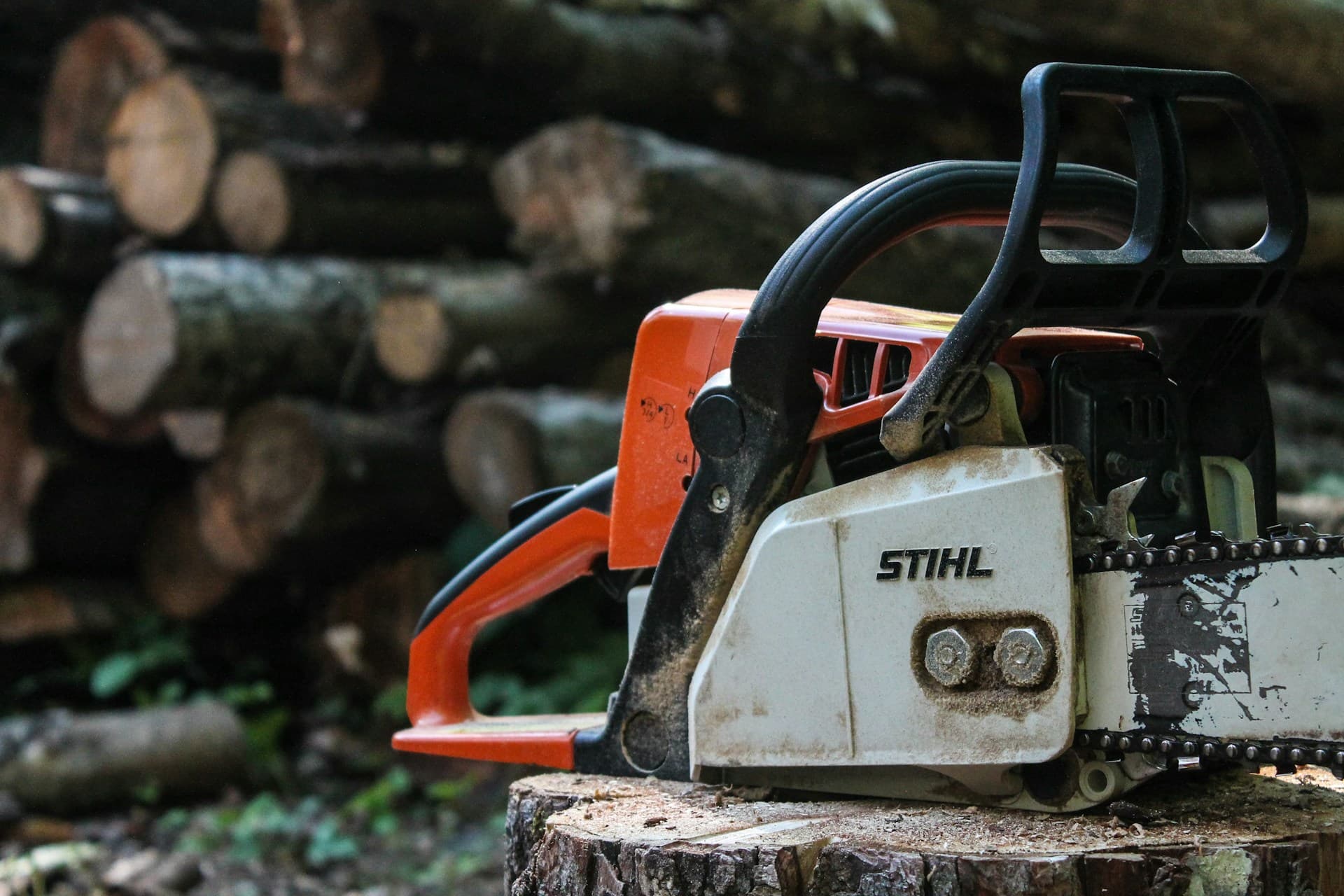
Chainsaw Operation
Comprehensive chainsaw operation SWMS for cross-cutting timber, log cutting, limbing, stump trimming, firewood processing, clearing fallen trees, and cutting timber on construction sites. Covers pre-start inspection, safe cutting techniques, fuel handling, chain maintenance, and sharpening. Includes both petrol and battery/electric chainsaws. Mandatory focus on chainsaw kickback mechanics, reactive forces, chain brake operation, bar length selection, vibration management, and noise exposure. Fully compliant with AS/NZS 4453.3 for protective legwear, AS/NZS 4453.2 for protective footwear, AS/NZS 4453.1 for gloves, and AS/NZS 862 for chainsaw kickback prevention. Pre-filled hazards, controls, and risk ratings.
Kickback is the failure mode that defines this trade. The bar nose contacting wood from the upper quadrant deflects the saw back toward the operator's face faster than human reaction time, and Australian injury data carries hundreds of kickback cases a year. The chain brake — both the manual pull-test and the inertia test against a stationary object before each shift — is the engineering control that catches a faulty brake before the operator's day uses it. Reduced-kickback chain design plus a chain that's properly sharpened and tensioned reduces incidence; bypassed brakes do the opposite.
Chainsaw chaps and trousers to AS/NZS 4453.3:1997 jam a contacting chain in fractions of a second by feeding loose ballistic fibre into the sprocket — saving the operator a femoral artery and a leg in the process. They're not optional gear on professional chainsaw work, and the half-step of treating "old denim" as adequate shows up repeatedly in chainsaw injury reports. Hearing protection on a petrol saw running at 100 to 115 dB(A) — the daily noise dose under the Model Code of Practice on Managing Noise and Preventing Hearing Loss is reached in 15 minutes — Class 5 muffs as the default, plus a mesh visor against face contact.
The tension-and-compression read on a fallen log is the technique that prevents the bar pinching or the log springing back into the operator's chest. Compression side first, tension side second, with the operator standing to the side of the cut, not behind it. Two-tree-length exclusion zones on felling are widely underestimated. Refuelling on a hot exhaust at 200 to 300 degrees Celsius starts grass fires; let the saw cool, refuel on bare ground, keep a fire extinguisher in arm's reach. AHCMOM213 chainsaw operation and maintenance is the unit of competency; White Card on construction sites, current first aid and a remote-work plan where the operator is alone make up the qualifications brought to the cut.
What's In Your SWMS
7 Hazards & Controls
Head lacerations, facial lacerations, eye injuries, neck lacerations, chest wounds, death from rapid deceleration or neck trauma
Use battery/electric chainsaws instead of petrol where practicable — lower power reduces kickback energy.
Select low-kickback chains with reduced-kickback design per AS/NZS 862. Use small-radius bar nose (10-15mm radius) instead of full-radius (25mm).
Establish 2-tree-length or 2x-log-length minimum working distance from other workers. No bystanders in kickback zone (upper 90° arc in front of saw).
- Chain brake (inertia-activated or manual) MANDATORY — must engage in <0.15 seconds. Test before every cut.
- Low-kickback chain design (AS/NZS 862) — significantly reduces kickback energy compared to standard chains
- Reduced-nose-radius bar (10-15mm) instead of full-radius — minimises contact with kickback zone
- Anti-vibration system in chainsaw handle reduces operator fatigue and improves control
- Throttle lock prevents accidental full-throttle operation
- Pre-start chain brake test — pull test (manual engagement check) and inertia test (engine running contact with stationary object)
- Avoid cutting with bar nose — most dangerous technique. Use side of bar for all cuts where possible.
- Bore cutting technique (entering from side) only for experienced operators with full PPE and firm grip
- Proper grip with both hands, thumbs wrapped around handles at all times. Firm stance with feet shoulder-width apart.
- Never cut above shoulder height — loss of control risk. Position body to one side of bar plane.
- Stop chainsaw when not actively cutting — throttle off, let chain coast to stop.
- No single-handed operation — both hands mandatory at all times.
- Maintain firm grip and stance — fatigue increases kickback risk
- Keep body parts away from chain path at all times — no loose clothing or jewellery
Chainsaw protective trousers/chaps (AS/NZS 4453.3:1997 Type A minimum), safety helmet with visor (AS/NZS 1801:2024 + AS/NZS 1337.1:2010), safety boots (AS 2210.3:2019 + AS/NZS 4453.2:1997), hearing protection (AS/NZS 1270:2002), gloves (AS/NZS 2161.1:2016 + AS/NZS 4453.1:1997), long sleeves.
17-Step Work Procedure
Equipment & PPE
Equipment (11)
- Petrol chainsaw (12" bar)
For limbing, small cross-cutting, and firewood processing. Guide bar length 12" (30cm). Engine displacement 30-40cc. Fuel consumption ~1.5 litres per 8 hours.
- Petrol chainsaw (16" bar)
General purpose cross-cutting and log processing. Guide bar 16" (40cm). Engine 40-50cc. Typical choice for contractors and arborists.
- Chainsaw sharpening kit
Round file (5.5mm, 6mm, or 7mm depending on bar pitch), flat file, depth gauge tool, file guide/holder. Dull chains cause operator fatigue and increase kickback risk.
- Bar oil (biodegradable or mineral)
Guide bar lubricant. Type depends on climate: winter-grade for cold, standard for mild. Petrol chainsaws require bar oil top-up every 2-3 tanks.
- 2-stroke fuel mix (50:1 petrol to 2-stroke oil)
Pre-mixed or mixed on-site. Ratio critical: incorrect mix causes engine damage or excessive smoke. Use quality 2-stroke engine oil only.
- Fuel container (approved AS/NZS 2906:2001)
Metal or plastic container approved for fuel storage. Capacity 10-20 litres typical. Must have vented cap and spout. Never refuel directly from jerry cans.
- Log dogs or log holders
Prevent logs rolling during cutting. Anchor logs on bucks/trestles to stabilise and allow safe positioning.
- Cant hook or peavey
Lever tool for repositioning and handling heavy logs (>30kg). Prevent manual carrying of large diameter logs.
- Measuring tape and chalk/marker
For marking cut positions, spacing, and length verification. Prevents repeat cuts and measurement errors.
- First aid kit with trauma supplies
CRITICAL: Include tourniquets, trauma dressings, pressure bandages, sterile gauze, tape. Chainsaw injuries are severe and require immediate advanced first aid.
- Fire extinguisher (dry chemical, minimum 2kg)
For petrol chainsaw fuel/exhaust fires. Station near refuelling area. Verify charge status monthly.
PPE (8)
- Chainsaw protective trousers or chaps (AS/NZS 4453.3:1997)AS/NZS 4453.3:1997
MANDATORY. Type A minimum for general use (20 m/s chain speed). Type C for professional felling. Must cover waist to boot top. Contains ballistic nylon/polyester layers that jam rotating chain within milliseconds. Single-layer protection insufficient — multi-layer design is critical.
- Safety helmet with integrated mesh visor and ear muffs (forestry combination helmet)AS/NZS 1801:2024 (helmet); AS/NZS 1337.1:2010 (visor); AS/NZS 1270:2002 (ear muffs)
Full integrated unit mandatory for chainsaw work. Hard shell (≥3mm) for impact protection. Mesh visor (AS/NZS 1337.1:2010) protects face from flying chips/debris. Integrated ear muffs (AS/NZS 1270:2002) provide Class 5 protection (SLC80 ≥26 dB). Chin strap essential.
- Chainsaw safety boots (AS 2210.3:2019 + AS/NZS 4453.2:1997)AS 2210.3:2019 (safety footwear - Australian-only redesignation); AS/NZS 4453.2:1997 (chainsaw cut protection)
Must meet BOTH standards. Steel cap and steel mid-sole for puncture protection. Chainsaw-specific cut protection (Class 1 minimum = 20 m/s chain speed rating). Anti-slip, oil-resistant sole for muddy/wet conditions. Ankle support mandatory. Many casualties involve leg injuries — boots are critical defence.
- Hearing protection Class 5 (SLC80 ≥26 dB)AS/NZS 1270:2002
Petrol chainsaws produce 100-115 dB(A) at operator ear. Battery chainsaws 85-95 dB(A). Exposure at 100 dB(A) reaches daily dose in 15 minutes without protection. Cumulative and irreversible damage. Class 5 mandatory for petrol operation. Integrated earmuffs in forestry helmet preferred.
- Safety glasses or mesh visor (AS/NZS 1337.1:2010)AS/NZS 1337.1:2010
Impact-rated for protection against wood chips, debris, and ejected material. Mesh visor integrated into forestry helmet is preferred. Separate safety glasses required if using standard helmet.
- Work gloves with vibration dampening (AS/NZS 2161.1:2016 + AS/NZS 4453.1:1997)AS/NZS 2161.1:2016 (general); AS/NZS 4453.1:1997 (chainsaw-specific)
Left-hand glove with chainsaw cut protection (AS/NZS 4453.1:1997) highly recommended. Vibration-dampening material reduces HAVS risk. Full leather or leather/fabric blend. Ensure grip is not compromised — wet/slippery gloves increase drop risk.
- Close-fitting long-sleeve shirt (cotton or flame-resistant)
Protect arms from chips and abrasion. NEVER wear loose, baggy, or flapping clothing that could catch in chain. No jewellery, watches, or bracelets.
- Sun protection (hat under helmet, SPF 50+ sunscreen, long sleeves)
Chainsaw work often occurs outdoors in summer. UV exposure combined with heavy PPE (chaps, boots, helmet) creates heat stress. Reapply sunscreen every 2 hours.
Training & Emergency
Competency Requirements
- Chainsaw Operation Competency (AHCMOM213)training
Competency to safely operate and maintain chainsaws. Covers pre-start inspection, cutting techniques, maintenance, fuelling, and hazard awareness. Certificate III in Arboriculture includes this. Refresher every 2 years recommended.
- Chainsaw Maintenance Competencytraining
Competency in chainsaw maintenance: chain sharpening, tensioning, air filter cleaning, plug inspection, fuel/oil management. Practical skills essential for safe operation.
- Chainsaw Cross-Cutting and Limbing
Specific training in cross-cutting fallen timber, limbing branches, and tension assessment. Recommended for anyone regularly cross-cutting logs. (Note: AHCMOM213 "Operate and maintain chainsaws" is the current cross-cutting unit on training.gov.au; the previously cited "AHCMOM214" does not appear in the current AHC training package register - check training.gov.au for any successor or specialty unit before relying on a specific code.)
- Tree Felling Competency (AHCARB205 or equivalent)
Advanced training for felling standing trees (beyond scope of this template). Required only if work includes directing tree fall.
- General Construction Induction (White Card)
CPCCWHS1001. Mandatory only if chainsaw work is performed on construction sites as defined by WHS Regulations.
- First Aid Certificate (HLTAID011)
Provide First Aid — general first aid training. STRONGLY RECOMMENDED for all chainsaw operators due to high-severity injury risk. Trauma first aid skills are critical. Refresher annually.
- Remote/Isolated Work Awareness
Required if chainsaw work occurs in remote areas without rapid emergency services access. Emphasises self-reliance, communication protocols, and first aid management.
- Hand-Arm Vibration Syndrome (HAVS) Awareness
Awareness of HAVS risks, symptoms, prevention strategies. Relevant for operators using chainsaws >2 hours per day regularly. Free resources available from Safe Work Australia.
Emergency Procedures
Chainsaw kickback resulting in injury: (1) Switch off chainsaw immediately — release throttle and let chain stop; (2) Call 000 immediately; (3) Provide first aid if trained (apply pressure to bleeding, manage airway if unconscious); (4) Do NOT move casualty unless in immediate danger — spinal injuries possible; (5) Preserve scene — note chainsaw position, timber position, weather, and conditions for investigation.
Chainsaw laceration or amputation (SEVERE): (1) Switch off chainsaw; (2) Call 000 immediately and state "severe laceration/amputation from chainsaw" — emergency services will prioritise; (3) Apply DIRECT PRESSURE with trauma dressing — continuous pressure; (4) If life-threatening bleeding after 10 minutes: apply TOURNIQUET above wound. Write time on tourniquet; (5) Keep patient warm and still — do NOT move unnecessarily; (6) Do NOT remove embedded objects; (7) Monitor breathing and consciousness until ambulance arrives; (8) If finger/hand severed: wrap part in clean cloth, ice preservation, transport with patient.
Chain brake malfunction or chainsaw does not stop after impact: (1) Do NOT continue operation — stop immediately and isolate saw; (2) Switch off engine; (3) Engage manual brake pull-test — if brake does not engage, mark saw "DO NOT USE"; (4) Do NOT allow anyone to operate saw until chain brake is repaired by qualified technician; (5) Contact manufacturer or authorised service centre for repair — chain brake is safety-critical component.
Worker overcome by heat stress (signs: excessive sweating, fatigue, dizziness, confusion, slurred speech): (1) Cease operations immediately; (2) Move worker to cool shaded area; (3) Remove helmet/chaps/gloves to increase cooling; (4) Provide cool (not ice-cold) water to drink — small frequent sips; (5) Spray face/neck with water or apply wet cloth; (6) Lay worker down with legs elevated (promotes blood flow to head); (7) Monitor closely — if no improvement in 10-15 minutes or symptoms worsen: call 000.
Fire spreading from chainsaw operation: (1) Cease chainsaw operation; (2) Evacuate all personnel from area; (3) Call 000 and report fire location; (4) Do NOT attempt to contain spreading fire — focus on safe evacuation; (5) Move to upwind side and keep clear.
Everything above, included in your SWMS document.
Get This TemplateWriting a SWMS from scratch?
That's 2-4 hours of research, formatting, and cross-referencing regulations.
We've done the starting work — pick your template, add your details, review.
Or just do this:
- Unlimited documents
- All 70+ templates
- Instant PDF & DOCX
- Cancel anytime
High-Risk Construction Work Categories
Under Australian WHS Regulations (Section 291 - High Risk Construction Work; Chapter 5 Part 5.1 - Plant; Chapter 7 Part 7.2 - Noise), this work is classified as high-risk due to:
- Use of powered mobile plant (Chainsaws are classified as powered mobile plant under WHS Regulations. Chain speed 15-25 m/s (petrol) creates high-energy cutting equipment. Chain brake activation time <0.15 seconds mandatory.)
Australian Standards Referenced
National Guidance Documents
Who Needs This SWMS?
This template is designed for the following trades and roles performing chainsaw operation work.
Frequently Asked Questions
What PPE is mandatory for chainsaw work in Australia?
Mandatory PPE for chainsaw operation includes: (1) Chainsaw protective trousers or chaps (AS/NZS 4453.3, Type A minimum) — CRITICAL protective layer with ballistic nylon that jams chain; (2) Safety helmet with integrated mesh visor and ear muffs (AS/NZS 1801 + 1337 + 1270) — forestry combination helmet is ideal; (3) Chainsaw safety boots (AS/NZS 2210.3 + 4453.2) with steel cap, mid-sole, and chainsaw cut protection Class 1 minimum; (4) Hearing protection Class 5 (SLC80 ≥26 dB) — mandatory for petrol chainsaws producing 100-115 dB(A); (5) Work gloves (AS/NZS 2161, left hand with chainsaw cut protection AS/NZS 4453.1); (6) Long sleeves and long pants (close-fitting, no loose fabric). Additional PPE: high-visibility clothing near roads/traffic, sunscreen SPF 50+, thermal gloves in cold weather.
What is chainsaw kickback and how can I prevent it?
Chainsaw kickback occurs when the upper quadrant of the bar nose (upper 90° arc) contacts wood or a foreign object. The chain's kinetic energy causes the bar to rotate violently upward and backward toward the operator's head/body in a fraction of a second — it happens faster than human reflexes can react. Over 30% of chainsaw injuries are kickback injuries. Prevention requires multiple layers of control: (1) Elimination: use battery/electric chainsaws (lower power) instead of petrol; (2) Engineering: install chain brake (must engage <0.15 seconds) and use low-kickback chain design per AS/NZS 862; (3) Administrative: NEVER use the bar nose for cutting — use side of bar only; avoid cutting with bar above shoulder height; maintain firm two-handed grip with both thumbs wrapped around handles; use proper stance with feet shoulder-width apart; test chain brake engagement before every cut (manual pull test and inertia test); (4) PPE: wear full protective clothing including helmet (protects head from bar), chaps (protects legs from flying chain).
What training and competency is required for chainsaw operation in Australia?
Chainsaw operation competency training is strongly recommended and mandatory under many workplace policies. Standard competency includes: (1) Chainsaw Operation Competency (AHCMOM213) — covers pre-start inspection, safe cutting techniques (including cross-cutting fallen timber), maintenance, and fuelling; (2) Chainsaw Maintenance Competency — practical skills in chain sharpening, tensioning, filter cleaning, spark plug inspection; (3) For standing tree felling: Tree Felling Competency (AHCARB205); (4) On construction sites: General Construction Induction (White Card CPCCWHS1001). First Aid Certificate (HLTAID011) is STRONGLY RECOMMENDED for all chainsaw operators — trauma first aid skills are critical for severe injuries. Refresher training every 2 years is recommended best practice.
How do I maintain my chainsaw safely?
Chainsaw maintenance is critical for safety and performance: (1) Daily pre-start inspection: check chain tension (should not pull >10mm from bar at midpoint), chain sharpness (pulls to one side = dull, file touch-up needed), bar condition (no bent/twisted sections), chain brake function (manual and inertia tests), air filter (clean if clogged), fuel/bar oil levels, throttle lock, recoil starter, spark plug, muffler condition; (2) Chain sharpening: weekly if cutting >8 hours/week; dull chains cause operator fatigue and increase kickback risk; use correct round file size (5.5mm, 6mm, or 7mm depending on chain pitch); sharpen each tooth to same angle and depth; set depth gauges with depth gauge tool after sharpening; (3) Chain tensioning: tension decreases as chain stretches — maintain 10mm pull-away at midpoint; over-tightening stalls engine and causes damage; under-tensioning increases derailment and injury risk; (4) Fuel management: for petrol saws, use correct 2-stroke fuel mix ratio (50:1 petrol to 2-stroke oil) — incorrect ratio damages engine; store fuel in approved AS 2906 container in cool location; drain fuel if storing >1 month or add fuel stabiliser; (5) Post-work: allow saw to cool 30 minutes before storage; clean chain and bar of debris; top up bar oil; inspect for damage.
What are the AS/NZS 4453 standards and why are they critical for chainsaw work?
AS/NZS 4453 is a three-part Australian/New Zealand Standard specifically for chainsaw operator protective equipment: (1) AS/NZS 4453.1 — Protective gloves for hand-held chainsaws; specifies left-hand glove cut protection and vibration-dampening material; (2) AS/NZS 4453.2 — Protective footwear for hand-held chainsaws; requires Class 1 minimum (20 m/s chain speed protection), steel cap, steel mid-sole, anti-slip sole; (3) AS/NZS 4453.3 — Protective legwear for hand-held chainsaws (CRITICAL); specifies Type A (minimum for general use = 20 m/s chain speed) and Type C (professional felling = higher protection); chaps/trousers contain multiple ballistic nylon layers that jam rotating chain within milliseconds when contacted, limiting injury depth. These standards are essential because: regular work clothing offers NO protection against chainsaw contact — a bare leg hits chain and suffers amputation; ballistic nylon in compliant chaps absorbs chain energy and jams sprocket before deep penetration. Wearing non-compliant "work pants" vs compliant chainsaw chaps can mean the difference between minor laceration and amputation. Compliance with AS/NZS 4453.3 is non-negotiable for any chainsaw operation.
Can I operate a chainsaw alone or do I need to work with others?
Solo chainsaw operation is possible but carries higher risk, particularly in remote/isolated areas. Best practice recommendations: (1) If working alone: avoid remote locations; operate in daylight hours only; ensure mobile phone is charged and functional; brief someone of work location and expected completion time — arrange check-in protocol; carry first aid kit with trauma supplies (tourniquets essential); carry fire extinguisher for petrol saws; avoid working in bad weather; limit to simple cross-cutting tasks (avoid tree felling or unstable situations); (2) For remote/isolated work: MINIMUM 2 workers recommended — one operates, one provides spotting and first aid backup; improves safety significantly; (3) For complex tasks (tree felling, suspended branches, steep slopes): 2+ workers MANDATORY; (4) Never operate alone in extreme fire danger — fire spread too rapid to control single-handed. On construction sites or commercial work, check client SWMS requirements — may mandate minimum crew size or never solo operation.
What first aid is required for chainsaw injuries?
Chainsaw injuries are SEVERE and require immediate advanced first aid. First aid kit MUST include trauma supplies: tourniquets (minimum 2), trauma dressings, pressure bandages, sterile gauze packs, hypoallergenic tape, latex-free gloves. Critical procedures: (1) Severe laceration or amputation (LIFE-THREATENING): Call 000 IMMEDIATELY — do not delay; (2) Apply DIRECT PRESSURE with trauma dressing for minimum 10 minutes — continuous pressure saves lives; (3) If bleeding does not stop after 10 minutes and is life-threatening: apply TOURNIQUET above wound (between wound and heart), at least 5cm above wound, tighten until bleeding stops; write time applied on tourniquet with permanent marker — critical for medical staff; DO NOT remove tourniquet — medical professionals assess if safe; (4) Keep patient warm to prevent shock; do not elevate limb above heart (increases bleeding); (5) For severed finger/hand: wrap part in clean cloth, place in ice-filled plastic bag, transport with patient to hospital — modern surgery may reattach if properly preserved. First Aid Certificate (HLTAID011) is STRONGLY RECOMMENDED for all chainsaw operators. Annual refresher training on trauma first aid is best practice.
How often should I sharpen my chainsaw chain?
Chain sharpening frequency depends on usage and wood type: (1) Visual assessment before each use: if chainsaw pulls to one side during operation on flat surface = one tooth is dull and higher, requires sharpening; if creating fine sawdust instead of wood chips = dull chain, cannot cut efficiently; dull chains cause operator fatigue and increase kickback risk; (2) Typical schedule: weekly touch-up if cutting >8 hours/week; after every 8-12 hours of cutting for professional users; every 40-50 hours of cutting if kept in storage; (3) Sharpening procedure: use appropriate round file size (5.5mm, 6mm, or 7mm depending on chain pitch — check manual); sharpen each tooth to same angle and depth — uneven sharpening causes pulling to one side; use file guide/holder for consistent angle; after sharpening, set depth gauges (limiting links) with depth gauge tool to manufacturer specs — incorrect depth creates unsafe cutting or clogging; (4) Professional sharpening: if unsure of sharpening technique, use professional service — incorrectly sharpened chain is dangerous (pulling, binding, increased kickback). Sharp chain is safer chain — requires less operator force, more efficient cutting, less fatigue, and lower kickback risk.
What is HAVS (hand-arm vibration syndrome) and how do I prevent it?
HAVS (Hand-Arm Vibration Syndrome) is a progressive, non-reversible condition caused by prolonged exposure to vibration from powered tools like chainsaws. Symptoms include: vibration white finger (colour changes and numbness in fingertips in response to cold), loss of fine motor control, reduced grip strength, pain in hands/wrists, and eventually permanent nerve damage and arthritis. Exposure is measured in m/s² A(8) — Australian exposure action value is 2.5 m/s² A(8), exposure limit value is 5 m/s² A(8). Most petrol chainsaws produce 3-7 m/s² at operator hands. Daily exposure >2 hours significantly increases HAVS risk. Prevention strategies: (1) Substitution: use battery/electric chainsaw (lower vibration 2-5 m/s²) instead of petrol; (2) Engineering: select chainsaw with anti-vibration technology (isolated engine mounts, elastomer handles); ensure anti-vibration system is functioning at pre-start inspection; use vibration-dampening gloves; (3) Administrative: limit continuous operation to 30-minute blocks with 10-minute rest breaks; rotate operators every 30 minutes; maintain relaxed grip — let chainsaw do work, do not force; warm hands before operation and during breaks (cold increases HAVS symptoms); avoid operation in cold weather if possible; (4) Monitoring: watch for early signs (colour changes, numbness, tingling) and report to supervisor immediately. HAVS is cumulative and permanent once established — prevention is critical.
Do I need a SWMS for chainsaw work?
Yes, a SWMS (Safe Work Method Statement) is STRONGLY RECOMMENDED and often MANDATORY for chainsaw work. Requirements vary: (1) MANDATORY on construction sites if work involves high-risk construction activities (chainsaws are classified as powered mobile plant); (2) STRONGLY RECOMMENDED for all professional/commercial chainsaw work; (3) Recommended best practice even for DIY homeowner use — provides structured hazard assessment and control planning. A comprehensive SWMS identifies hazards (kickback, laceration, noise, vibration, falling timber, fire), assesses risks, specifies controls (engineering and administrative), defines PPE requirements, and outlines emergency procedures. The process of developing a SWMS helps operators think through hazards and controls before work commences — reducing injury risk significantly. This template provides a SWMS that can be customised to site-specific conditions.
What are the fire safety requirements for operating petrol chainsaws?
Petrol chainsaws create several fire hazards and are subject to fire weather restrictions. Safety requirements: (1) Fuel storage: must use approved AS 2906 container (metal or approved plastic) with secure cap and vented opening; store in cool, shaded location away from heat sources; never store near occupied buildings; (2) Refuelling: engine MUST be OFF and cooled (minimum 5 minutes) before refuelling — exhaust muffler reaches 200-300°C; move saw away from work area to refuelling station minimum 3m from work zone; use approved fuel dispenser nozzle, NEVER pour directly from jerry cans; place absorbent mat under refuelling point; allow fuel to settle 2-3 minutes before restarting; (3) Fire extinguisher: dry chemical fire extinguisher (minimum 2kg) stationed within arm's reach of refuelling area; check charge status monthly; (4) Site cleanup: clear dry grass, leaves, and debris from work area — accumulated material ignites from exhaust sparks; (5) Fire weather restrictions: check local fire authority ratings (CFA VIC, RFS NSW, QFES QLD, etc.); cease all petrol chainsaw operation during total fire bans — non-compliance results in heavy fines (up to $60,000+ in some states); high fire danger rating (very high/extreme) — restrict operation to early morning when humidity high and fuel moisture elevated; battery/electric chainsaws safe during fire bans (zero ignition risk); (6) Muffler inspection: ensure muffler is intact and not clogged with leaves/debris — clogging increases exhaust temperature and spark intensity.
What is the correct starting technique for a chainsaw?
Correct chainsaw starting procedure is critical for safety and preventing damage: (1) Preparation: place chainsaw on flat, stable ground in secure position (between legs is unsafe — legs at risk if engine starts unexpectedly); (2) Engage chain brake: push brake guard forward to activate brake — chain must be stationary before starting; (3) Set choke (cold start only): if engine is cold, set choke to full position; warm engine — no choke adjustment needed; (4) Prime fuel pump (if equipped): press primer bulb 5-10 times to draw fuel to engine — check manufacturer instructions; (5) Proper grip: place one foot through handle and hold saw firmly between legs or against body — never hold saw in air or between legs loosely; (6) Pull recoil starter: pull starter rope with firm, steady motion — do NOT yank aggressively; full-length pull needed for best compression; (7) Engine starts: once engine catches, let idle briefly (30-60 seconds) to warm up and stabilize; (8) Release choke: gradually reduce choke as engine warms — do NOT operate at full choke during cutting (runs rich, wastes fuel); (9) Chain brake release: disengage chain brake for operation. CRITICAL: NEVER drop-start (dropping saw on handle to start) — this is prohibited and creates safety hazard. Never start chainsaw held in air or between legs — risk of uncontrolled movement if engine starts.
Get Your Chainsaw Operation SWMS
Pre-filled. Risk-rated. Ready in 5 minutes.
Get Your SWMS PDFNo credit card required. First SWMS is free.
