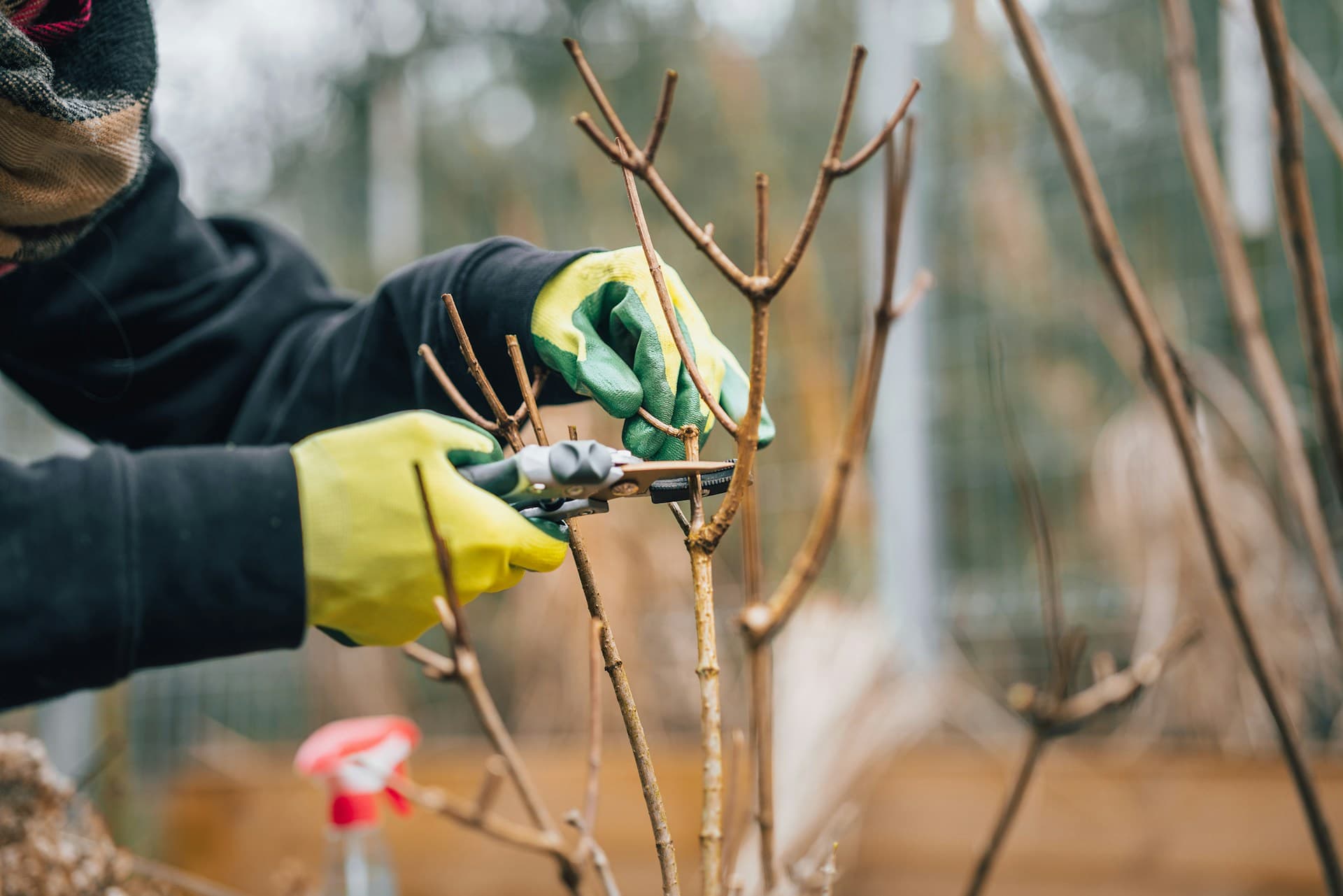
Tree Pruning and Removal (Under 4 Metres)
Pruning, lopping, and removal of trees and large shrubs under 4 metres height. Covers chainsaw operation, pole pruner and pole saw use, chipper and mulcher operation, manual handling of branches and timber sections, optional stump grinding, and debris removal. Comprehensive controls for chainsaw injuries (kickback, laceration, amputation), falling branches and widow makers, overhead powerline proximity and electrocution risk (CRITICAL hazard), chipper/mulcher entanglement, manual handling strain from heavy branches and log sections, UV and heat exposure from outdoor physical work, and high noise levels from chainsaws (100-115 dB(A)), chippers (95-110 dB(A)), and stump grinders (95-105 dB(A)). Work near overhead powerlines requires strict separation distances and electricity distributor consultation. Pre-filled hazards, controls, and risk ratings.
Tree work under 4 metres covers most residential pruning and small-tree removal — but "under 4 metres" doesn't make the trade safe, it just changes the technique. The aerial component, however brief, brings widow-maker risk: a loose or dead limb suspended in the canopy that drops without warning when something below it gets cut. The lookout-and-drop-zone discipline matters more on small trees than people expect, because crews routinely skip exclusion zones and personal lookouts on jobs that "look quick".
Overhead powerlines are the critical hazard column on suburban tree work. Three metres of clearance for lines below 66kV, six metres for higher voltages, and trees that pass through or near service drops require the electricity distributor to be notified before any cut goes in. Working "near" a powerline still requires distributor-issued live-line clearance permits in many states; many small operators wrongly believe a visual three-metre clearance covers it. The Model Code of Practice on Managing Electrical Risks in the Workplace covers the broader frame, with the state distributor's authorisation process layered on top.
Chainsaw chaps and trousers to AS/NZS 4453.3:1997, Class 5 hearing protection, mesh visor and a helmet to AS/NZS 1801:2024 (supersedes :1997; no :2015 edition exists) are the personal control set. Chipper feed-roller entanglement is the catastrophic mechanism on the green-waste end of the work — never feed by hand, use a push stick, no drawstrings, no loose sleeves. AHCMOM213 (Operate and maintain chainsaws), AHCARB202 (Fell small trees) for tree felling within scope, working-near-powerlines authorisation where applicable, current first aid and a White Card on construction sites cover the qualifications. (Note: AHCARB204 is "Undertake standard climbing techniques" and AHCARB205 is "Operate and maintain chainsaws" - neither is the tree-felling unit; AHCARB202 is the correct cite for felling small trees.) Above 4 metres or rigging into a canopy, the SWMS handover happens — the climbing arborist takes over.
What's In Your SWMS
8 Hazards & Controls
Severe lacerations and cuts through skin and muscle, partial or complete amputation of limbs or fingers, penetrating injuries to abdomen/chest, uncontrolled bleeding and shock, permanent disability, death from blood loss
Where possible, use pole pruners or pole saws instead of hand-held chainsaw for upper branches. Eliminate hand-held chainsaw use on upper branches - reduces kickback exposure.
Use electric chainsaws (lower power, less kickback risk) for smaller branches. Use professional arborist services for complex tree felling.
Establish exclusion zone minimum 2x tree height in all directions. Keep other workers minimum 10m from chainsaw operation.
- Chainsaw with modern safety features: automatic chain brake (within 300ms of kickback), low-vibration design, throttle kill switch, muffler with heat shield
- Maintain chain sharpness - dull chain increases kickback risk by 5-10x and requires excessive force
- Install throttle kill switch and run-on stop mechanism for quick engine stop
- Anti-vibration mounts and dampers reduce hand-arm vibration (leading to HAVS long-term)
- Guide bar with round nose profile (8mm nose radius minimum) instead of square nose - significantly reduces kickback initiation
- Use full-skip chain for cleaner cuts, reduces binding and kickback
- Maintain correct chain tension - loose chain jumps off, tight chain increases kickback response force
- AHCMOM213 (Operate and maintain chainsaws) competency MANDATORY - comprehensive training in kickback zones, proper stance, cutting techniques
- AHCARB202 (Fell small trees) competency required for any tree felling operation in scope of this template (under 4m). Note: AHCARB205 is "Operate and maintain chainsaws" (a chainsaw competency, NOT tree felling).
- Never operate chainsaw one-handed - maintain two-handed grip at all times
- Never operate chainsaw above shoulder height (increases instability and kickback risk)
- Do not operate chainsaw while fatigued - fatigue impairs reaction time
- Maintain firm stance with feet shoulder-width apart, knees slightly bent - prevents being thrown by kickback force
- Never reach across body with chainsaw - reposition feet instead
- Use proper cutting technique: angle bar away from body, keep elbows in, feed wood into chain smoothly
- Never cut through knots, nails, or hidden metals (increases kickback 10x)
- Never operate chainsaw in high wind (impairs control)
- Avoid cutting above shoulder or below hip when possible - use ladder for upper cuts
- Never attempt to free jammed chain - shut down engine and carefully extract
- Sharpen chain every 1-2 hours of use - do not continue with dull chain
- Inspect chain daily for tension, damage, and sharpness before starting work
- Daily toolbox talk reinforcing kickback hazard and safe cutting techniques
Chainsaw protective chaps/trousers (AS/NZS 4453.3:1997) - MANDATORY and CRITICAL. Safety boots with chainsaw protection (AS 2210.3:2019 + AS/NZS 4453.2:1997). Forestry helmet with integrated face screen (AS/NZS 1801:2024 + AS/NZS 1337.1:2010) for facial protection from kickback contacts. Work gloves (AS/NZS 2161.1:2016 + AS/NZS 4453.1:1997) with anti-vibration. Long-sleeved shirt and long trousers.
18-Step Work Procedure
Equipment & PPE
Equipment (12)
- Petrol chainsaw (20-50cc, various bar lengths)
Bar length 14-20 inches typical for residential trees. Must have automatic chain oiler, chain brake, throttle kill switch, and muffler. AHCMOM213 competency required. Inspect chain sharpness and tension daily.
- Pole pruner/saw (petrol or electric)
Petrol 20-25cc or electric 80-120V for reaching upper branches without ladder. Maximum reach 3-4m. Reduces falls from ladder. Regular inspection of pruning head and cutting blades.
- Loppers, hand saws, and secateurs
Manual pruning tools for smaller branches and precision cuts. Maintain sharp blades. Bypass-type loppers more effective than anvil type.
- Chipper/mulcher (electric or petrol)
For processing branches into mulch. Feed roller entanglement is critical hazard. Never feed material into hopper with hands - use push stick. Operator training essential. Check blade condition before use.
- Hand saw (pruning/folding saw)
For making clean cuts on branches without power equipment. Maintain sharp blade. Essential for precision work.
- Ropes and slings for branch lowering (3-4mm diameter)
For controlled lowering of large branches instead of allowing free fall. Prevents struck-by injuries. Inspect for fraying, damage, and load ratings.
- Wheelbarrow (heavy-duty, pneumatic tyres)
For transporting branches and debris to chipper or collection point. Pneumatic tyres for rough ground.
- Tarpaulin or debris collection tarp (min 3x3m)
For containing fallen branches and preventing scatter across site. Easier cleanup than individual branch collection.
- First aid kit (comprehensive)
Include eye wash (for sawdust in eyes), sterile dressings, compression bandages for bleeding control, tourniquets for severe limb injuries, burn dressings for fuel/heat burns.
- Fuel containers (approved metal containers)
For petrol storage for chainsaw and chipper. Minimum 10m away from work area. Never refuel running equipment.
- Chainsaw sharpening equipment (file, gauge)
Maintain sharp chain throughout work. Dull chain increases kickback risk and requires more force. Sharpen every 1-2 hours of use.
- Hearing protection station or central supply
Store Class 5 earmuffs/earplugs in weatherproof container at work area for quick access.
PPE (9)
- Chainsaw protective chaps or trousersAS/NZS 4453.3:1997
CRITICAL PPE for chainsaw operation. Chaps must be form-fitting with cut-resistant material (polyester or aramid fibre). Minimum 30cm leg coverage. Protective trousers full length (both legs) with protective material from waistband to ankles. Replace after any chainsaw cut. Check integrity daily.
- Safety helmet with integrated face screen and ear muffsAS/NZS 1801:2024 (helmet); AS/NZS 1337.1:2010 (face screen); AS/NZS 1270:2002 (ear muffs)
Forestry helmet with full face screen for flying debris/sawdust protection and integrated Class 5 hearing protection. Prevents eye injuries and severe facial lacerations. Face screen must be polycarbonate or similar, minimum 1mm thickness. Check for cracks or damage daily.
- Safety boots with chainsaw protectionAS 2210.3:2019 (safety footwear); AS/NZS 4453.2:1997 (chainsaw cut protection)
Steel cap with cut-resistant overlay on sides and ankles. Chainsaw-rated boots include protective material rated for chain speed contact. Oil-resistant sole for slippery conditions.
- Safety glasses or face shieldAS/NZS 1337.1:2010
Impact-resistant polycarbonate for protection against flying sawdust, branch fragments, and debris. Wear under face screen on helmet or separately. Anti-fog coating recommended.
- Hearing protection Class 5AS/NZS 1270:2002
Required for chainsaw (100-115 dB(A)), chipper (95-110 dB(A)), and stump grinder (95-105 dB(A)) operation. Earmuffs or custom-moulded earplugs. Integrated muffs on forestry helmet satisfy this requirement. Ensure proper fit and seal.
- Work gloves with vibration dampeningAS/NZS 2161.1:2016 (general); AS/NZS 4453.1:1997 (chainsaw-specific for left hand)
For chainsaw and stump grinder operation, gloves reduce vibration transmission and provide grip. Material should be leather with synthetic padding. Remove gloves when using loppers/secateurs for better dexterity. Left-hand glove with chainsaw cut protection (AS/NZS 4453.1:1997) recommended.
- High-visibility clothingAS 4602.1:2024
Hi-vis vest or hi-vis shirt (Class D minimum) for visibility to spotters and traffic. Essential if work near roads or around public areas.
- Sun protection (hat, long sleeves, sunscreen)
Wide-brim hat (minimum 7.5cm brim) or hard hat with neck flap. Long-sleeved work shirt (UPF 50+ rated if possible). SPF 50+ broad-spectrum sunscreen applied every 2 hours. Sunglasses with UV protection (optional, if not wearing helmet face screen).
- Long trousers (protective material)
Full-length heavy-duty trousers for abrasion and scratch protection. Chainsaw chaps/protective trousers replace standard trousers. Tuck into boots to prevent debris entry.
Training & Emergency
Competency Requirements
- Chainsaw Operation Competency (AHCMOM213 or equivalent)ticket
Mandatory for any worker operating a chainsaw. Unit of competency AHCMOM213 (or AHCMOM213A, AHCMOM213B) from a Registered Training Organisation (RTO) or equivalent competency from former training. Covers chainsaw safety, maintenance, operation technique, and hazard management. Typical duration 2-3 days or 40-50 hours.
- Tree Felling Competency (AHCARB202 - Fell small trees, or higher AHCARB unit for larger trees)ticket
Required for any tree felling operations (removal of standing trees). The correct AHC training package unit for felling small trees (under 4m, the scope of this template) is AHCARB202 "Fell small trees". The previously cited "AHCARB205 (Fell trees using chainsaws)" is incorrect - AHCARB205 is actually "Operate and maintain chainsaws" (a chainsaw competency, not a tree-felling competency). For trees larger than this template's scope (over 4m), additional/higher AHCARB units apply (e.g. AHCARB201 series for advanced felling). Typical duration 3-5 days.
- Chipper/Mulcher Operation Trainingtraining
Required for any worker operating a chipper or mulcher. Training must cover entanglement hazards, safe feeding techniques, feed door interlock, emergency stop operation, and projectile discharge. Can be conducted in-house by experienced supervisor or via external training provider. Typical duration 1-2 hours.
- Working Near Overhead Powerlines Awarenesstraining
Mandatory for tree work near powerlines (within 10m). Training must cover safe approach distances (3m for <66kV, 6m for 66-132kV), electricity distributor notification, risk of electrocution, and procedures if powerline contact occurs. Typical duration 1-2 hours. Provider: electricity distributor (often free) or external WHS trainer.
- Construction Induction Card (White Card)
Required only if work is on construction sites. Most residential tree work is not on construction sites. Check whether SWMS is being conducted on registered construction site.
- Stump Grinder Operation (AHCARB212 - Operate and maintain stump grinding machines)
Required only if stump grinding is part of work scope. The current unit of competency on training.gov.au is AHCARB212 "Operate and maintain stump grinding machines" (which superseded AHCARB206). The previously cited "AHCMOM214" is a fabricated unit code - it does not exist on training.gov.au. Covers operation, hazard management, vibration and noise control. Not required if stump grinding is subcontracted to specialist.
- Ladder Safety and Working at Height (AS/NZS 1576)
Recommended for any worker using ladders for tree work. Covers ladder selection, positioning, stability, fall prevention, and 3-point contact technique. Typical duration 1-2 hours. Can be in-house training.
- First Aid Certificate (HLTAID011 Provide First Aid)
Strongly recommended for at least one team member. Essential given severe injury risks (chainsaw laceration, falling branches, powerline electrocution). Current certificate required. Typical duration 1 day.
- Arboriculture or Tree Work Experience
Demonstrated practical experience in tree pruning, removal, and maintenance. New workers should be supervised by experienced arborist for first 5-10 days. Experience requirement depends on complexity of trees and hazards.
Emergency Procedures
CHAINSAW KICKBACK INJURY TO LEGS/TORSO: Stop work immediately. If bleeding present, apply direct pressure and tourniquet. Even with protective chaps, lacerations through chaps and into leg tissue possible with deep impacts. Call 000 for any significant bleeding or deep wounds. Move worker away from chainsaw and other equipment. Monitor for shock symptoms: cold skin, rapid pulse, weakness, confusion. Keep worker calm and lying down.
ELECTROCUTION FROM POWERLINE CONTACT: DO NOT TOUCH worker if still in contact with live powerline. Call 000 immediately. Contact electricity distributor emergency line (posted on powerline pole). Do NOT attempt rescue until circuit confirmed de-energised by distributor. Once safe, begin CPR if unresponsive and not breathing. Treat for severe electrical burns (surface burns plus internal tissue damage along current pathway). Cardiac rhythm disturbances may develop - continue CPR until paramedics take over.
FALLING BRANCH STRUCK HEAD: Immediately assess consciousness and responsiveness. Call 000 if any head impact or loss of consciousness. Do NOT move worker if spinal injury suspected - stabilize head and neck. Monitor for deterioration: headache, dizziness, confusion, nausea, vision changes. If loss of consciousness develops, place in recovery position (side-lying) to keep airway open and allow drainage. Spinal injury protocols: minimize movement, log-roll if repositioning needed.
CHIPPER ENTANGLEMENT - Hand/Arm Caught: Do NOT attempt to extract trapped limb manually. Call 000 immediately. Shut down chipper engine. Assess for continued bleeding - may need tourniquet even while trapped if severe arterial bleeding. Support and stabilize trapped limb. Prepare for emergency amputation if circulation cut off and cannot be restored quickly. Do NOT remove tourniquet once applied - paramedics continue.
HEAT STROKE - LIFE-THREATENING: Call 000 immediately. This is a medical emergency (mortality rate 10-50% if untreated). Move worker to shade immediately, remove all excess clothing including hat/helmet if safe, apply aggressive cooling using water spray/immersion and ice packs on neck, armpits, and groin. Do NOT give fluids if worker is confused or semi-conscious (aspiration risk). Monitor continuously for recovery of consciousness. Continue cooling until paramedics arrive. Do NOT wait for cooling to improve symptoms - begin treatment immediately.
TREATED TIMBER DUST INHALATION: Move worker to fresh air immediately. Remove work clothes (contaminated with dust). If respiratory symptoms develop (coughing, shortness of breath, chest tightness, wheezing): call 000 or seek urgent medical attention. Worker should not re-enter high-dust areas until symptoms resolve. Long-term exposure to arsenic/copper from CCA/ACQ timber may require follow-up medical monitoring and pulmonary function testing.
LADDER FALL FROM HEIGHT: Assume spinal injury until proven otherwise. Do NOT move worker. Immobilize spine: stabilize head/neck, support torso, do not roll or flex. Call 000 for any height over 2m or any loss of consciousness. If fall less than 2m and worker conscious and alert: allow assessment before moving. For any concerning symptoms (headache, neck/back pain, tingling, weakness), call 000 and follow spinal protocols.
POLE PRUNER/POLE SAW DROP: If pole pruner falls from height, assess for head impact (if fell on operator). If struck on head/face: call 000, apply pressure if bleeding, monitor for head injury symptoms. If no impact injury, tool may be recovered and inspected for damage before reuse.
Everything above, included in your SWMS document.
Get This TemplateWriting a SWMS from scratch?
That's 2-4 hours of research, formatting, and cross-referencing regulations.
We've done the starting work — pick your template, add your details, review.
Or just do this:
- Unlimited documents
- All 70+ templates
- Instant PDF & DOCX
- Cancel anytime
High-Risk Construction Work Categories
Under Australian WHS Regulations (Section 291 - High Risk Construction Work (high-risk tree work); Chapter 4 Part 4.4 - Hazardous Manual Tasks; Chapter 7 Part 7.2 - Noise; Chapter 4 Part 4.3 - Management of hazardous substances; Chapter 6 - Management of electrical risks), this work is classified as high-risk due to:
- Involves use of powered mobile plant (Petrol-powered chainsaw (various bar lengths), electric pole pruner/saw, gas-powered chipper/mulcher, petrol-powered stump grinder. All operators require appropriate competency certifications.)
- Work at height (including ladder work) (Ladder work for pruning upper branches even on trees under 4m. Risk of falls from ladder or slips on wet bark/branches.)
- Work on or near energised electrical installations (Overhead powerlines represent CRITICAL hazard for tree work. Safe approach distances: 3m minimum for <66kV lines, 6m minimum for 66-132kV lines. Trees growing through or near powerlines require electricity distributor notification and clearance.)
Australian Standards Referenced
National Guidance Documents
- Safe Work Australia - Model Code of Practice: Managing Risks of Chainsaw Use
- Safe Work Australia - Guide to Hazard Identification, Risk Assessment and Risk Control
- Safe Work Australia - Managing Noise and Preventing Hearing Loss at Work
- Safe Work Australia - How to Manage Work Health and Safety Risks - Electrical Hazards
- Safe Work Australia - Hazardous Manual Tasks
- Electrical Safety and Bushfires - Working Near Overhead Powerlines
Who Needs This SWMS?
This template is designed for the following trades and roles performing tree pruning and removal (under 4 metres) work.
Frequently Asked Questions
What are the key hazards in tree pruning and removal work?
This SWMS identifies seven major hazards: (1) Chainsaw injuries - kickback, lacerations, amputation - require AS/NZS 4453.3 protective chaps and AHCMOM213 competency. Kickback is the leading cause of chainsaw injuries. (2) Falling branches and widow makers - uncontrolled branch fall from 4m height impacts with 500+ kg force. Use rope-lowering technique. (3) Overhead powerline contact - CRITICAL hazard causing electrocution. Maintain 3m safe distance for typical residential lines (<66kV), 6m for medium voltage. Contact electricity distributor before work. (4) Chipper entanglement - feed roller draw-in causes amputation in milliseconds. Use push-stick only, never hands in hopper. (5) Manual handling of heavy branches (10-30kg) causes back, shoulder, and knee injuries. (6) UV and heat stress from outdoor work - Australian outdoor workers have 10x greater skin cancer risk. (7) Noise from chainsaws (100-115 dB(A)) causes permanent hearing loss.
What training and competencies are required for tree pruning and removal?
Mandatory competencies: AHCMOM213 (Operate and maintain chainsaws) required for any chainsaw use - covers safety, maintenance, and hazard management (2-3 days training). AHCARB202 (Fell small trees) required for tree removal operations within this template's scope (under 4m) - covers felling techniques and branch hazard management (3-5 days). Note: the previously cited "AHCARB205" is actually "Operate and maintain chainsaws" - a chainsaw competency, NOT tree felling. AHCARB212 (Operate and maintain stump grinding machines) required only if stump grinding is part of scope (note: "AHCMOM214" was previously cited but does not exist on training.gov.au - the correct code is AHCARB212, which superseded AHCARB206). Mandatory training: Working near overhead powerlines (1-2 hours) if work within 10m of powerlines - required for all team members. Chipper operation training (1-2 hours) if using chipper/mulcher. Recommended: First aid certificate (HLTAID011) given severe injury risks. Ladder safety and working at height training (1-2 hours) if ladder work required.
What is the critical control for chainsaw safety?
Chainsaw protective chaps or trousers to AS/NZS 4453.3 are the MOST CRITICAL PPE item - they must be worn by every chainsaw operator. Chaps contain cut-resistant material (polyester or aramid fibre) that jams the chain if contacted, typically stopping kickback injuries before they cause severe lacerations or amputation. Full-length protective trousers (both legs) provide equivalent protection. Chaps must fit properly and be secured with velcro/straps. Replace chaps after any chainsaw cut. Additional critical controls: maintain sharp chain (reduces kickback by preventing binding and binding), never operate one-handed, avoid kickback zones (do not use bar tip for cutting), keep elbows in and firm stance, use forestry helmet with face screen.
How do you safely work near overhead powerlines when pruning trees?
Powerline safety procedures: (1) BEFORE starting work, identify all powerlines within 10m of tree. Check powerline pole for voltage marking and safe approach distance sign. (2) MANDATORY: Contact electricity distributor minimum one week before work if tree is within safe approach distance (3m for typical residential <66kV, 6m for 66-132kV). Distributor phone number is posted on powerline poles. (3) Do NOT start any work without distributor approval or presence - they may trim powerline, isolate circuit, or determine work is unsafe. (4) Maintain safe approach distances: 3m minimum for low voltage, 6m for medium voltage. Mark safe zone with barriers. (5) Assume ALL powerlines are LIVE and energised - never test or touch. (6) If accidental contact occurs: DO NOT TOUCH worker or powerline, call 000 and distributor, wait for de-energisation before rescue. (7) Use non-conductive tools (fibreglass poles) near powerlines.
What is the proper technique for lowering branches to prevent struck-by injuries?
Rope-lowering technique is the critical control for falling branch hazards: (1) For branches 10cm diameter or larger, never allow free fall. (2) Secure a rope above branch position (tie to stable anchor or spotter holds). (3) Make partial cut with chainsaw (do not sever completely). (4) Control descent by managing rope tension - spotter carefully lowers branch at controlled speed instead of free fall. (5) Once branch reaches ground level, complete the final cut. (6) This technique reduces fall energy from 500+ kg impact force to near zero - prevents crushing injuries to head/torso. (7) Two operators required: one cutting, one managing rope descent with continuous communication. (8) Never stand directly below branches being lowered - position to side at minimum 2m distance. (9) Establish drop zone (2x tree height in all directions) with exclusion barriers before starting work.
What are the entanglement hazards with chipper/mulcher machines?
Chipper/mulcher entanglement is a CRITICAL hazard: (1) Feed roller operates at 200-400 rpm, much slower than final cutting blades (1200-3000 rpm), but draw-in force exceeds human strength. (2) Hand or arm contact with feed roller causes immediate draw-in - operator cannot stop or escape. (3) Injuries progress from laceration to crushing amputation in milliseconds. (4) Multiple fatalities from chipper entanglement documented in Australia and globally. (5) Secondary hazard: hard objects (rocks, metal, tree nails) become projectiles (30+ mph) from discharge chute, causing blindness and facial/head injuries. CRITICAL CONTROLS: (1) NEVER use hands to feed material into hopper - ALWAYS use push-stick or feed tongs (operator maintains 1m+ distance from feed opening). (2) Break branches into small pieces (max 10cm diameter) for proper feeding. (3) Establish 3m exclusion zone around chipper during operation - no personnel in discharge zone. (4) Only trained operators use chipper. (5) Emergency stop button on operator controls. (6) Feed door interlock - engine stops if door opened.
How do you prevent heat stroke and heat stress during summer tree work?
Heat stress management: (1) Check UV index and heat forecast before starting work each day. (2) Schedule work outside peak UV hours (10am-2pm) where possible - start early (6-7am in summer) for cooler morning work. (3) Schedule heavy physical tasks (felling, climbing, loading) for morning cool period. (4) Establish mandatory hydration protocol: drink 250mL water or electrolyte drink every 15-20 minutes (not waiting until thirsty). (5) Rest breaks in shade minimum 10-15 minutes every hour if temperature exceeds 35°C. (6) Continuous monitoring of all workers for heat stress symptoms: headache, excessive sweating, confusion, dizziness, nausea, fatigue. (7) Never allow worker to work alone - buddy system for monitoring. (8) HEAT STROKE is a LIFE-THREATENING EMERGENCY: call 000 immediately, move to shade, remove clothing, aggressive cooling with water spray and ice packs on neck/armpits/groin. Do NOT wait for improvement - begin treatment immediately. (9) Temporary shade shelter (gazebo) at work area. (10) Lightweight, light-coloured PPE where possible. (11) Apply SPF 50+ sunscreen before work and reapply every 2 hours.
What causes chainsaw kickback and how do you prevent it?
Chainsaw kickback: (1) Occurs when chain catches on object during cutting, typically at bar tip (top of bar), causing rapid reverse rotation and throwing chainsaw/cutting hand toward operator at 40-60 mph. (2) Leading cause is contacting knots, nails, or binding in wood during cutting. (3) Dull chain significantly increases kickback risk (5-10x) by causing binding and requiring excessive operator force. (4) Loose chain jumps off guide bar, tight chain increases force response. PREVENTION CONTROLS: (1) Maintain sharp chain - sharpen every 1-2 hours or when cutting force increases noticeably. (2) Maintain correct chain tension (manufacturer specification). (3) Use guide bar with round-nose profile (8mm radius minimum) instead of square nose - dramatically reduces kickback initiation. (4) Never cut with bar tip - always use side of bar for cutting. (5) Never cut through knots, nails, or metals (increases kickback 10x). (6) Proper cutting technique: angle bar away from body, keep elbows in, feed wood smoothly. (7) Firm stance with feet shoulder-width apart, knees bent, ready to absorb forces. (8) Never operate one-handed. (9) Modern chainsaws have automatic chain brake that stops chain within 300ms of kickback detection - reduces injury severity. (10) Wear chainsaw protective chaps (AS/NZS 4453.3) - most critical PPE for kickback protection.
What PPE is mandatory for tree pruning and removal work?
Mandatory PPE for all tree work: (1) Chainsaw protective chaps/trousers (AS/NZS 4453.3:1997) - CRITICAL for any chainsaw operation. Minimum 30cm leg coverage with cut-resistant material. Replace after any chainsaw cut. (2) Safety helmet with integrated face screen and hearing protection (AS/NZS 1801:2024 + AS/NZS 1337.1:2010 + AS/NZS 1270:2002) - forestry helmet preferred. Face screen minimum 1mm polycarbonate thickness protects against flying sawdust and branch fragments. (3) Chainsaw safety boots (AS 2210.3:2019 + AS/NZS 4453.2:1997) with steel cap and cut-resistant overlay on sides/ankles. Oil-resistant sole. (4) Work gloves with vibration dampening (AS/NZS 2161.1:2016 + AS/NZS 4453.1:1997 for left hand) - leather or synthetic for general work. (5) High-visibility clothing (AS 4602.1:2024) - hi-vis vest or shirt. (6) Long-sleeved shirt and long trousers for abrasion/scratch protection. (7) Hearing protection Class 5 (AS/NZS 1270:2002) during chainsaw (100-115 dB(A)), chipper (95-110 dB(A)), stump grinder (95-105 dB(A)) operation. Integrated muffs on forestry helmet satisfy this requirement. (8) Safety glasses or face shield (AS/NZS 1337.1:2010) for eye protection. (9) Sun protection: wide-brim hat (7.5cm+ brim), UPF 50+ long sleeves, SPF 50+ broad-spectrum sunscreen applied every 2 hours.
What is the typical duration and crew size for tree pruning and removal work?
Typical work scope: (1) Small tree pruning only (routine maintenance, branches under 10cm, no felling): 1-2 days for small property trees, 1-3 workers. (2) Pruning and removal of multiple trees under 4m: 2-3 days for residential yard with 3-5 trees, 2-4 workers. (3) Complex work (trees near powerlines, storm damage, protected trees): 3-5 days, 2-4 workers depending on complexity. (4) Stump grinding only (existing stumps): 0.5-1 day depending on stump quantity and size, 1-2 workers. CREW COMPOSITION: Minimum 2 workers (operator + spotter/ground crew) for safety. Optimal 3-4 workers: chainsaw operator, spotter/ground crew member, equipment operator (chipper), material handler. FACTORS AFFECTING DURATION: (1) Tree species and size - larger/harder wood slower. (2) Tree condition - dead/brittle trees faster, storm damage slower due to hazards. (3) Branch size - larger branches requiring rope-lowering extend time. (4) Distance to waste disposal (chipper on-site faster vs hand-carrying to off-site). (5) Powerline proximity requires electricity distributor coordination (adds 1-2 weeks lead time). (6) Site access (tight urban gardens vs open properties). (7) Weather conditions - rain/wind reduces efficiency and increases hazards.
When should you contact a professional arborist instead of doing tree work yourself?
Professional arborist referral: (1) Trees within 10m of overhead powerlines - electricity distributor may require licensed arborist due to electrocution risk. (2) Trees over 4m height - exceeds scope of this SWMS. Larger trees require additional equipment (elevated work platforms, rigging equipment) and higher fall risks. (3) Trees over main building structures - risk of roof/building damage if branch/tree falls. (4) Dead or disease trees with extensive rot - structural integrity may fail unexpectedly. (5) Storm-damaged trees with multiple widow makers and hazardous branches - complex assessment needed. (6) Protected trees under council heritage or regulations - may require specialist arborist permit. (7) Trees in confined spaces (between buildings, over parked vehicles, adjacent to public footpaths) - complex hazard management. (8) Crew lacks mandatory competencies (AHCMOM213 chainsaw, AHCARB205 tree felling) - cannot legally perform work. (9) Commercial/public liability insurance - your home insurance may not cover tree work injury/damage; professional arborists carry appropriate insurance. (10) Complex pruning requiring specialist knowledge of tree species and preservation of tree health - arborists trained in preservation techniques.
Get Your Tree Pruning and Removal (Under 4 Metres) SWMS
Pre-filled. Risk-rated. Ready in 5 minutes.
Get Your SWMS PDFNo credit card required. First SWMS is free.
