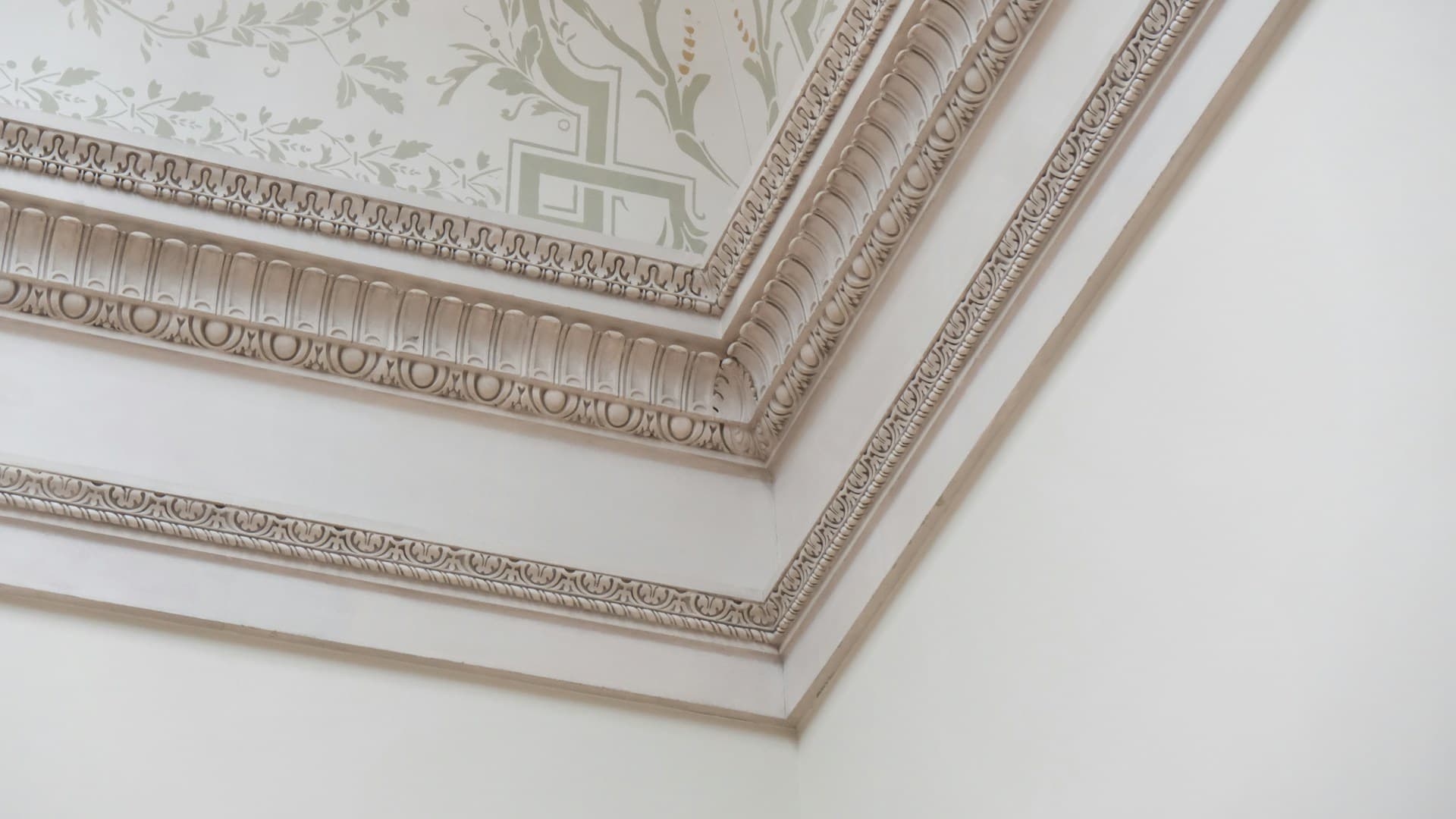
Cornice Installation
Installation of plaster cornice (decorative ceiling moulding) at wall-ceiling junctions in residential and commercial buildings. Covers measuring, cutting with mitre saw, adhesive application, fixing, jointing, and finishing. Includes fibrous plaster and gypsum cornice profiles. Pre-filled hazards, controls, and risk ratings.
Cornice work runs at the wall-ceiling junction, which puts the plasterer at maximum reach for the entire room — and that overhead posture is the strain source nobody plans for. A four-metre length of fibrous cornice held single-handed against the ceiling while the second hand applies the cornice cement is the position shoulders, necks and lower backs end up in across an eight-hour shift. The Model Code of Practice on Hazardous Manual Tasks drives the substitution decision: pole-mounted applicators, two-person fits on long runs, and a planned rotation between cutting and fixing keep the trade out of physiotherapy.
The platform underneath is the second decision. Plastering stilts give a cornice fixer mobility along a wall but introduce an unstable elevated surface that a quick weight-transfer can drop. Some states and insurers treat stilts as effectively banned on commercial sites, and the substitution is a trestle and plank or a low mobile scaffold to AS/NZS 1576.1:2019; a step ladder selected to AS/NZS 1892.5:2020 on shorter runs. State-specific and insurer-specific stilt rules need to be checked before they get written into the SWMS.
Pre-1990 fibrous plaster cornice is the sneaky exposure path on heritage renovations. The plaster matrix can carry asbestos fibres, and sanding existing original cornice on an older house puts those fibres in the breathing zone with no obvious warning sign. The Model Code of Practice on How to Safely Remove Asbestos governs the assessment — stop, sample, and bring in a competent person before disturbance. Cornice cement is alkaline and burns skin on prolonged contact; nitrile gloves and prompt skin flushing are the practical answer. White Card, plastering trade competency, working at heights for two-storey or vaulted-ceiling work, and current first aid sit alongside the trade ticket.
What's In Your SWMS
7 Hazards & Controls
Fractures, head injuries, spinal injuries, concussion, death
Use extension tools (pole sander, long-reach applicator) to work from floor level where possible
Use platform ladder or trestle-and-plank system instead of stepladder for extended overhead work
Clear area below work zone of trip hazards and other workers
- Platform ladders with guardrails for overhead work (manufactured to AS 1892.1:2018; selected and used per AS 1892.5:2020; minimum 120kg industrial rating)
- Trestle and plank system for long cornice runs — plank minimum 225mm wide
- Ensure all four ladder legs on stable, level surface
- If using stilts: flat, even floor only — never on scaffold, stairs, or near open edges
- Inspect ladder or platform before each use — reject if damaged
- Maintain three points of contact when climbing
- Do not overreach — reposition ladder instead
- Never carry cornice lengths while climbing — have helper pass material from below
- One person on ladder at a time
- Stilts: only experienced operators, maximum height per manufacturer rating
Non-slip safety footwear essential for all ladder and platform work
16-Step Work Procedure
Equipment & PPE
Equipment (10)
- Electric mitre saw (drop saw)
Blade guard, emergency stop, and guarding must be functional. Correct blade for plaster/gypsum. Inspect before each use.
- Platform ladder (industrial rated)
Minimum 120kg load rating. AS 1892.1:2018 (manufacturing) / AS 1892.5:2020 (selection, safe use and care) — both Australian-only re-designations. Platform provides stable work surface for overhead installation.
- Stepladder (industrial rated)
Minimum 120kg load rating. For short-duration positioning. Never stand on top two steps.
- Cornice adhesive (cornice cement)
Cement-based or acrylic-based. Review SDS. Skin and eye irritant. Mix in ventilated area.
- Gap filler and joint compound
For filling joints between cornice lengths and wall/ceiling junctions. Water-based products preferred.
- Brad nailer or pin nailer
For temporary fixing while adhesive sets. Sequential trigger only. Never point at body parts.
- Sanding block and pole sander
For finishing joints. Use with dust extraction or wet sanding where possible. P2 mask mandatory during dry sanding.
- Hand tools (trowels, spatulas, corner tools, utility knife)
For adhesive application, jointing, and trimming. Retractable blade utility knives only.
- Dust sheets and floor protection
Protect floors and furniture from plaster dust and adhesive drips. Canvas for walkways.
- First aid kit with eye wash
Include sterile eye wash (minimum 500ml), wound dressings, and adhesive burn treatment.
PPE (7)
- Safety glasses or gogglesAS/NZS 1337.1:2010
Mandatory for all overhead work, cutting, and sanding. Splash goggles when mixing adhesive overhead.
- P2 dust mask or half-face respiratorAS/NZS 1716:2012 (selection/use AS/NZS 1715:2009)
P2 minimum for all cutting and sanding operations. Half-face respirator with P2 filters for extended sanding. Fit-test required for tight-fitting masks per AS/NZS 1715:2009.
- Work gloves (general purpose)AS/NZS 2161.1:2016 (general); AS/NZS 2161.10.1:2024 (chemical/microorganism - for cement adhesive)
Protects hands from cement-based adhesive (alkaline pH 12-13, treat as chemical hazard), cuts from raw cornice edges, and plaster abrasion. Nitrile chemical-protective for adhesive mixing/application; cut-resistant (AS/NZS 2161.3:2020) when handling cut cornice. Note: AS/NZS 2161.2 (sampling/testing methodology) is NOT the chemical-resistance sub-part.
- Safety footwear (non-slip)AS 2210.3:2019
Non-slip soles for ladder work and dusty surfaces. Steel cap for general construction sites. Note: AS 2210.3 is now AS-only (Australia-only re-designation).
- Hard hatAS/NZS 1801:2024
Required on construction sites. Protects from falling cornice sections and overhead hazards.
- Hearing protection (earmuffs or plugs)AS/NZS 1270:2002
Required when using mitre saw (90-100 dB(A)) or nail gun. Class 4 minimum for mitre saw operation.
- Long sleeve shirt and long pants
Protects skin from plaster dust and adhesive contact. Reduces risk of cement-based adhesive irritation. (No specific AS/NZS standard applies to general workwear.)
Training & Emergency
Competency Requirements
- Construction Induction Card (White Card)training
CPCCWHS1001 — mandatory for all construction site work
- Plastering Trade Competencycertificate
Certificate III in Solid Plastering (CPC31020) or equivalent trade experience. Covers cornice installation, jointing, and finishing techniques.
- Mitre Saw Safety Trainingtraining
Demonstrated competency in mitre saw operation including blade changing, guarding, and emergency procedures. Site-specific induction.
- Ladder and Platform Safety Trainingtraining
Training in safe ladder selection, inspection, and use. Covers AS 1892.5:2020 (selection, safe use and care) requirements, three points of contact, and overreaching prevention.
- Manual Handling Trainingtraining
HLTWHS005 or equivalent. Focus on overhead work techniques, task rotation, and musculoskeletal injury prevention.
- Working at Heights Training
RIIWHS204E — required if cornice work is at heights exceeding 2m (high ceilings, stairwells, vaulted ceilings).
- First Aid Certificate (HLTAID011)
Recommended for at least one crew member on site. Covers wound treatment, eye injury response, and breathing difficulties.
Emergency Procedures
FALL FROM LADDER: Do not move injured person unless in immediate danger. Call 000 if suspected spinal or head injury. Keep person warm and calm.
ADHESIVE IN EYES: Immediately irrigate with clean water for minimum 15 minutes. Hold eyelids open. Do not rub. Seek emergency medical attention — cement-based adhesive can cause permanent eye damage.
SEVERE LACERATION (mitre saw): Apply firm pressure with clean dressing. Elevate injured limb. Call 000 if bleeding is severe or finger/hand amputation. Keep severed part in clean plastic bag on ice.
DUST INHALATION (prolonged exposure): Move to fresh air. If breathing difficulty or persistent coughing, seek medical attention. Note product name and SDS for treating doctor.
Everything above, included in your SWMS document.
Get This TemplateWriting a SWMS from scratch?
That's 2-4 hours of research, formatting, and cross-referencing regulations.
We've done the starting work — pick your template, add your details, review.
Or just do this:
- Unlimited documents
- All 70+ templates
- Instant PDF & DOCX
- Cancel anytime
Australian Standards Referenced
National Guidance Documents
- Safe Work Australia - Model Code of Practice: Managing the Risk of Falls at Workplaces
- Safe Work Australia - Model Code of Practice: Hazardous Manual Tasks
- Safe Work Australia - Model Code of Practice: Construction Work
- Safe Work Australia - Model Code of Practice: How to Manage and Control Asbestos in the Workplace (for pre-2003 fibrous-plaster substrate assessment)
- Safe Work Australia - Model Code of Practice: How to Safely Remove Asbestos
Who Needs This SWMS?
This template is designed for the following trades and roles performing cornice installation work.
Frequently Asked Questions
Do I need a SWMS for cornice installation?
A SWMS is required for high-risk construction work under WHS Regulation. Cornice installation becomes high-risk when there is a risk of falling more than 2 metres (e.g., high ceilings, stairwells). Even for standard height work, a SWMS is recommended best practice and may be required by the principal contractor.
What is the safest access method for cornice installation?
A platform ladder is the safest option for standard ceiling heights — it provides a stable platform with guardrails. For extended runs, use a trestle and scaffold plank system. Avoid using stepladders for prolonged overhead work. Scaffolding is required for ceilings above 3.6m. Plastering stilts are only for experienced operators on flat, even surfaces.
What dust mask do I need for cutting cornice?
Minimum P2 dust mask (AS/NZS 1716) for all cutting and sanding operations. Use a half-face respirator with P2 filters for extended sanding. Fit-testing is required for tight-fitting respirators (AS/NZS 1715). Wet cutting or dust extraction at the saw reduces airborne dust significantly.
Can I use plastering stilts for cornice installation?
Plastering stilts can be used by experienced operators on flat, even floors only. They must never be used on scaffolding, stairs, ramps, or near open edges. Maximum height is per manufacturer rating. Check state-specific regulations — some jurisdictions have additional restrictions on stilt use.
Is cement-based cornice adhesive hazardous?
Yes. Cement-based cornice adhesive is alkaline (pH 12-13) and is classified as causing serious eye damage (Category 1) and skin irritation (Category 2). Always wear gloves and safety glasses when mixing and applying. If adhesive contacts eyes, irrigate with clean water for minimum 15 minutes and seek immediate medical attention.
How do I manage manual handling risks with overhead cornice work?
Use T-braces or cornice props to support lengths while adhesive sets. Two-person operation for lengths over 2.4m or heavy profiles. Rotate between overhead and ground tasks every 30-45 minutes. Adjust platform height to minimise reaching distance. Take regular breaks and stretch shoulders and arms.
What should I check if the building is pre-2003?
Buildings constructed before 2003 may contain asbestos in existing cornice, ceiling sheets, or wall linings. If removing or disturbing existing cornice in pre-2003 buildings, have a competent person assess for asbestos before work begins. If asbestos is confirmed, engage a licensed asbestos removalist.
What hearing protection do I need for mitre saw cutting?
Mitre saws generate 90-100 dB(A), exceeding the 85 dB(A) exposure standard. Class 4 or 5 earmuffs (AS/NZS 1270) are required during mitre saw operation. Hearing protection should also be worn within 3m of the operating saw. Batch cutting reduces total exposure time.
How often should ladders be inspected for cornice work?
Inspect ladders before each use. Check for bent rungs, cracked stiles, missing feet, loose rivets, and damaged platforms. Reject any ladder with visible damage. Industrial-rated ladders (minimum 120kg) compliant with AS/NZS 1892 must be used. Platform ladders should have functional guardrails and locking mechanisms.
What are the main differences in cornice material hazards?
Gypsum cornice is lightweight (2-4kg per length) with moderate dust risk. Fibrous plaster is heavier (4-8kg) requiring two-person handling for large profiles, and may contain glass fibre. Polystyrene/foam cornice is very lightweight with minimal manual handling risk but melts if in contact with certain adhesives. Always check SDS for specific product hazards.
Get Your Cornice Installation SWMS
Pre-filled. Risk-rated. Ready in 5 minutes.
Get Your SWMS PDFNo credit card required. First SWMS is free.
