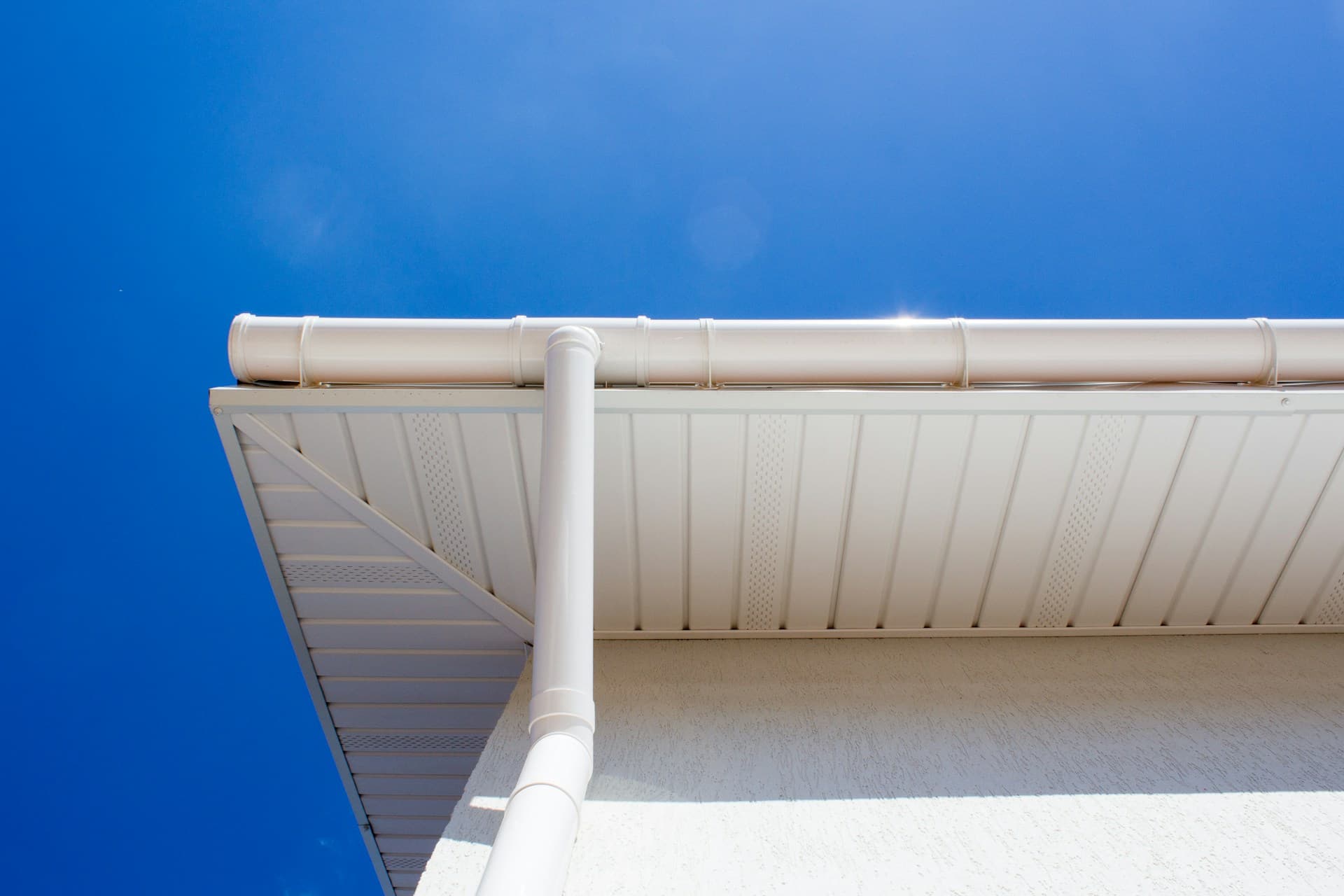
Gutter and Fascia Installation
Installation of metal gutters, downpipes, and fascia boards on residential and commercial buildings. Covers roof edge work, ladder and scaffold access, handling of long materials (6m gutter lengths), cutting, joining, and fixing. Includes fall prevention for work within 2 metres of roof edge. Pre-filled hazards, controls, and risk ratings.
Service drops to a fascia line are the documented contact path for a roof plumber doing gutter and fascia replacement. The cable enters the eave near the corner and runs along the line where the new fascia goes, and a worker pulling the old fascia off without confirming where the service drop sits is operating in the same risk zone as a sparky in a switchboard. Calling the distributor for an isolation or a tiger-tail before the work starts is the practical control; the Model Code of Practice on Managing Electrical Risks in the Workplace drives the planning behind it.
A 6-metre length of continuous gutter in moderate wind acts like a sail, and the operator carrying it up a ladder gets pulled off balance the moment a gust catches the leading edge. Two-person lifts on lengths above 4 metres, a wind-condition stop limit on the daily plan, and a ladder standoff bracket so the operator isn't holding the gutter against the eave one-handed keep the worker on the ladder. AS/NZS 1576.1:2019 covers the perimeter scaffold for prolonged edge work; AS/NZS 1891.1:2020 the harness where a roof anchor is the only viable option.
Cut metal edges are the third injury column. Cut Colorbond gutters and fascia carry razor-sharp edges that go through generic riggers gloves; A4-rated cut-resistant gloves to AS/NZS 2161.3:2020 match the duty. Stormwater connection between gutter and downpipe traces back to AS/NZS 3500.3:2018, with the discharge pathway sized to the catchment area. White Card, roof plumbing competency, Working at Heights under RIIWHS204E, an EWP HRWL where a boom is in scope, and a current first aid carry the day. Service line confirmed, two-person lift planned, A4 gloves on — the morning brief stops at three.
What's In Your SWMS
8 Hazards & Controls
Fractures, spinal injuries, head injuries, death
Where possible, use continuous gutter machine at ground level to pre-fabricate sections
Use scaffolding with guardrails instead of ladders for extended work
Establish exclusion zones below work areas to protect workers and public
- Scaffold must have guardrails (900mm), mid rails, and toe boards (150mm)
- Temporary roof edge protection (guardrails) preferred over harnesses
- Ladder standoff brackets - never rest ladder directly on gutter
- Extension ladders secured at top and bottom
- EWP positioned on firm, level ground with outriggers deployed
- Anchor points identified for fall arrest systems
- Complete daily scaffold inspection before use - use checklist
- Ladder positioning: 1:4 angle ratio (1m out for every 4m up)
- Maintain three points of contact on ladders at all times
- Do not overreach - keep belt buckle within ladder rails
- Never stand on top two rungs of ladder
- Move ladder rather than overreaching
- Do not work from ladder in winds exceeding 30 km/h
- Do not carry materials while climbing - use rope and bucket
- Two workers minimum for roof edge work
Full body harness with shock-absorbing lanyard when working above 2m without guardrails. Non-slip safety footwear.
20-Step Work Procedure
Equipment & PPE
Equipment (12)
- Mobile or fixed scaffolding
Preferred access method for gutter work. Must have guardrails, mid rails, toe boards. Erected by competent person.
- Extension ladder (industrial rated)
Minimum 120kg load rating. AS/NZS 1892 compliant. For short duration access only - not for extended work.
- Ladder standoff bracket
Prevents ladder resting on gutter. Provides stable platform away from fascia.
- Pop rivet gun (manual or cordless)
For joining gutter sections and fixing brackets. Built-in lanyard loop to prevent dropping.
- Cordless drill/driver
For fixing fascia and gutter brackets. Use lanyard when working at height.
- Tin snips (aviation snips)
Left, right, and straight cut. For cutting gutter and flashing.
- Angle grinder (115mm)
For cutting downpipes and brackets. Guard must be fitted. Never use on gutters near roof.
- Measuring tape (8m)
For measuring gutter runs and downpipe positions.
- String line and level
For establishing gutter fall (1:500 minimum gradient).
- Silicone/sealant gun
For sealing gutter joints and outlets.
- Drop sheets
Protect surfaces below from debris and off-cuts.
- First aid kit
Include wound dressings, eye wash, and burn treatment.
PPE (7)
- Hard hat (Type 1)AS/NZS 1801:2024
Required when working below others or where overhead hazards exist. Chin strap in windy conditions.
- Safety glasses (wraparound)AS/NZS 1337.1:2010
High-impact protection for cutting and drilling. Essential when using angle grinder.
- Cut-resistant gloves (Level 5 / A4-rated)AS/NZS 2161.3:2020
Essential for handling cut metal edges (mechanical risks). Leather or Kevlar. Replace when damaged.
- Safety footwear (non-slip, steel cap)AS 2210.3:2019
Non-slip soles for ladder and scaffold work. Steel cap for falling objects. Note: AS-only (no longer joint NZ).
- Hearing protection (Class 4)AS/NZS 1270:2002
Required when using angle grinder, nibbler, or pop rivet gun for extended periods.
- Long-sleeve shirt and trousers
Protects arms and legs from sharp metal edges and sun exposure.
- Sun protection (hat, sunscreen SPF50+)
Essential for outdoor work. Reapply sunscreen every 2 hours.
Training & Emergency
Competency Requirements
- Construction Induction Card (White Card)training
Required for all workers on construction sites
- Working at Heights Trainingtraining
Training in fall prevention, ladder safety, and scaffold use. Required for work above 2m.
- Roof Plumbing / Gutter Installation Competencycertificate
Experience in gutter and fascia installation. May hold Certificate III in Roof Plumbing (CPC32620).
- Scaffold User Training
Required if using scaffolding. Training in safe scaffold use and inspection.
- Scaffolding High Risk Work Licence
Required for scaffold erection. Basic (SB) for <4m, Intermediate (SI) for 4-15m.
- EWP High Risk Work Licence (WP)
Required for boom lift operation over 11m.
- First Aid Certificate
Recommended for at least one team member. HLTAID011 Provide First Aid.
Emergency Procedures
FALL FROM HEIGHT: Do not move injured person unless immediate danger. Call 000 if suspected spinal injury. Keep person warm and calm until help arrives.
DEEP LACERATION FROM METAL: Apply firm pressure to stop bleeding. Do not remove embedded objects. Seek immediate medical attention. Check tetanus immunisation status.
ELECTRIC SHOCK: Do not touch person if still in contact with power. Isolate power if safe. Call 000. Begin CPR if person is not breathing.
HEAT STROKE: Call 000 immediately. Move person to shade. Remove excess clothing. Apply cool water to skin. Do not give fluids if unconscious.
OBJECT FALLEN ON WORKER: Call 000 if serious injury. Do not move person if spinal injury suspected. Provide first aid as required.
Everything above, included in your SWMS document.
Get This TemplateWriting a SWMS from scratch?
That's 2-4 hours of research, formatting, and cross-referencing regulations.
We've done the starting work — pick your template, add your details, review.
Or just do this:
- Unlimited documents
- All 70+ templates
- Instant PDF & DOCX
- Cancel anytime
High-Risk Construction Work Categories
Under Australian WHS Regulations (Chapter 6 Part 6.1 - Construction Work; Reg 291 - High Risk Construction Work (risk of falling >2m)), this work is classified as high-risk due to:
- Risk of falling more than 2 metres (Gutter and fascia work involves working at roof edge height, typically 3-8 metres. Fall prevention required when working within 2m of roof edge or any fall hazard ≥2m.)
- Hazardous manual handling (Long gutter sections (6m lengths, 10-15kg) and fascia boards require careful handling. Awkward positioning at height increases injury risk.)
Australian Standards Referenced
National Guidance Documents
Who Needs This SWMS?
This template is designed for the following trades and roles performing gutter and fascia installation work.
Frequently Asked Questions
What height requires fall protection for gutter work?
Under WHS Regulations, fall protection is required when working at a height where a person could fall 2 metres or more. This includes most gutter and fascia work on residential buildings. Controls must follow the hierarchy: elimination, guardrails, work positioning, then fall arrest as last resort.
Can ladders be used for gutter installation?
Ladders should only be used for short duration, light work where other methods are not reasonably practicable. Ladders are not suitable for extended gutter runs. Scaffolding or EWPs are preferred for work lasting more than a few minutes or requiring two hands. Ladders must never rest directly on gutters - use standoff brackets.
What PPE is required for handling metal gutters?
Cut-resistant gloves (Level 5) are essential when handling metal gutters and fascia - sharp edges cause approximately one-third of all handling injuries. Also required: safety glasses, non-slip safety footwear, hard hat when below other workers, and hearing protection when using power tools.
What are the safe distances from power lines?
Minimum safe approach distances: greater than 1 metre from low voltage (LV) lines, greater than 3 metres from 11kV lines, greater than 6 metres from 33kV lines. Long gutter sections can bridge clearances unexpectedly - plan material movement carefully. Contact electricity provider if work within these distances is required.
When should gutter work stop due to weather?
Work should cease when wind gusts exceed 30 knots (approximately 56 km/h). Long gutter sections act as sails in wind and become difficult to control safely. Also stop work on wet or icy ladders/scaffolds, during electrical storms, or in extreme heat (implement work-rest cycles and early starts).
What is the correct ladder angle for gutter work?
Extension ladders must be positioned at a 1:4 ratio (1 metre out from the wall for every 4 metres of height). Ladders must be secured at top and bottom, placed on firm level ground, and fitted with standoff brackets so they do not rest on the gutter itself.
What training is required for gutter installers?
At minimum: White Card (construction induction) and Working at Heights training. Scaffold users need scaffold user training. If erecting scaffold, a High Risk Work Licence is required (Basic SB for under 4m, Intermediate SI for 4-15m). EWP operators need specific training, with HRWL required for boom lifts over 11m.
How should metal off-cuts be disposed of?
Metal off-cuts have sharp edges that can cut through plastic bags and cause serious injury. Collect all off-cuts in a sturdy metal or thick plastic container immediately after cutting. Never leave loose off-cuts on ground or scaffold platform. Dispose of at appropriate metal recycling facility.
Get Your Gutter and Fascia Installation SWMS
Pre-filled. Risk-rated. Ready in 5 minutes.
Get Your SWMS PDFNo credit card required. First SWMS is free.
