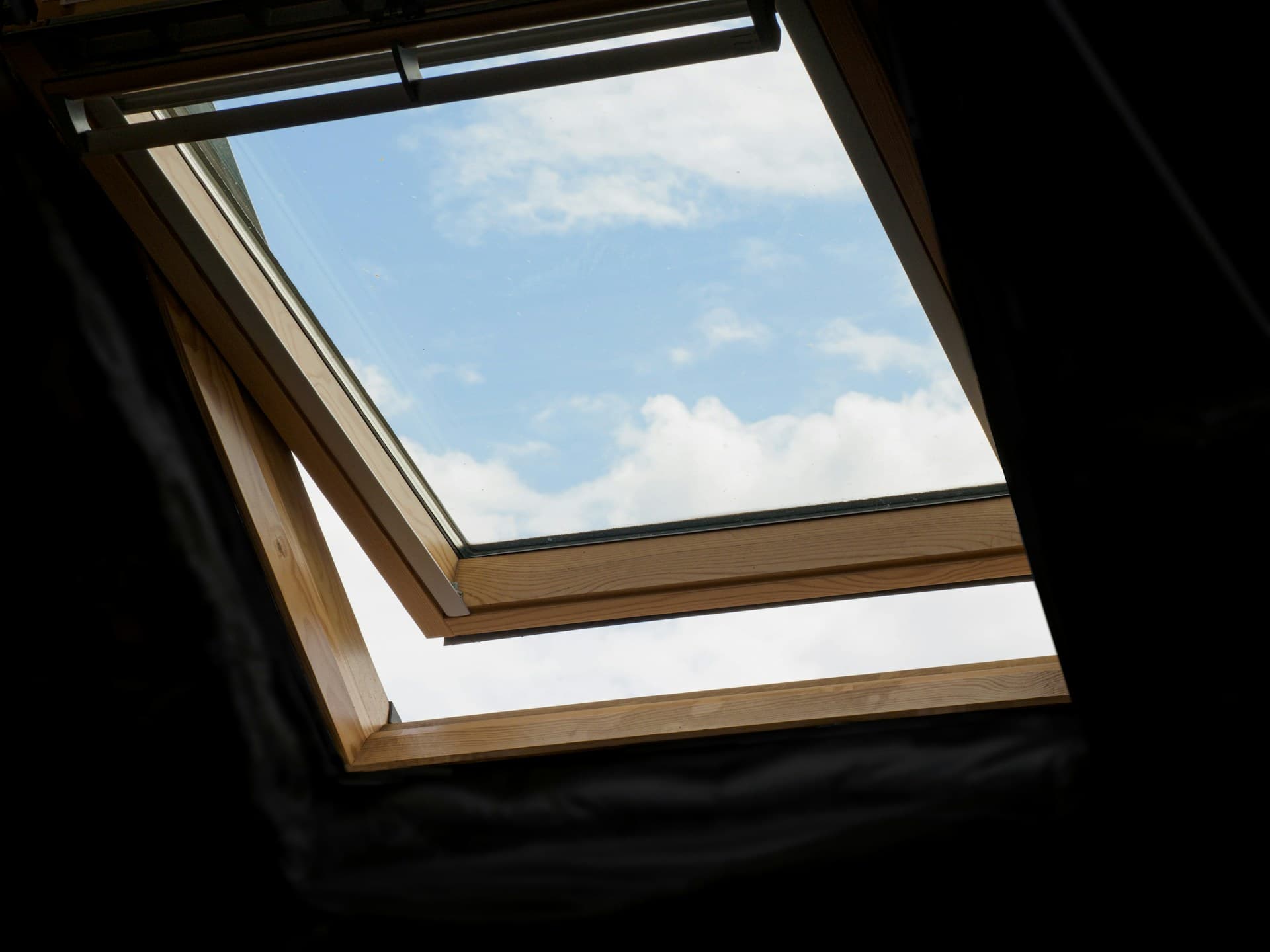
Skylight Installation
Installation of skylights and roof windows in residential and commercial buildings including roof access, cutting roof openings, flashing installation, skylight fixing, and interior finishing from ceiling cavity. Covers controls for falls from roof edge (24 fatalities nationally in 2024), falls through fragile roof surfaces and unprotected openings ($270,000 fine NSW 2022), reciprocating/circular saw injuries when cutting roof openings, electrical hazards from wiring in ceiling cavity (solar cables remain live), ceiling cavity work in extreme heat (60°C+), manual handling of heavy skylight units at height, and falling objects through ceiling. AS/NZS 4285 skylight compliance. Pre-filled hazards, controls, and risk ratings.
The moment a skylight installer cuts the opening, the roof becomes a fall-through hazard with a worker, a homeowner and a tradesperson below who can all step into it. NSW SafeWork prosecutions on residential skylight jobs have hit six-figure penalties precisely because installers left openings unprotected "for two minutes while I grab the unit". The control is timing: physical cover or safety mesh in place before the cut completes, not after. AS/NZS 4994.1:2023 governs temporary edge protection on slopes up to 35 degrees; safety mesh under and around openings is the engineering control that backs it up.
Adjacent fragile surfaces multiply the hazard. Older domed plastic skylights on the same roof routinely break under foot — workers stepping onto a dome they assumed was structural is a documented fatality scenario. Pre-1990 buildings can carry asbestos sarking and asbestos-cement roofing nearby, and the Model Code of Practice on How to Safely Remove Asbestos governs how that gets handled — stop, assess, get a competent person on it before disturbance. Inside the ceiling cavity, plasterboard between joists is not load-bearing, the cavity in summer can clear 60 degrees, and lighting circuits plus solar PV strings remain energised; a crawl board across joists keeps the worker out of the kitchen below.
Skylight units themselves run 25 to 40 kilograms and arrive on a sloped roof needing two-person hoist, glass-handling care, and flashing detail that ties the unit through the deck and back into the watertight envelope. Glass selection sits under AS 1288:2021, and the unit itself under AS/NZS 4285. Working at Heights under RIIWHS204E, Cert III in the relevant trade, asbestos awareness and a current first aid sit on the toolbox card before the saw turns on. Cover the opening before the saw stops — that's the rule that prevents the prosecution.
What's In Your SWMS
7 Hazards & Controls
Fractures, spinal injuries, head injuries, internal injuries, death
Where possible, use ground-level or interior-access skylight systems (tubular skylights installed from ceiling cavity). Maximise work completed before accessing roof.
Use scaffolding with full guardrail system for roof access instead of ladders. Consider EWP (elevated work platform) for single-storey buildings.
Establish exclusion zone at ground level below all roof work. No workers below without hard hats. Barricade tape and signage.
- Temporary edge protection (AS/NZS 4994.1:2023 + AS/NZS 4994.2:2023): guardrails 900-1100mm, mid-rails, 150mm toe boards at all open roof edges
- Roof anchor points rated to 15kN, certified by qualified height safety certifier
- Fall arrest harness system (AS/NZS 1891.1:2020 + AS/NZS 1891.4:2025) connected at all times on roof
- Energy-absorbing lanyard limiting peak load to 6kN and free fall to 2m maximum
- Ladder secured at top, extending 1m above roof edge
- Non-slip walkway matting on metal roof surfaces if wet or steep (>15°)
- All workers on roof must hold current Working at Heights training (RIIWHS204E)
- Do NOT access roof in rain, dew, frost, or when surfaces are wet - postpone work
- Do NOT work on roof in wind gusts exceeding 40 km/h
- Inspect harness and anchor points before each use
- Rescue plan documented and tested before work commences
- Minimum two workers on site during all roof work (one may be ground-based)
- Three-point contact on ladder at all times
- Licensed scaffolder for edge protection systems over 4m
Full body harness (AS/NZS 1891.1:2020 + AS/NZS 1891.4:2025) with energy absorber connected to 15kN anchor. Hard hat with chin strap. Non-slip safety footwear.
15-Step Work Procedure
Equipment & PPE
Equipment (14)
- Reciprocating saw (cordless preferred)
For cutting roof opening through cladding and timber. Cordless eliminates cord-trip hazard on roof. Correct blade for material type (metal, timber). Dead-man switch functioning.
- Circular saw (185mm)
Alternative for straight cuts in roof cladding and timber trimming. Blade guard functioning. Riving knife in place. NOT for use on fragile roofing (asbestos cement).
- Cordless drill/driver and impact driver
For fixing skylight frame, flashing screws, and interior trim. Pre-drill where required. Magnetic bit holder to prevent dropped screws.
- Full body harness, lanyard with energy absorber
AS/NZS 1891.1:2020 (harness/equipment) + AS/NZS 1891.4:2025 (selection/use/maintenance) compliant. Inspect before each use. 6-monthly formal inspection per AS/NZS 1891.4:2025. Shock-absorbing lanyard to limit peak load to 6kN. Lanyard length appropriate for working height.
- Roof anchor points (temporary or permanent)
Rated to 15kN minimum. Certified by qualified height safety certifier. Annual inspection required. Position to limit free fall to 2m maximum. One anchor per worker.
- Temporary edge protection system / guardrails
AS/NZS 4994.1:2023 + AS/NZS 4994.2:2023 compliant. Top rail 900-1100mm. Mid-rail. Toe board 150mm. Install around roof opening immediately after cutting. Post spacing maximum 2m.
- Extension ladder (industrial rated)
Industrial rating (120kg minimum). Extend 1m above roof edge. Secured at top. 4:1 angle ratio. Three-point contact. For roof access only - not as work platform.
- Temporary hole covers (rated to 75kg+)
To cover roof opening when work pauses. Secured in place - must not slide. Clearly marked "HOLE BELOW" or "DANGER - OPENING". Remove only when worker is harnessed and ready to work.
- Spirit level, tape measure, and chalk line
For marking skylight opening dimensions on roof and checking level of installed unit. Chalk line for straight cut lines.
- Aviation snips and flashing tools
For cutting and forming lead or metal flashings around skylight. Right-hand, left-hand, and straight-cut snips. Debur all cut edges.
- Caulking gun and roof sealant
Exterior-grade silicone or polyurethane sealant per skylight manufacturer specification. For sealing flashing laps and penetrations.
- Headlamp and portable work light
For ceiling cavity work. Headlamp leaves hands free. LED work light for general illumination. Intrinsically safe if working near damaged wiring.
- Extension leads with RCD protection
Heavy-duty construction leads. RCD protected (max 30mA). Test and tag current. Secure to prevent trip hazard on roof and ladder.
- First aid kit
Include wound dressings, eye wash, burn treatment, splinter removal. Emergency rescue kit for harness suspension rescue. Accessible at ground level and roof level.
PPE (8)
- Full body harness and energy-absorbing lanyardAS/NZS 1891.1:2020 (harness/equipment); AS/NZS 1891.4:2025 (selection/use/maintenance)
MANDATORY for all roof work. Inspect before each use per AS/NZS 1891.4:2025. Connect to rated anchor point (15kN) at all times on roof. Shock-absorbing lanyard. Rescue plan in place before use (with ANZCOR Guideline 9.1.5-aligned post-rescue positioning - flat / supine, NOT legs-bent / upright).
- Hard hat with chin strapAS/NZS 1801:2024
Required at all times on roof and below work area. Chin strap prevents loss during falls or wind. Brim for sun protection.
- Safety glasses (impact rated)AS/NZS 1337.1:2010
MANDATORY during all cutting, drilling, and work in ceiling cavity. Impact rated for debris from saw cutting. Wrap-around style for ceiling cavity (falling dust/insulation).
- Safety footwear (steel cap, non-slip sole)AS 2210.3:2019
Non-slip sole essential for roof work (pitched surfaces, wet conditions). Steel cap for dropped tools and skylight components. Ankle support recommended.
- Hearing protection (Class 5)AS/NZS 1270:2002
Required during reciprocating saw, circular saw, and impact driver operation. Noise amplified in ceiling cavity.
- Work gloves (cut-resistant)AS/NZS 2161.1:2016 (general); AS/NZS 2161.3:2020 (mechanical risks)
Cut-resistant for handling metal flashings, cut roofing material, and skylight frames. Remove when operating power saws (entanglement). Fibreglass-rated for ceiling cavity insulation handling.
- P2 dust mask / respiratorAS/NZS 1716:2012 (device); AS/NZS 1715:2009 (selection/use/fit testing)
Required in ceiling cavity (fibreglass insulation fibres, dust, debris). AS/NZS 1716 uses P1/P2/P3 classifications (not N95/FFP2 - those are NIOSH and EN 149 respectively). Required when cutting treated timber. If asbestos suspected: STOP WORK and engage licensed assessor.
- Sun protection (long sleeves, sunscreen)
Long-sleeved UPF 50+ shirt. SPF 50+ sunscreen every 2 hours. UV-rated safety glasses. Hard hat with brim provides partial protection. Metal roof surfaces can exceed 70°C.
Training & Emergency
Competency Requirements
- Construction Induction Card (White Card)training
Required for all workers on construction sites. CPCCWHS1001.
- Working at Heights Training (RIIWHS204E)training
Required for ALL workers on roof. Covers fall prevention, harness use, anchor systems, and rescue procedures. Refresh every 2-3 years.
- Roofing / Carpentry Contractor Licencelicence
Required for roofing and skylight installation work. Licence requirements vary by state. NSW: required for work over $5,000.
- Certificate III in Roof Tiling (CPC31420) or Carpentry (CPC30220)certificate
Nationally recognised trade qualification. Covers roof penetration installation, flashing, and weatherproofing.
- Asbestos Awareness Trainingtraining
Required for workers who may encounter asbestos-containing materials. Essential for work in ceiling cavities of pre-1990 buildings. (Note: this is general identification/awareness training delivered by RTOs and asbestos-licensed assessors - not a single national unit of competency. CPCCDE3014 "Remove non-friable asbestos" is a separate active-removal unit and should NOT be confused with awareness training. The previously cited "CPCCDE3014A" was the superseded version of CPCCDE3014 - and was wrongly cited here as awareness training when it is actually an active-removal unit. If skylight installation scope unexpectedly requires removal of non-friable asbestos in the ceiling cavity, work must stop and a Class B licensed removalist or competent person with CPCCDE3014 must be engaged.)
- Electrical Hazard Awarenesstraining
Workers must understand electrical isolation procedures, voltage testing, and risks of working near live wiring in ceiling cavities. Solar cable awareness critical.
- First Aid Certificate
Recommended for at least one team member. HLTAID011 Provide First Aid. Critical given fall, electrical shock, and heat stroke risks on roof.
Emergency Procedures
FALL FROM ROOF: Call 000 immediately. Do NOT move patient if spinal injury suspected. Keep warm and still. If harness arrested fall: rescue from suspension within 15 minutes (suspension trauma risk). Implement pre-planned rescue procedure. Once rescued, place the worker in a flat / supine position (or recovery position if unconscious and breathing) per ANZCOR Guideline 9.1.5. Earlier advice to keep the rescued worker in a legs-bent / upright position to prevent orthostatic shock has been retracted as it lacks evidence and may be harmful. Seek medical attention even if the worker appears uninjured.
FALL THROUGH ROOF OPENING: Call 000. Assess from safe position (do not lean into opening). If patient accessible from below: do not move if spinal injury suspected. Clear debris away from patient. Administer first aid.
ELECTRIC SHOCK IN CEILING CAVITY: Do NOT touch victim if still in contact with electrical source. Isolate power at switchboard. Remove victim from cavity only when safe. Call 000. Commence CPR if not breathing.
SAW LACERATION ON ROOF: Apply direct pressure. Do not descend ladder while bleeding heavily. Call for assistance from ground worker. Apply tourniquet if arterial bleeding. Lower patient by rescue method if unable to self-descend.
HEAT STROKE ON ROOF: Call 000. Assist worker to descend safely (may need rescue descent if confused). Move to shade. Remove harness and excess clothing. Cool rapidly. Do not give fluids if unconscious.
Everything above, included in your SWMS document.
Get This TemplateWriting a SWMS from scratch?
That's 2-4 hours of research, formatting, and cross-referencing regulations.
We've done the starting work — pick your template, add your details, review.
Or just do this:
- Unlimited documents
- All 70+ templates
- Instant PDF & DOCX
- Cancel anytime
High-Risk Construction Work Categories
Under Australian WHS Regulations (Section 291 - High Risk Construction Work; Chapter 6 Part 6.5 - Falls; Chapter 7 Part 7.1 - Hazardous Chemicals; Chapter 8 Part 8.10 - Asbestos), this work is classified as high-risk due to:
- Risk of falling more than 2 metres (Roof work at 3-10m height. Workers exposed to falls from roof edge and falls through roof openings/skylights. Falls from height caused 24 worker fatalities nationally in 2024 (13% of all work deaths). 45% of fall fatalities in 2023 were in construction.)
- Work on or near energised electrical installations (Cutting roof openings risks contacting electrical wiring in ceiling cavity. Solar array cables remain LIVE even when main switchboard is off. Deteriorated 1970s-80s wiring insulation in older ceiling spaces.)
Australian Standards Referenced
National Guidance Documents
- Safe Work Australia - Model Code of Practice: Managing the Risk of Falls at Workplaces
- Safe Work Australia - Model Code of Practice: Preventing Falls in Housing Construction
- Safe Work Australia - Model Code of Practice: Construction Work
- Safe Work Australia - Safe Work on Roofs Information Sheet
- Safe Work Australia - Model Code of Practice: How to Manage and Control Asbestos in the Workplace
Who Needs This SWMS?
This template is designed for the following trades and roles performing skylight installation work.
Frequently Asked Questions
What are the biggest risks when installing a skylight?
The two most critical risks are falls from the roof edge and falls through the roof opening being created. Falls from height caused 24 worker fatalities nationally in 2024. Falls through skylights have resulted in fines of $40,000-$270,000 across Australian states. Additional significant risks include cutting near electrical wiring in ceiling cavities (solar cables remain live), working in extreme heat in roof spaces (60°C+), and handling heavy skylight units at height.
What fall protection is required for skylight installation?
Full body harness (AS/NZS 1891.1:2020 + AS/NZS 1891.4:2025) connected to a rated anchor point (15kN minimum) is required at all times on the roof. Temporary edge protection (guardrails per AS/NZS 4994.1:2023 + AS/NZS 4994.2:2023) must be installed around the roof opening BEFORE cutting begins and maintained until the skylight is fully installed. Temporary hole covers (rated 75kg+, secured, marked "HOLE BELOW") must cover the opening whenever work pauses. Safety mesh (AS/NZS 4389:2015) should be installed under any fragile roof surfaces that workers must traverse.
Can you step on existing skylights?
NEVER step on or near existing skylights or polycarbonate roof panels. These are fragile surfaces that can fracture without warning under body weight, causing falls of 4-9 metres. Multiple prosecutions confirm this: a QLD worker fell 4.8m when polycarbonate broke, a WA worker fell 4.1m through an unguarded skylight, and an apprentice fell 9.2m through a skylight in 2015. All existing skylights must be marked with warning barriers maintaining a 2m exclusion perimeter.
What electrical hazards exist when cutting a roof opening?
Ceiling cavities contain electrical wiring for lights, outlets, and air conditioning. Critically, solar array cables remain LIVE even when the main switchboard is turned off. Older buildings (1970s-80s) may have deteriorated wiring insulation with exposed conductors. All electrical circuits in the work area must be isolated at the switchboard and verified with a voltage tester before cutting. A licensed electrician should be consulted if wiring condition is unknown or solar panels are present.
Is an asbestos check required before skylight installation?
Yes, for any building constructed before 1990. These buildings are presumed to contain asbestos until proven otherwise. Asbestos may be present in roof cladding, ceiling materials, pipe insulation, and eave linings. The building's asbestos register must be checked before any roof or ceiling cavity work. If asbestos is identified or suspected, STOP WORK and engage a licensed asbestos assessor. Cutting through asbestos-containing materials generates carcinogenic fibres causing mesothelioma and lung cancer.
How hot can ceiling cavities get?
Ceiling cavities in Australian buildings can exceed 60°C in summer, with extreme conditions reaching 80°C or higher under dark metal roofs. Workers must not enter ceiling cavities above 40°C. Schedule cavity work for early morning (coolest temperatures). Limit continuous work to 30 minutes maximum, then exit for cool-down breaks. A second person must be stationed at the cavity access point at all times during entry, with verbal check-ins every 10 minutes.
What Australian Standard applies to skylight installation?
AS/NZS 4285:2019 is the primary standard for skylights and roof windows, covering product performance, safety, installation requirements, and maintenance. AS 1562.1:2018 covers integration into metal roof cladding systems. AS 1288:2021 covers safety glazing requirements. For fall protection: AS/NZS 1891 (harness systems), AS/NZS 4994.1:2023 + AS/NZS 4994.2:2023 (edge protection), and AS/NZS 4389:2015 (safety mesh). All skylights must be installed per the manufacturer's instructions.
What sequence protects the opening once the cut goes in?
Physical cover or safety mesh in place before the cut completes, not after — that's the rule that prevents the prosecutions cited above. Practical sequence: deploy the safety mesh under the cut line before the saw starts; cut the opening; lift the offcut out the moment it separates; fit a temporary cover (plywood crawl board, rigid sheet, or factory-supplied opening protection) immediately. The Model Code of Practice on Managing the Risk of Falls in Housing Construction governs the broader fall plan: physical fall prevention before fall arrest, and the opening is a fall-through hazard the second the saw breaks through.
What fines have been issued for skylight fall incidents?
Australian regulators have issued significant fines: NSW $270,000 (worker fell 4m through skylight, 2022), WA $140,000 combined (worker fell 4.1m, 2021), QLD $60,000 combined (worker fell through skylight, 2022), VIC $40,000 (worker fractured spine, 2023). Courts consistently find that verbal instructions like "be careful" are not control measures. Physical barriers, harness systems, and edge protection are the minimum required.
When should roof work be stopped due to weather?
Stop all roof work when surfaces are wet from rain, dew, or frost (extreme slip hazard on metal and tile roofs). Stop work in wind gusts exceeding 40 km/h (general roof work) or 30 km/h when handling large skylight panels (sail effect). Stop work if ambient temperature exceeds 38°C or if any worker shows heat stress symptoms. Check weather forecast before starting and monitor conditions throughout the day. Metal roof surfaces can exceed 70°C in direct sun.
Get Your Skylight Installation SWMS
Pre-filled. Risk-rated. Ready in 5 minutes.
Get Your SWMS PDFNo credit card required. First SWMS is free.
