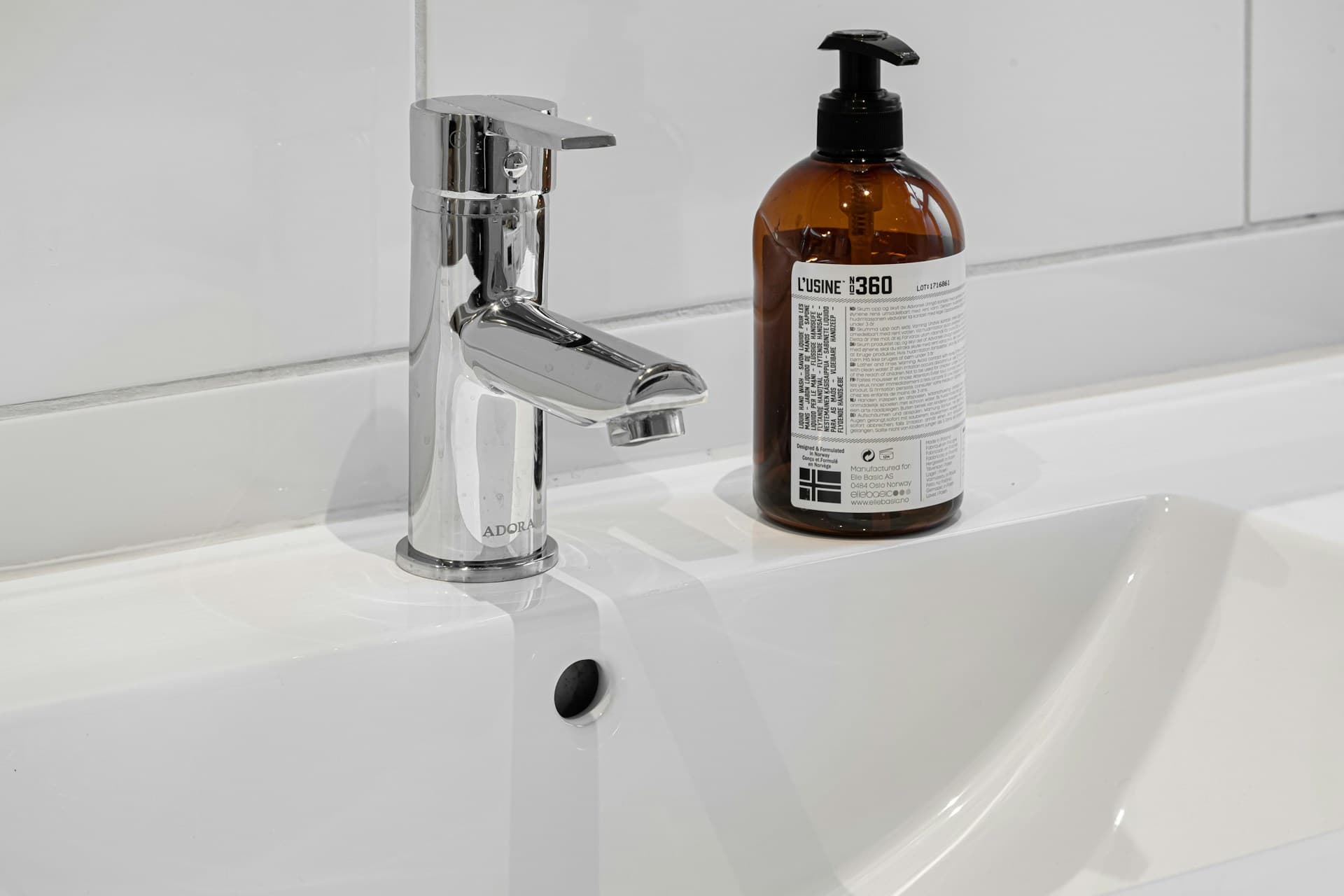
Basin and Tap Installation
Installation of bathroom basins (pedestal, wall-hung, semi-recessed, countertop, undermount), vanity units, kitchen sinks, laundry tubs, and associated tapware (mixer taps, pillar taps, wall-mounted taps). Covers removal of old fixtures, water supply connection (hot and cold), waste pipework connection, sealing, and commissioning. Includes hazard controls for manual handling of heavy ceramic and stone vanity tops (30-80kg), biological/sewage exposure from old waste traps, sharp edges from broken ceramics and cut pipe, chemical exposure to silicone sealants and PVC solvents, slips on wet bathroom floors, electrical contact during bracket fixing, and musculoskeletal injuries from awkward postures. Pre-filled hazards, controls, and risk ratings.
A vanity swap reads like a half-day quote and runs that way until the wall behind the basin turns out to hide a shaver-outlet cable on the same fixing line, or the eighty-kilo stone top arrives without a second pair of hands on site. The hazards basin fitters wear without naming are the manual-handling profile of a stone or solid-ceramic top (30–80kg, overhead onto a wall-hung bracket, single-person on most callouts), the waste-pipe biofilm on galvanised pipework that hasn't been disturbed since the eighties (E. coli, Campylobacter, Legionella, hepatitis A residue — flush with 1:10 bleach before disconnect, full nitrile and face shield), and the cable-and-pipe locator pass before drilling that makes the difference between a clean install and a callout. AS/NZS 3500.1:2021 and 3500.2:2021 cover supply and sanitary plumbing; AS/NZS 4020:2018 governs products contacting drinking water.
Two product-choice decisions quietly cause more callbacks than the structural ones. Acetic-cure silicone fills a sealed bathroom with acetic acid fumes during a 24-hour cure — fine in a ventilated kitchen, harsh in a tight ensuite handed over to the next trade — and neutral-cure is the indoor spec for that reason. PVC solvent cement vapours (MEK at a 150 ppm TWA, THF with documented liver effects) accumulate in confined wet areas without forced ventilation; A1 organic vapour cartridges to AS/NZS 1716:2012 cover the breathing-zone gap. State plumbing licensing and Cert III in Plumbing (CPC32420) set the operator baseline, and apprentices on basin work need direct supervision rather than a sign-off from another room. A basin SWMS earns its keep when it captures the locator pass, the silicone cure type, the team-lift threshold and the chemical ventilation — those four are where the trouble lands, not the obvious shock-and-fall column.
What's In Your SWMS
7 Hazards & Controls
Back injuries and herniated discs, shoulder strain and rotator cuff damage, knee injuries from kneeling on hard surfaces, muscle tears, repetitive strain injuries to wrists and hands
Pre-fabricate basin and tap assemblies in workshop at comfortable working height before installation. Use pre-hung basin mounting systems with height adjustment to reduce on-site manual adjustment.
Use lightweight composite vanity tops instead of stone or ceramic where aesthetics permit. Order vanity units with integrated basins already installed.
- Work platforms at comfortable height for pre-assembly and testing of tap connections
- Mechanical lifting aids or hoist for mounting heavy vanity tops
- Knee pads or kneeling mat for floor work
- Adjustable height work bench for tap pre-assembly
- Step stool to avoid overhead reaching when mounting wall basins
- Team lift for all vanity tops over 20kg - minimum 2 workers
- Break heavy tasks into stages - remove old basin first, prepare connections, then install new
- Correct lifting technique - bend knees, keep back straight, hold close to body
- Rotate between tasks to vary muscle groups (standing work alternating with bending work)
- Regular breaks - 5 minutes every 45 minutes during heavy or repetitive work
- Limit time spent under vanity cabinets - maximum 20 minutes continuous before break
Work gloves for handling basins and pipes. Knee pads for floor and under-sink work. Steel cap boots for dropped basin protection. Apron to reduce slipping from water.
14-Step Work Procedure
Equipment & PPE
Equipment (9)
- SDS rotary hammer drill with dust extraction
For wall mounting brackets on masonry or tiled walls. Dust extraction attachment required for concrete and tile dust. Correct SDS bits for tile and concrete.
- Adjustable wrench and spanners
For tightening tap connections, basin mounting nuts, and trap connections. Check sizes: typically 10-16mm for basin work.
- Sink wrench or basin spanner
Specialized tool for tightening tap mounting nuts under and inside basins. Reduces joint stress and breakage risk.
- Pipe cutters (copper and plastic)
For cutting supply pipes and waste pipes to length. Ratchet PVC cutter for plastic waste. Copper tube cutter for supply lines.
- Silicone sealant and caulking gun
For sealing basin edges to benchtops, walls, and tiles. Acid-free or neutral cure. Ensure surfaces are clean and dry before application.
- Cable and pipe locator
Non-contact voltage detector and electromagnetic cable locator. Scan walls before drilling for brackets.
- Spirit level and laser level
For checking basin level and tap alignment. Ensure waste connections have correct fall. Digital levels improve accuracy.
- Bucket, tray, and towels
For containing water when disconnecting old fixtures and testing new connections. Absorbent towels to prevent slips.
- First aid kit
Include wound dressings, antiseptic, eye wash, cold water compress for cuts, and sealant exposure treatment.
PPE (7)
- Safety glasses (impact rated)AS/NZS 1337.1:2010
MANDATORY during drilling, grinding, and cutting. Impact rated for flying debris from masonry and tiles. Side shields for splash protection.
- P2 dust maskAS/NZS 1716:2012
Required during drilling masonry and tile cutting (silica dust). Minimum P2 rated. Replace mask if blocked or damaged. AS/NZS 1716 uses P1/P2/P3 classifications; U.S. NIOSH N95/N99 and European EN 149 FFP2/FFP3 are different national schemes.
- Chemical-resistant gloves (nitrile or butyl rubber)AS/NZS 2161.10.1:2024 (chemical/microorganism risks); AS/NZS 2161.1:2016 (general requirements)
Required when handling PVC solvent cement, primer, and silicone sealants. Nitrile acceptable for sealants; butyl rubber preferred for solvent cement (MEK/THF). AS/NZS 2161.10.1:2024 is the chemical-resistance standard (aligned to ISO 374-1:2024). Change gloves if breakthrough occurs.
- Work gloves (cotton or leather)AS/NZS 2161.3:2020 (mechanical risks); AS/NZS 2161.1:2016 (general requirements)
For handling pipes, brackets, and ceramic basins — mechanical-risk scope (cut, abrasion, puncture). Protects against sharp edges, cut pipes, and rough masonry. Ensure dry for grip.
- Safety footwear (steel cap, slip-resistant)AS 2210.3:2019
Steel cap for dropped basins, tools, and mounting brackets. Slip-resistant sole essential in wet bathrooms. Waterproof or quick-drying. AS 2210.3 is now AS-only (no longer joint NZ since the 2019 revision).
- Hearing protection (earplugs or muffs)AS/NZS 1270:2002
Required during SDS drilling and grinding. Impulse noise from hammer drill exceeds 85 dB(A). Comfort important for extended wear.
- Apron or protective clothing
Water-resistant apron reduces water absorption and slipping risk. Protects personal clothing from sealants and chemicals. No specific AS/NZS standard applies to general work aprons; select to manufacturer specification appropriate to splash and chemical exposure.
Training & Emergency
Competency Requirements
- Construction Induction Card (White Card)training
Required for all workers on construction sites. Current unit is CPCCWHS1001 (legacy code CPCWHS1001 is on legacy.training.gov.au). The Construction Induction Card itself does not legally "expire" in most states, but several jurisdictions (e.g. NSW since 2019) require the card to remain in use — production of the card if requested and refresher training as appropriate.
- Plumbing Licence (state-specific)licence
Licensed plumber required for all plumbing work in Australia. Underpinned by Certificate III in Plumbing (CPC32420). Work limited to licensed classification (e.g., water services, sanitary drainage). Apprentices work under direct supervision only.
- Certificate III in Plumbing (CPC32420)certificate
Nationally recognised trade qualification. Covers water services installation, sanitary plumbing, and tapware connection. Recognition of Prior Learning (RPL) accepted for experienced workers.
- First Aid Certificate
HLTAID011 Provide First Aid. Recommended for at least one team member on site. Important given sharp edge and electrical contact risks.
- Electrical Safety (Cable Avoidance) Training
Recommended for workers performing wall drilling for bracket installation. Covers cable locator use, safe drilling practices, and isolation procedures. There is no single nationally-recognised unit specifically for cable-avoidance training; the topic is covered within trade Cert III units and supplier/manufacturer cable-locator training. (Note: the earlier reference to "RIIWHS204E Carry out safe manual handling" was a wrong-scope cite — RIIWHS204E is "Work safely at heights".)
- RCD Testing and Electrical Tool Safety
Competency in testing RCD protection on power tools. Safe use of power tools in damp bathroom environment. Reducing electrical risk.
- Manual Handling Training
Manual-handling awareness training aligned with the Safe Work Australia Model Code of Practice on Hazardous Manual Tasks (WHS Reg 60). Important for handling heavy vanity tops and basins. Reduces back injury risk. There is no single nationally-recognised manual-handling unit applicable to plumbing work — the topic sits within Cert III in Plumbing and within state-specific WHS induction. (Note: the earlier reference to "RIIWHS204E" was a wrong-scope cite — RIIWHS204E is "Work safely at heights".)
Emergency Procedures
SHARP LACERATION WITH BLEEDING: Apply firm pressure with sterile dressing for 10-15 minutes. Elevate hand if possible. Do NOT remove embedded objects. Seek medical attention immediately for deep cuts or profuse bleeding.
CHEMICAL SPLASH TO EYES: Flush immediately with clean water for minimum 15 minutes. Do NOT rub eyes. Remove contact lenses if worn. Seek urgent medical attention even if discomfort resolves.
ELECTRIC SHOCK: Do NOT touch person if still in contact with electrical source. Turn off power at switchboard immediately. Call 000. If person unresponsive, commence CPR. Have AED applied if available. Do NOT apply rescue breaths if mouth-to-mouth contact risks chemical contamination.
WATER LEAK FROM NEW INSTALLATION: Isolate water supply at main stopcock immediately. Dry floor to prevent slips. Identify source of leak. Tighten loose connections (minor dripping) or remake joint if persistent. Re-test before returning to service.
SLIP/FALL IN WET BATHROOM: Do NOT move person if neck or back pain reported. Call 000 if injury suspected. Immobilise spine if necessary. Keep person warm and calm. Do NOT apply movement or manipulation.
Everything above, included in your SWMS document.
Get This TemplateWriting a SWMS from scratch?
That's 2-4 hours of research, formatting, and cross-referencing regulations.
We've done the starting work — pick your template, add your details, review.
Or just do this:
- Unlimited documents
- All 70+ templates
- Instant PDF & DOCX
- Cancel anytime
High-Risk Construction Work Categories
Under Australian WHS Regulations (Chapter 6 Part 6.1 - Construction Work; Reg 291 - High Risk Construction Work (if site context triggers HRCW — basin/tap install alone typically does not); Chapter 4 Part 4.2 - Hazardous Manual Tasks (Reg 60); Chapter 4 Part 4.7 - Electrical Safety in the Workplace (Reg 140-165); Chapter 7 Part 7.1 - Hazardous Chemicals), this work is classified as high-risk due to:
- Work on or near energised electrical installations (Drilling into walls and tile for basin brackets creates risk of contact with concealed electrical cables behind walls. Cable detection and isolation required before any drilling.)
Australian Standards Referenced
Who Needs This SWMS?
This template is designed for the following trades and roles performing basin and tap installation work.
Frequently Asked Questions
When does a basin or tap install legally require a SWMS?
Domestic basin and tap installation is plumbing work that sits outside the high-risk construction work categories defined by the Model Code of Practice on Construction Work — it's not work above 2m, not in a confined space, and not part of demolition. A SWMS isn't legally mandatory for a domestic swap. The trigger is the wider site context: a basin install inside a bathroom strip-out or a new build runs alongside HRCW (asbestos disturbance, structural demolition, work at height) and the principal contractor will require a SWMS regardless. On commercial fit-out the document captures the cable-and-pipe locator pass, the silicone cure-type spec, and the chemical ventilation arrangement — none of which sit in a generic plumbing site induction.
Do you need a licence to install basins and taps in Australia?
Yes. Basin and tap installation is plumbing work and requires a plumbing licence in all Australian states and territories. The licence is underpinned by Certificate III in Plumbing (CPC32420). In NSW, a plumbing licence is required for work over $5,000 in labour and materials. Apprentice plumbers may only work under the direct supervision of a licensed plumber.
How do you handle old bathroom basins safely when removing them?
Old basins may be contaminated with biofilm, bacteria, and sewage from waste traps. Before disconnection, flush the old basin with clean water and a dilute bleach solution (1:10 ratio) to reduce microbial load. Wear latex or nitrile gloves during trap disconnection. Place a bucket under the trap to catch residual contaminated water. Broken ceramic edges are extremely sharp - never handle with bare hands. Wrap broken edges with a towel. Dispose in a sealed rigid container, not general waste. Wash hands thoroughly with soap and water after handling old fixtures.
What is the risk from silicone sealants during basin installation?
Silicone sealants release acetic acid (in older products) or methanol fumes, particularly in poorly ventilated bathrooms during curing (typically 24 hours). Fumes can cause respiratory irritation, eye irritation, and headaches. Skin contact can cause contact dermatitis. Use neutral-cure silicone sealants to eliminate acetic acid fumes. Ensure adequate ventilation - open windows or run exhaust fan during application and curing. Chemical-resistant gloves (nitrile) prevent skin contact. Safety glasses prevent eye splash. Allow 24-hour curing with bathroom isolated from occupants.
How do you avoid electrical hazards when drilling for wall-hung basin brackets?
Wall-hung basins require drilling into bathroom walls, creating risk of hitting concealed electrical wiring running vertically from power points or horizontally along framing. Always scan walls with an electromagnetic cable locator before drilling. Mark all detected cables. Use a non-contact voltage detector at the drilling point. If scanning is inconclusive, assume cables are present and isolate the circuit at the switchboard before drilling. Never drill directly above, below, or beside power points or switches without scanning. Ensure hands and feet are dry when using electrical drilling tools, as moisture reduces electrical resistance and increases shock severity.
How do I check the wall behind a basin for live cabling before drilling?
A two-stage check beats a single instrument. Use a non-contact voltage tester to sweep the wall at the bracket fixing line — it picks up live AC cable behind tile or plasterboard from 240V circuits. Then run a multi-mode cable-and-pipe locator that reads metallic pipe and AC cable at depth; the two instruments detect different things. Mark every detection on the wall with pencil before drilling. Drill the first 5–10mm at low speed and back the bit out to inspect; if you see foil tape, conduit or pipe, stop and re-route. Bracket fixings often run at the same height as shaver outlets and demister mirror circuits in renos, which is why the locator pass is non-negotiable. Hand tools for the chase rather than an SDS where the locator is uncertain.
When is PVC solvent cement dangerous in bathroom installation?
PVC solvent cement contains volatile organic compounds (MEK and THF) with workplace exposure standard 150 ppm TWA / 300 ppm STEL. In poorly ventilated bathrooms, these fumes can accumulate and cause dizziness, headaches, and respiratory irritation. Chronic THF exposure is associated with liver damage. Use only in well-ventilated bathrooms. If bathroom ventilation is poor, consider using push-fit PVC connectors instead (no solvent required). If solvent cement is necessary, ensure bathroom exhaust fan is running, window is open, or portable ventilation fan is running. Chemical-resistant gloves and organic vapour respirator (Class A cartridge) provide personal protection.
What is the correct technique for handling heavy vanity tops during installation?
Vanity tops with integrated basins typically weigh 30-80kg depending on material (stone, ceramic, composite). Never lift alone - use a team lift with minimum 2 workers. Bend knees and keep back straight when lifting. Hold the load close to body. Communicate lifting movement with your team member. Use a mechanical hoist or lifting device if available. Ensure clear pathway to installation location. Set down carefully on padded support to prevent breakage. For wall-hung vanities, ensure brackets are installed securely before placing load - never hang vanity partially as this may cause sudden failure.
How do you prevent slips in wet bathrooms during basin installation?
Water spills during disconnection of old fixtures and testing of new connections create slip hazards. Place absorbent towels or anti-slip mats in the main work area. Dry wet areas immediately as work progresses - do not rely on evaporation. Wear slip-resistant safety footwear (AS/NZS 2210.3) with adequate tread. Change shoes if soles become wet. Place "wet floor" warning signs if leaving the bathroom unattended. Maintain clear pathways to entry/exit doors - no tools or materials blocking egress. Keep water supply isolated except during specific connection or testing work to minimise unnecessary water release.
What are the hazards of working under vanity cabinets with restricted headroom?
Working under vanity cabinets with limited headroom (typically 60-80cm) requires sustained awkward postures - kneeling or crouching with spine bent, arms extended to reach behind pipes, twisting to access p-traps. These postures cause cumulative strain to lower back, cervical spine, shoulders, and knees. Limit continuous time under cabinet to maximum 20 minutes before a break. Use a cushioned knee pad to reduce knee pressure. Use task lighting to avoid excessive neck extension. Rotate between different body positions - alternate between kneeling, crouching, and standing. Take regular stretching breaks every 30 minutes. Consider using a hoist to position vanity at more comfortable working height if doing multiple installations.
What Australian Standards apply to basin and tap installation?
The primary standard is the AS/NZS 3500:2025 series covering water services (Part 1), sanitary plumbing and drainage (Part 2), and heated water services (Part 4) — mandatory for new plumbing work from 20 October 2025. AS/NZS 4020:2018 (Amd 1:2022) specifies testing requirements for products in contact with drinking water — all taps and water supply fittings must carry WaterMark approval (AS/NZS 4020 certified). PPE standards include AS/NZS 1337.1:2010 (safety glasses), AS/NZS 1716:2012 (respirators) with AS/NZS 1715:2009 for selection/use, AS/NZS 2161.3:2020 (mechanical gloves) and AS/NZS 2161.10.1:2024 (chemical gloves) with AS/NZS 2161.1:2016 (general requirements), AS 2210.3:2019 (footwear — Australian-only), and AS/NZS 1270:2002 (hearing protection). The Plumbing Code of Australia (NCC Volume Three) provides the overarching regulatory framework.
Get Your Basin and Tap Installation SWMS
Pre-filled. Risk-rated. Ready in 5 minutes.
Get Your SWMS PDFNo credit card required. First SWMS is free.
