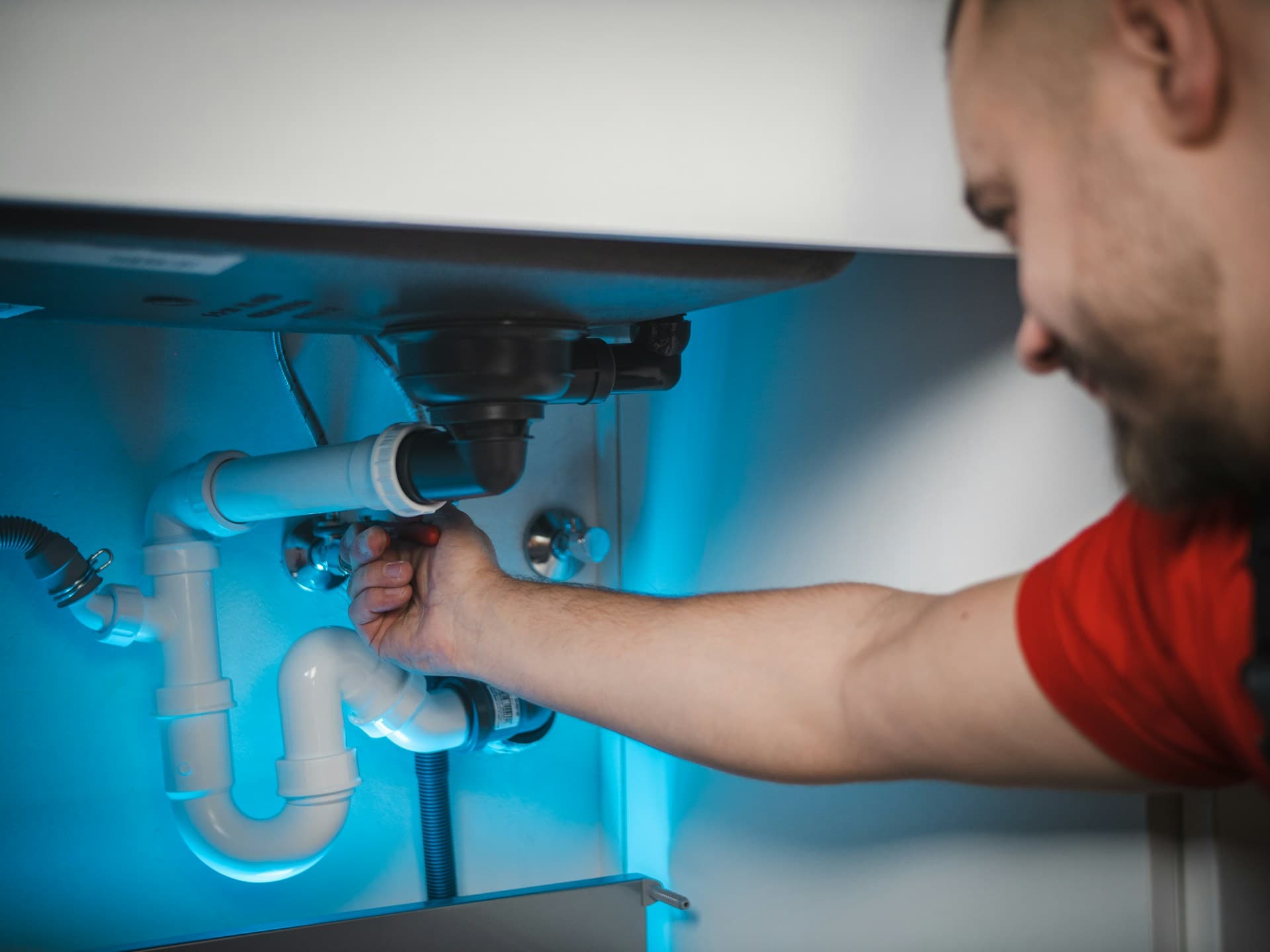
General Plumbing Rough-In
Installation of water supply pipes, sanitary drainage, and gas rough-in for residential new builds and renovations. Covers trenching for under-slab drainage, PVC solvent cement welding, copper soldering and brazing, core drilling concrete for penetrations, pressure testing, and connection to mains services. Includes controls for trench collapse, solvent fume inhalation (MEK/THF), hot work burns, silica dust from concrete cutting, electrical contact from concealed wiring, manual handling of pipe bundles, and confined space work in subfloors and ceiling cavities. Pre-filled hazards, controls, and risk ratings.
Rough-in is where the apprentice on a plumbing crew earns or loses their stripes. The pipework that goes in before the slab pour or the wall sheets close up is the work no one will see again — until something leaks behind a tiled wall and the builder rings asking why the pressure test didn't catch it. The standards governing this stage are AS/NZS 3500.1:2025 for water services, 3500.2:2025 for sanitary plumbing and drainage, 3500.4:2025 for heated water services, and 5601.1:2022 for any gas rough-in; the SWMS walks through each connection, fitting and pressure test against the right one rather than as one undifferentiated "plumbing". The 2025 editions of AS/NZS 3500 are mandatory for new plumbing work from 20 October 2025 (PCA reference).
Three moments carry the bulk of the risk on this stage. The first is hot work. Soldering and oxy-acetylene brazing inside a framed wall ignites timber framing, sarking and insulation the moment the operator looks away — a hot work permit, a fire blanket within two metres, an extinguisher rated for the actual fuel, and a 30-minute fire watch after the last joint is the sequence that prevents a callback and a fire claim. The second is solvent vapour. PVC solvent cement carries MEK at a 150 ppm TWA and 300 ppm STEL, plus THF with documented liver effects; in a closed-up subfloor or a stud wall before sheeting, both gather quickly without forced ventilation. The third is concealed services. Chasing through pre-2003 walls or coring a slab without a cable-and-pipe locator pass is how electrocution and gas-line strikes happen on rough-in.
The trench column matters too. Under-slab drainage to AS/NZS 3500.2:2025 means trench shoring under AS 4744.1:2025 - Steel shoring and trench lining - Design once depth passes the threshold (AS 4744.1:2000 was superseded in 2025), and soil at 1.5 tonnes per cubic metre doesn't give a worker long to react. RIIWHS202E confined space entry for subfloor and ceiling cavity work, and the apprentice's direct supervision under a CPC32420 sign-off are the operator-side baseline. Asbestos awareness training is required where work in pre-1990 buildings risks disturbing ACMs — but rough-in plumbing should not actively remove asbestos (that requires a separately-licensed Class A or B removalist). Pressure test, capped joint, fire watch, sign-off — the rough-in rhythm holds when the document captures it that way.
What's In Your SWMS
7 Hazards & Controls
Crush injuries, asphyxiation, broken bones, spinal injuries, internal organ damage, death
Route drainage above ground where design allows. Use trenchless pipe-pulling technology for sewer connections where feasible.
Reduce trench depth by adjusting pipe route. Use mechanical excavation instead of hand digging to minimise time workers spend in trench.
Establish exclusion zone around trench. No plant or vehicles within 1m of trench edge. Keep spoil pile minimum 1m from edge.
- Trench shoring, shields, or hydraulic shores for trenches exceeding 1.5m depth
- Batch or batter trench walls to stable angle (1:1 minimum for clay, 1:1.5 for sand)
- Install trench ladder every 9m for rapid egress
- Dewater trench if groundwater present - pump and drainage system
- Written geotechnical advice required for trenches exceeding 1.5m in unstable ground
- Daily trench inspection before entry and after rain
- Monitor trench walls for cracking, bulging, or seepage during work
- Minimise time workers spend in trench - prepare materials at surface
- No more than 2 workers in trench at any time
- Rescue plan established before any trench entry
- Toolbox talk on trench safety before each trench task
Hard hat (AS/NZS 1801:2024) mandatory in all trenches. Steel cap boots. High-visibility vest.
15-Step Work Procedure
Equipment & PPE
Equipment (14)
- Core drill (diamond tipped)
For concrete penetrations. Wet cutting with water suppression mandatory to control silica dust. Secure to mounting rig for stability.
- SDS rotary hammer drill
For masonry penetrations and bracket fixing. Dust extraction attachment required for concrete drilling.
- Pipe cutters (copper, PVC, PEX)
Ratchet PVC cutter, copper tube cutter, PEX crimp/press tool. Deburr all cut ends before joining.
- Soldering kit (gas torch, solder, flux)
Lead-free solder only for potable water (AS 4020 compliance). Fire blanket and extinguisher within 2m during use. MAPP or propane torch.
- Press fitting tool (copper or PEX)
Battery-powered press tool for mechanical press fittings. Eliminates hot work hazard where used. Inspect jaws before use.
- PVC solvent cement and primer
Contains MEK and THF volatile solvents. Use in well-ventilated areas only. SDS must be on site. Keep containers sealed when not in use.
- Pressure test pump and gauge
Hydrostatic test pump for water supply testing. Pressure relief valve must be functioning. Gradual pressurisation only.
- Cable and pipe locator
Non-contact voltage detector and electromagnetic cable locator. Scan all surfaces before drilling or cutting penetrations.
- Laser level and pipe laser
For establishing drainage falls (minimum 1:60 for 100mm pipe). Laser safety: avoid direct eye exposure.
- Reciprocating saw
For cutting existing pipes, framing notches, and demolition work. Correct blade for material type.
- Trench shoring equipment
Trench shields, hydraulic shores, or timber shoring. Required for trenches exceeding 1.5m depth. Geotechnical advice required for unstable ground.
- Fire extinguisher and fire blanket
Dry chemical extinguisher minimum 2kg. Fire blanket for hot work. Position within 2m of soldering/brazing operations.
- Step ladder and extension ladder
Industrial rating 120kg minimum. For roof penetration access and ceiling cavity work. Secured at top, 4:1 angle ratio.
- First aid kit
Include burn dressings, eye wash, chemical exposure treatment, wound dressings, and cold water for cement burns.
PPE (8)
- Safety glasses (impact rated)AS/NZS 1337.1:2010
MANDATORY during all drilling, cutting, and soldering. Impact rated for flying debris and molten solder splash protection.
- Organic vapour respirator (half-face)AS/NZS 1716:2012 (device); AS/NZS 1715:2009 (selection/use/fit testing)
Required when using PVC solvent cement in enclosed or poorly ventilated areas. Class A organic vapour cartridge. Fit tested per AS/NZS 1715:2009.
- P2 dust maskAS/NZS 1716:2012 (device); AS/NZS 1715:2009 (selection/use)
Required during concrete drilling and cutting for silica dust control. Minimum P2 rated for respirable crystalline silica.
- Safety footwear (steel cap, puncture-resistant sole)AS 2210.3:2019
Steel cap for dropped pipes and tools. Puncture-resistant sole for nails on renovation sites. Ankle support for trench work.
- Chemical-resistant gloves (nitrile or butyl rubber)AS/NZS 2161.1:2016 (general requirements). Chemical protection performance is most commonly specified to EN ISO 374 (chemicals and microorganisms).
Required when handling PVC solvent cement, primer, and flux. Butyl rubber preferred for MEK/THF resistance. Change gloves if breakthrough occurs.
- Leather gauntlet glovesAS/NZS 2161.1:2016 (general requirements). Heat/flame protection performance is best specified to EN 407 (international thermal-risk standard for protective gloves).
Required for soldering and brazing operations. Gauntlet style to protect wrists and forearms from heat and molten solder splash.
- Hearing protection (Class 5)AS/NZS 1270:2002
Required during core drilling, SDS drilling, and reciprocating saw use. Impulse noise from hammer drill exceeds 85 dB(A).
- Hard hatAS/NZS 1801:2024
Required in trenches (falling objects/spoil), below elevated work areas, and when working near plant or crane operations.
Training & Emergency
Competency Requirements
- Construction Induction Card (White Card)training
Required for all workers on construction sites. CPCWHS1001.
- Plumbing Licence (state-specific)licence
Licensed plumber required in all Australian jurisdictions. Underpinned by Certificate III in Plumbing (CPC32420). NSW: required for work over $5,000. Apprentices work under direct supervision of licensed plumber only.
- Certificate III in Plumbing (CPC32420)certificate
Nationally recognised trade qualification. Covers water services, sanitary drainage, roofing (stormwater), and gas fitting streams.
- Gas Fitting Licence (if gas work included)
Separate gas fitting authorisation required in most states for gas pipework installation. Must comply with AS/NZS 5601.1:2022.
- Confined Space Entry Training (RIIWHS202E)
Required for workers entering subfloor spaces, ceiling cavities, or risers that meet confined space definition. Covers atmospheric testing, entry permits, and rescue procedures.
- Asbestos Awareness Training
Required for all workers on pre-1990 renovation sites. Covers identification of asbestos-containing materials (ACMs) and safe work procedures to avoid disturbance. (Note: this is general identification/awareness training delivered by RTOs and asbestos-licensed assessors - not a single national unit of competency. CPCCDE3014 "Remove non-friable asbestos" is a separate active-removal unit and should NOT be confused with awareness training. If plumbing rough-in scope unexpectedly requires removal of non-friable asbestos, work must stop and a Class B licensed removalist or competent person with CPCCDE3014 must be engaged.)
- First Aid Certificate
HLTAID011 Provide First Aid. Recommended for at least one team member on site. Critical given chemical exposure and burn risks.
Emergency Procedures
TRENCH COLLAPSE: Call 000 immediately. Do NOT enter collapsed trench to rescue - secondary collapse risk. Direct rescue from surface if possible. Keep bystanders clear. If buried worker is visible and breathing, protect airway from further soil.
SOLVENT FUME OVEREXPOSURE (dizziness, confusion, loss of consciousness): Remove person to fresh air immediately. Call 000 if unconscious. Do not re-enter space without respiratory protection. Ventilate area before any re-entry.
ELECTRIC SHOCK: Do NOT touch person if still in contact with electrical source. Isolate power at switchboard. Call 000. Commence CPR if no breathing or pulse. AED if available.
GAS LEAK: Evacuate area immediately. No ignition sources (phones, switches, tools). Ventilate area. Call gas emergency line and 000. Do not re-enter until declared safe.
BURN FROM HOT WORK: Cool under running water for 20 minutes. Do NOT apply ice, butter, or creams. Cover with sterile dressing. Seek medical attention for all burns beyond superficial.
Everything above, included in your SWMS document.
Get This TemplateWriting a SWMS from scratch?
That's 2-4 hours of research, formatting, and cross-referencing regulations.
We've done the starting work — pick your template, add your details, review.
Or just do this:
- Unlimited documents
- All 70+ templates
- Instant PDF & DOCX
- Cancel anytime
High-Risk Construction Work Categories
Under Australian WHS Regulations (Section 291 - High Risk Construction Work; Part 4.2 - Excavation Work; Part 4.3 - Confined Spaces), this work is classified as high-risk due to:
- Work in or on trench deeper than 1.5 metres (Under-slab drainage trenches for sewer and stormwater connections commonly exceed 1.5m depth. Shoring, battering, or benching required per excavation code of practice.)
- Work in confined spaces (Subfloor spaces, ceiling cavities, and service risers may meet confined space definition. Risk of oxygen depletion from PVC solvent cement fumes in enclosed areas.)
- Work on or near energised electrical installations (Core drilling and pipe routing through walls and floors creates risk of contact with concealed electrical cables. Cable detection and isolation required before penetrations.)
- Work on or near pressurised gas mains or piping (Gas rough-in involves installation and pressure testing of gas pipework. Work must comply with AS/NZS 5601.1:2022.)
- Work in area with contaminated or flammable atmosphere (PVC solvent cement releases MEK and THF volatile organic compounds. Fumes are heavier than air and accumulate in trenches, subfloors, and enclosed spaces creating flammable and toxic atmosphere.)
Australian Standards Referenced
National Guidance Documents
- Safe Work Australia - Model Code of Practice: Excavation Work
- Safe Work Australia - Model Code of Practice: Confined Spaces
- Safe Work Australia - Model Code of Practice: Welding Processes
- Safe Work Australia - Model Code of Practice: Hazardous Manual Tasks
- Safe Work Australia - Working with Silica and Silica Containing Products National Guide
- Plumbing Code of Australia (NCC Volume Three)
Who Needs This SWMS?
This template is designed for the following trades and roles performing general plumbing rough-in work.
Frequently Asked Questions
Why is a hot work permit and fire watch required after the last solder joint?
Soldering and brazing inside a framed wall ignites timber framing, sarking and insulation through smouldering — the joint looks fine when the operator walks away, but heat soaks into adjacent framing and the wall lights up an hour later. The Model Code of Practice on Managing Risks of Hazardous Chemicals in the Workplace covers hot-work permits as a control on flammable structures. Working sequence: a fire blanket within two metres of the joint, an extinguisher matched to the fuel (CO2 or dry chemical, not water near electrical), and a 30-minute fire watch with the operator inspecting the cavity for smoke, heat or discolouration after the last joint. The residential fire claims that come from plumbing ignition consistently trace back to skipped fire watches.
Do you need a licence to do plumbing rough-in in Australia?
Yes. Plumbing is a licensed trade in all Australian states and territories. You need a plumbing licence underpinned by Certificate III in Plumbing (CPC32420). In NSW, a licence is required for work over $5,000 in labour and materials. Apprentices may only work under the direct supervision of a licensed plumber. Gas rough-in requires a separate gas fitting authorisation in most jurisdictions.
Is PVC solvent cement dangerous?
Yes. PVC solvent cement contains MEK (Methyl Ethyl Ketone) and THF (Tetrahydrofuran) which are volatile organic compounds. MEK has a workplace exposure standard of 150 ppm (TWA). THF is associated with liver damage with chronic exposure. Fumes are heavier than air and accumulate in trenches, subfloors, and enclosed spaces. Adequate ventilation, chemical-resistant gloves, and organic vapour respirators are required when working in enclosed areas.
When is trench shoring required for plumbing work?
Trench shoring (or equivalent protection such as battering or benching) is required for all trenches exceeding 1.5m depth under the Excavation Work Code of Practice. For trenches in unstable ground, written geotechnical advice is required. One cubic metre of soil weighs approximately 1,600kg - trench collapse is almost always fatal. Spoil must be kept minimum 1m from the trench edge.
Can an apprentice solder copper on a plumbing rough-in?
Apprentices working under a licensed plumber holding Cert III in Plumbing CPC32420 can perform soldering as part of the work they are being trained for, but the licensed plumber on the job remains responsible for the work and signs off the inspection. The state plumbing authority (NSW Fair Trading, VBA, QBCC, WA Building & Energy) sets the supervision ratio and on-site supervisor requirements; in most states the supervisor must be physically on site or contactable and able to attend within a defined response time. An apprentice unsupervised on hot work is operating outside the licensing arrangement, and the licensed plumber carries the regulatory breach.
What Australian Standards apply to plumbing rough-in?
The primary standard is AS/NZS 3500 (2025 edition mandatory for new plumbing work from 20 October 2025) covering water services (Part 1), sanitary plumbing and drainage (Part 2), stormwater drainage (Part 3), and heated water services (Part 4). Gas work must comply with AS/NZS 5601.1:2022. All products in contact with drinking water must be AS/NZS 4020:2018 certified (sixth edition with Amd 1 Sept 2022) and carry WaterMark approval. The Plumbing Code of Australia (NCC Volume Three) provides the overarching regulatory framework.
Can apprentices do plumbing rough-in work?
Apprentice plumbers can perform rough-in work but only under the direct supervision of a licensed plumber. They must hold a White Card (construction induction) and be registered with an approved training provider working toward Certificate III in Plumbing. Apprentices should not perform confined space entry, gas work, or hot work without qualified supervision and appropriate training.
What are the fire risks with copper soldering?
Copper soldering uses open flame torches reaching 1,300-1,900°C. The main fire risk is flame contact with combustible materials such as timber framing, insulation, and PVC pipes. A fire blanket must be positioned behind all joints being soldered. A fire extinguisher must be within 2m. Post-work fire watch of at least 30 minutes is required, with inspections at 15-minute intervals for 90 minutes total, as smouldering may not be immediately visible.
How do you avoid hitting electrical cables when drilling for pipe penetrations?
Scan all surfaces with an electromagnetic cable locator and non-contact voltage detector before every penetration. Mark all detected cables on the surface. If scanning is inconclusive, assume cables are present and isolate the circuit at the switchboard using lock-out tag-out procedures. Never drill directly above, below, or beside a power point or switch without scanning. A licensed electrician should confirm isolation of circuits in the work area.
Is a confined space entry permit needed for subfloor work?
If the subfloor space meets the definition of a confined space under WHS Regulations (enclosed or partially enclosed, not designed for continuous occupancy, risk from atmospheric contamination or restricted access), then yes - a formal confined space risk assessment, entry permit, standby person, and rescue plan are required. PVC solvent cement fumes in a subfloor create additional atmospheric hazards that may trigger confined space requirements even in spaces not typically classified as such.
Get Your General Plumbing Rough-In SWMS
Pre-filled. Risk-rated. Ready in 5 minutes.
Get Your SWMS PDFNo credit card required. First SWMS is free.
