Concrete Cutting with Handheld Saw
Cutting concrete slabs, walls, or footings using petrol or electric handheld concrete saws. Pre-filled hazards, controls, and risk ratings.
Australian silicosis cases have risen substantially among construction tradies, and concrete cutters carry one of the highest exposure profiles of any trade in that cohort. Respirable crystalline silica from a handheld saw at full noise on a dry-cut slab loads the breathing zone fast — the workplace exposure standard sits at 0.05 mg/m³ over an eight-hour day, and a single dry cut on a residential driveway can put the operator above it in minutes. The control that drops the dose is wet cutting with an integrated water suppression system; the same control drops noise from the saw below the level where Class 5 muffs become mandatory, and stops the diamond blade running hot enough to fragment.
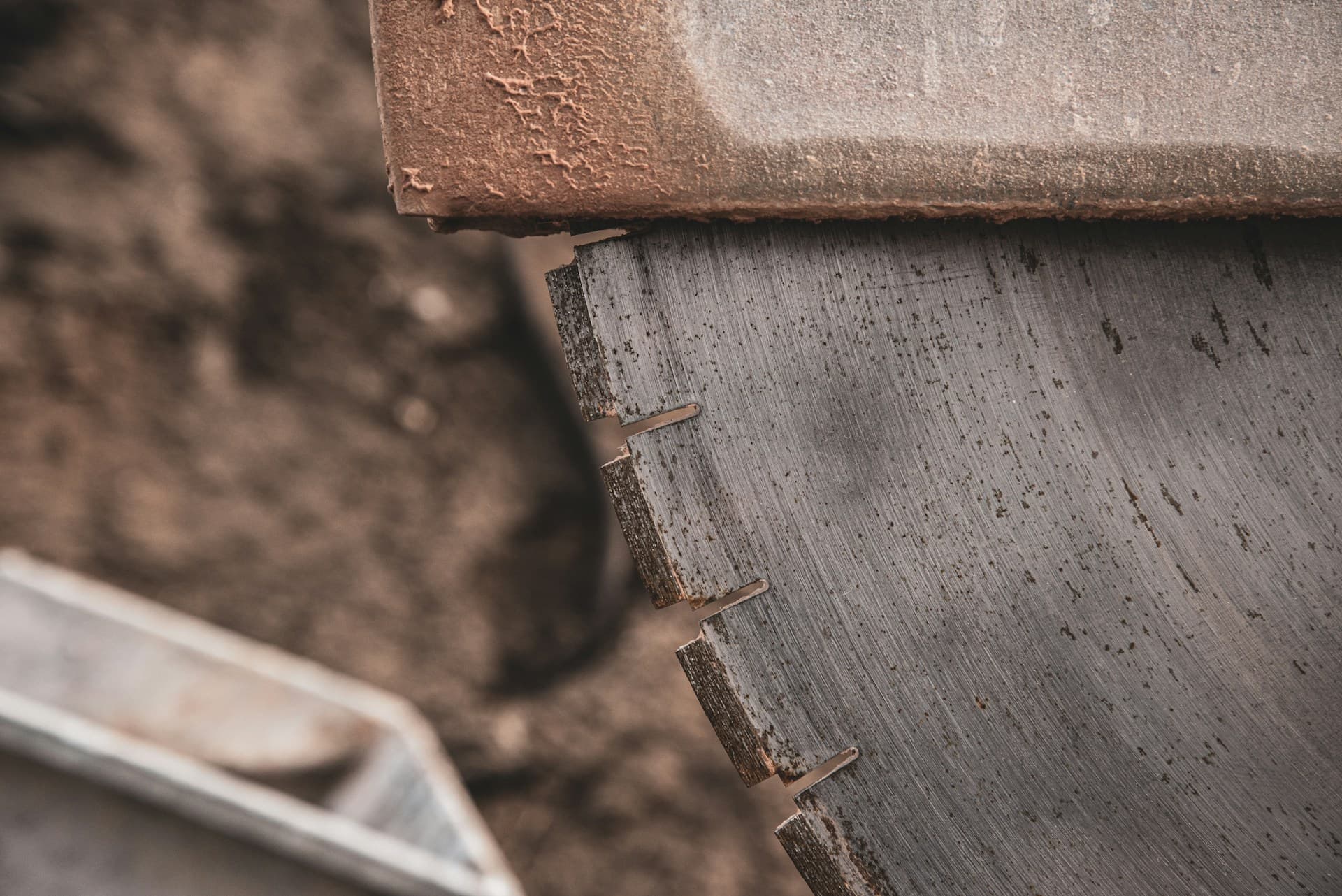
Blade fragmentation is the second hazard. A saw blade rated for masonry meeting heavy reinforcement bar fails violently — fragments leave at high speed, and a 5-metre exclusion zone with a dedicated spotter is what stands between the blade and the next worker on site. Blade selection against the actual material being cut is the working control; the masonry-blade-on-rebar shortcut is how operators end up in emergency. Fuel and ignition come next on petrol saws — no smoking within ten metres, an extinguisher within five, and the saw shut off before refuelling are the SafeWork NSW Cutting and Drilling Concrete Code expectations.
Underneath all of that sits the hand-arm vibration column. Continuous saw operation past thirty minutes pushes HAVS exposure into the action zone; ten-minute breaks and rotation across operators are the practical controls, and they hold up only when a crew is staffed for them. White Card, 10830NAT silica dust awareness for any operator on the saw, concrete cutting equipment competency and current first aid sit beneath the day's operating side. The crew that runs wet, runs blade-rated, runs the exclusion zone and runs the rotation finishes the job without the dose that adds up over a career.
What's In Your SWMS
11 Hazards & Controls
Silicosis, lung cancer, chronic respiratory disease
Erect plastic sheeting to isolate work area from occupied spaces
- Controlled processing MANDATORY since 1 September 2024 - wet suppression, on-tool extraction, LEV, isolation, or enclosed cabin with HEPA
- Use wet cutting method with continuous water suppression (preferred)
- On-tool dust extraction with M-class HEPA where wet cutting not practical
- Ensure adequate ventilation (open windows/doors) for residual dust
- Limit cutting duration (max 30 min continuous, 10 min breaks)
- No dry sweeping - use wet methods or HEPA vacuum for cleanup
- Employees trained in silica hazards (10830NAT recommended)
P2 respirator (AS/NZS 1716:2012) worn at all times during cutting and cleanup. P3 or PAPR for prolonged dry-cut situations.
16-Step Work Procedure
Equipment & PPE
Equipment (6)
- Handheld concrete saw (petrol/electric)
14-16 inch diamond blade recommended
- Diamond cutting blade
Rated for concrete/reinforced concrete
- Water suppression system
For wet cutting to control silica dust
- First aid kit
- Fire extinguisher (dry chemical)
Required for petrol-powered saws
- Crowbar and demolition hammer
For breaking out cut sections
PPE (6)
- P2 respirator (P3 or PAPR for prolonged dry-cutting fallback)AS/NZS 1716:2012 (device); AS/NZS 1715:2009 (selection/use/fit testing)
Silica-rated for concrete dust. Note: AS/NZS 1716 uses P1/P2/P3 classifications - "N95" is the U.S. NIOSH equivalent, not the AS/NZS classification. Use P2 minimum, P3 or PAPR for prolonged dry-cut situations where wet cutting cannot be used.
- Safety glassesAS/NZS 1337.1:2010
- Hearing protection (Class 5 earmuffs)AS/NZS 1270:2002
For 105+ dB noise exposure. Class 5 (SLC80 ≥30 dB) earmuffs per AS/NZS 1270 SLC80 classification.
- Steel cap bootsAS 2210.3:2019
- Cut-resistant glovesAS/NZS 2161.3:2020 (mechanical risks)
- Long pants and long sleeves
Training & Emergency
Competency Requirements
- Construction Induction (White Card)training
Required for all workers on construction sites
- Silica Dust Awareness Trainingtraining
Understanding of RCS hazards and control measures
- Concrete Cutting Equipment Trainingtraining
Specific training on handheld saw operation and safety
- First Aid Certificate
At least one person on site should hold current certificate
- Current Driver's Licence
If operating company vehicle
Emergency Procedures
If silica dust exposure occurs (coughing, difficulty breathing): Move to fresh air immediately, remove contaminated clothing, seek medical attention if symptoms persist.
For eye contact with concrete dust or debris: Flush eyes with clean water for at least 15 minutes, hold eyelids open. Seek medical attention.
For cuts or lacerations from blade or debris: Apply firm pressure with clean cloth, elevate if possible, seek first aid. For severe bleeding, call 000.
In case of fire (fuel spill ignition): Use dry chemical fire extinguisher. Do not use water on fuel fires. Evacuate if fire cannot be controlled within 30 seconds.
For equipment kickback injury: Stop all work, assess injury, administer first aid. Report incident to supervisor immediately.
If worker becomes trapped or struck by falling concrete: Do not move the person unless in immediate danger. Call 000 immediately. Provide first aid if trained.
Everything above, included in your SWMS document.
Get This TemplateWriting a SWMS from scratch?
That's 2-4 hours of research, formatting, and cross-referencing regulations.
We've done the starting work — pick your template, add your details, review.
Or just do this:
- Unlimited documents
- All 70+ templates
- Instant PDF & DOCX
- Cancel anytime
High-Risk Construction Work Categories
Under Australian WHS Regulations (291 - High Risk Construction Work), this work is classified as high-risk due to:
- Involves use of powered mobile plant (Concrete saw)
- Involves structural alteration requiring temporary support
Australian Standards Referenced
Who Needs This SWMS?
This template is designed for the following trades and roles performing concrete cutting with handheld saw work.
Frequently Asked Questions
Does concrete cutting on a residential job require a SWMS?
Concrete cutting on its own isn't listed as high-risk construction work under the Model Code of Practice on Construction Work, but it crosses into HRCW the moment it's done at height above 2m, near energised electrical mains, or as part of structural alterations. On most residential cutting (driveway joints, slab penetrations for plumbing), the SWMS is best practice rather than mandatory. On a strip-out or a commercial site, the principal contractor will require it as part of the wider HRCW envelope. Either way the document captures the wet-cut spec, blade selection and exclusion-zone radius, which a generic concreter induction doesn't.
Is wet cutting legally mandatory in Australia?
From 1 September 2024, SafeWork Australia's silica regulations require engineered dust controls on any work involving materials with crystalline silica content above 1%. Wet cutting, on-tool dust extraction and local exhaust ventilation are the primary expectation, with respiratory protection as a layered control rather than the only one. Dry cutting concrete or masonry without an on-tool extractor doesn't comply with that regulation. The SafeWork NSW Cutting and Drilling Concrete and other Masonry Products Code of Practice sets out the practical expectations for water suppression and HEPA cleanup.
Why does blade selection matter on rebar-heavy concrete?
A diamond blade with a soft segment bond — designed for clay brick or aerated block — fails violently when it meets heavy reinforcement bar. Fragments leave the blade at speeds that turn a routine cut into an emergency department visit, and the 5-metre exclusion zone with a dedicated spotter is what stops the next worker on site from being in the line of fire. Reinforced concrete needs a blade rated specifically for concrete-and-steel (harder bond, designed to handle the rebar load). Manufacturers spec this clearly on the box; the masonry-blade-on-rebar shortcut is a documented blade-fragmentation cause and one of the recurring saw-injury patterns on commercial sites.
What ticket does the operator need on the saw?
There's no standalone licence for concrete cutting in Australia, but the operator needs documented competency. 10830NAT Course in Crystalline Silica Exposure Prevention is the silica training most state regulators reference for any worker on a saw cutting silica-containing material. White Card on construction sites. State regulators (SafeWork NSW, WorkSafe Victoria, WorkSafe Queensland) audit silica-training records on site, particularly after the engineered stone ban — and the operator on the saw needs documented training in date. Records under the trainee's name, the unit code, and the issuing RTO are what audit asks for.
Why is silica dust such a significant hazard?
Crystalline silica dust is generated when cutting concrete and is classified as a known human carcinogen. Inhaling respirable crystalline silica (RCS) can cause silicosis (an incurable lung disease), lung cancer, and chronic respiratory disease. This is why wet cutting methods, adequate ventilation, and P2 respirators are mandatory controls in this SWMS.
Get Your Concrete Cutting with Handheld Saw SWMS
Pre-filled. Risk-rated. Ready in 5 minutes.
Get Your SWMS PDFNo credit card required. First SWMS is free.
