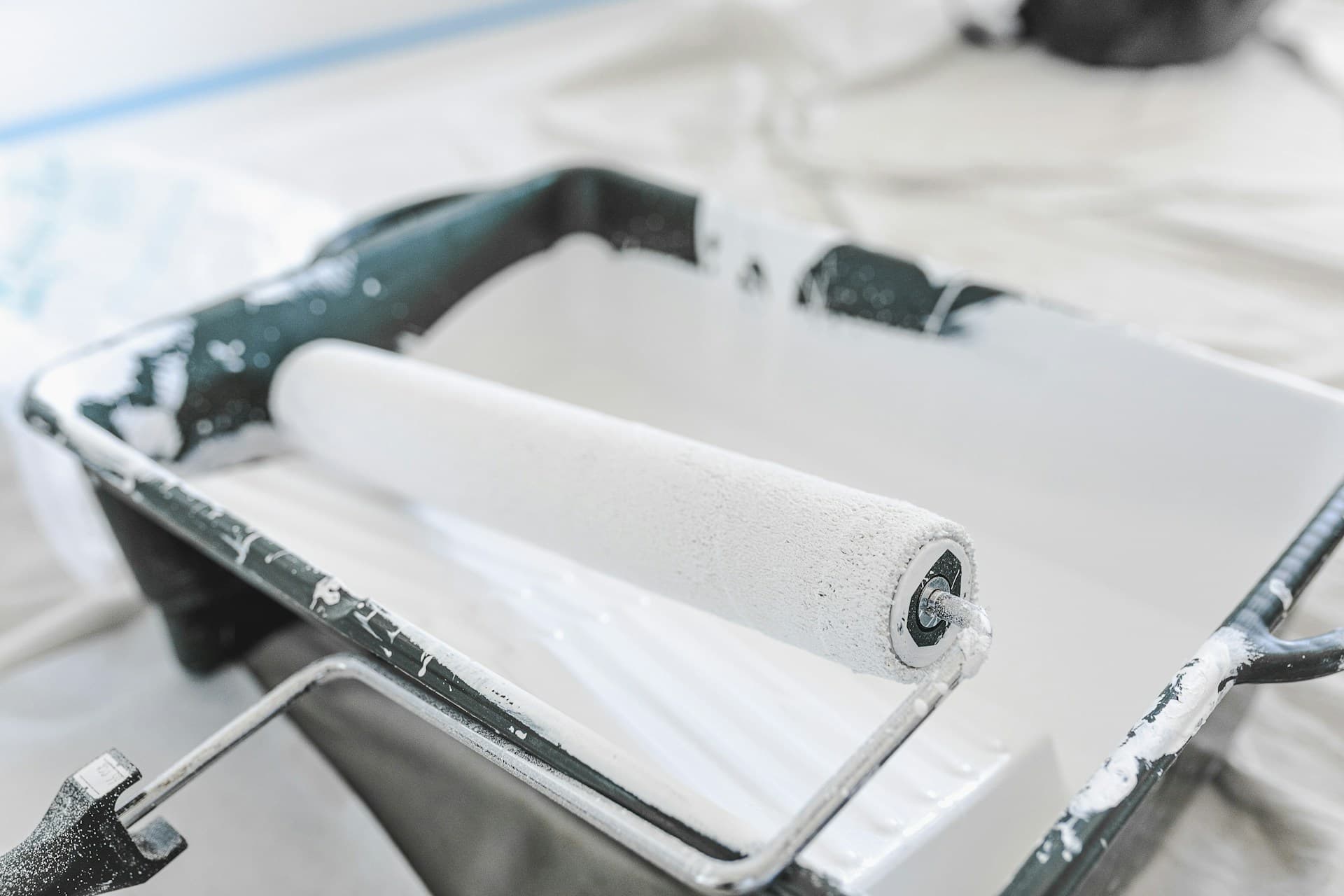
External House Painting
External painting of house walls, fascia, eaves, windows, doors, and trim including surface preparation, priming, and finish coat application. Covers brush, roller, and spray application methods with scaffolding and ladder access. Includes lead paint considerations for pre-1970 buildings. Pre-filled hazards, controls, and risk ratings.
External painting on a two-storey weatherboard puts a painter on a ladder or scaffold against the eaves for hours, and the trade's fatality data is dominated by exactly that fall. The Model Code of Practice on Managing the Risk of Falls at Workplaces sets the discipline — perimeter scaffold to AS/NZS 1576.1:2019 for the upper-storey work, an EWP for the gable detail, fall arrest to AS/NZS 1891.1:2020 where neither covers the geometry. Ladder work is the recognised mechanism, not because painters can't use ladders, but because the trade leans on them past the point of safe span.
Pre-1970 buildings carry the second hazard. External weatherboards, eaves and window trim of that era commonly have lead in the paint film, and prep — scraping, wire-brushing, sanding — releases lead dust into a wide environment that includes the homeowner's garden, the neighbour's yard and the adjacent vehicles. AS/NZS 4361.1:2017 prescribes containment, sample testing, wet sanding or HEPA-extracted sanding, and licensed disposal. The "P2 mask on a sander" approach is not enough; the work is licensed lead-paint removal where the surface area passes the state threshold.
Metal scaffold near overhead service drops is the recurring electrocution mechanism on suburban jobs. Powerline clearance widens with line voltage, and a spotter watching the leading edge of a scaffold lift against a service line beats hoping the bracket clears. Wind-condition stop limits matter for spray work where the dispute pattern is overspray drift onto neighbouring property and vehicles. White Card, painting trade competency, Working at Heights under RIIWHS204E, lead paint awareness, and a current first aid form the trade certification on the day. Test the paint, plan the platform, watch the wires — that sequence is what holds.
What's In Your SWMS
9 Hazards & Controls
Fractures, spinal injuries, head injuries, death
Use extension poles from ground level where possible to eliminate work at height
Use scaffolding with guardrails instead of ladders for extended work
Establish exclusion zones below work areas to protect workers and public
- Scaffold must have full guard rails (900mm), mid rails, and toe boards (150mm)
- Secure scaffold to building at required intervals per AS/NZS 1576.1:2019 and AS 4576:2020
- Extension ladders secured at top and bottom - use ladder stabilisers
- Install edge protection when working near roof edges
- EWP to be operated on firm, level ground with outriggers deployed
- Complete daily scaffold inspection before use - use checklist
- Never work on scaffold in winds exceeding 40 km/h
- Maintain three points of contact on ladders at all times
- Do not overreach - keep belt buckle within ladder rails
- Never stand on top two rungs of stepladder
- Do not carry tools or paint cans while climbing - use rope and bucket
- Move scaffold or ladder rather than overreaching
- Ensure adequate lighting for early/late work
Full body harness with shock-absorbing lanyard when working above 2m without guardrails. Non-slip safety footwear essential.
23-Step Work Procedure
Equipment & PPE
Equipment (13)
- Mobile or fixed scaffolding
Erected by competent person. Designed to support compliance with AS/NZS 1576.1:2019 (general requirements) and AS 4576:2020 (Australian-only safe use guidelines). Full guard rails, mid rails, toe boards required.
- Extension ladder (industrial rated)
Minimum 120kg load rating. Designed to support compliance with AS 1892.1:2018 (portable ladders — performance and safety requirements; Australian-only). Position at 1:4 angle ratio. Secure top and bottom.
- Stepladder (industrial rated)
Minimum 120kg load rating. For low-level work only. Never on scaffold platform.
- Paint brushes (various sizes)
50mm, 75mm, 100mm for cutting in and detail work.
- Paint rollers, roller covers, and trays
Exterior roller covers for textured surfaces. Extension pole for reach.
- Extension pole for roller (up to 4m)
Reduces ladder repositioning. Use telescopic pole for extended reach.
- Pressure washer
For surface preparation. Maximum 2000 PSI for timber. Keep nozzle 300mm from surface.
- Scrapers, wire brushes, and sanding equipment
For removing loose and flaking paint. Use dust extraction where possible.
- Drop sheets (heavy duty)
Plastic for ground protection. Secure to prevent wind lifting. Protect gardens and paths.
- Masking tape, paper, and plastic
For windows, doors, and fixtures. Remove promptly after painting.
- Exterior filler, caulk, and sealant
Use flexible exterior-grade filler. Seal gaps before painting.
- First aid kit
Include eye wash, burn treatment, and wound dressings.
- Spill kit
For paint and solvent spills. Absorbent materials, disposal bags.
PPE (8)
- Hard hat (Type 1)AS/NZS 1801:2024
Required when working below scaffold or where overhead hazards exist.
- Safety glasses or gogglesAS/NZS 1337.1:2010
Essential for overhead work and spray painting. Splash protection for pressure washing.
- Dust mask (P2) for sandingAS/NZS 1716:2012
Required during surface preparation and sanding operations. AS/NZS 1716 uses the P1/P2/P3 particulate-filter classification; U.S. NIOSH N95/N99 and European EN 149 FFP2/FFP3 are different national schemes.
- Half-face respirator with organic vapour cartridgesAS/NZS 1716:2012
Required for spray painting, oil-based paints, and solvent use. Cartridge class A (organic vapours, BP > 65 °C) per AS/NZS 1716; combined with P2 particulate filter when spraying.
- Chemical-resistant glovesAS/NZS 2161.10.1:2024 (chemical/microorganism risks); AS/NZS 2161.1:2016 (general requirements)
For handling solvents, oil-based paints, and cleaning chemicals. AS/NZS 2161.10.1:2024 is the chemical-resistance standard (aligned to ISO 374-1:2024); the older "AS/NZS 2161.2" cite was Part 2 (sampling and testing methodology), not the chemical-resistance part.
- Safety footwear (non-slip, steel cap)AS 2210.3:2019
Non-slip soles for ladder and scaffold work. Steel cap for falling object protection. AS 2210.3 is now AS-only (no longer joint NZ since the 2019 revision).
- Coveralls or protective clothing
Long sleeves for sun protection and paint contact prevention.
- Sun protection (hat, sunscreen SPF50+, long sleeves)
Essential for outdoor work. Reapply sunscreen every 2 hours.
Training & Emergency
Competency Requirements
- Construction Induction Card (White Card)training
Required for all workers on construction sites
- Painting Trade Competencycertificate
Experience in surface preparation and paint application. May hold Certificate III in Painting and Decorating.
- Working at Heights Trainingtraining
Training in fall prevention, ladder safety, and scaffold use. Required for work above 2m.
- Scaffold User Trainingtraining
Training in safe scaffold use, inspection, and hazard identification.
- Scaffolding High Risk Work Licence
Required for scaffold erection. Basic (SB) for <4m, Intermediate (SI) for 4-15m, Advanced (SA) for >15m.
- EWP High Risk Work Licence (WP)
Required for boom lift operation over 11m. Scissor lifts under 11m do not require HRWL.
- Lead Paint Awareness
Required if working on pre-1970 buildings. Covers identification, risks, and controls.
- Licensed Lead Paint Removalist
Required for lead paint removal work. State licensing varies.
- Spray Painting Competency
Required if using airless spray equipment
- First Aid Certificate
Recommended for at least one team member on site. HLTAID011 Provide First Aid.
Emergency Procedures
FALL FROM HEIGHT: Do not move injured person unless immediate danger. Call 000 if suspected spinal injury. Keep person warm and calm.
PAINT IN EYES: Immediately irrigate with clean water for minimum 15 minutes. Hold eyelids open. Do not rub. Seek medical attention.
SPRAY INJECTION INJURY: This is a medical emergency. Do not wait for symptoms. Go immediately to hospital emergency. Show SDS to doctor.
HEAT STROKE: Call 000 immediately. Move person to shade. Remove excess clothing. Apply cool water to skin. Do not give fluids if unconscious.
ELECTRIC SHOCK: Do not touch person if still in contact with power. Call 000. If safe to approach after power isolated, check breathing and begin CPR if needed.
LEAD PAINT EXPOSURE: If lead paint disturbed without controls, stop work immediately. Isolate area. Notify supervisor. Workers may require blood lead testing.
Everything above, included in your SWMS document.
Get This TemplateWriting a SWMS from scratch?
That's 2-4 hours of research, formatting, and cross-referencing regulations.
We've done the starting work — pick your template, add your details, review.
Or just do this:
- Unlimited documents
- All 70+ templates
- Instant PDF & DOCX
- Cancel anytime
High-Risk Construction Work Categories
Under Australian WHS Regulations (Chapter 6 Part 6.1 - Construction Work; Reg 291 - High Risk Construction Work; WHS Reg Part 7.2 (Lead) Regs 392-438 for lead work), this work is classified as high-risk due to:
- Risk of falling more than 2 metres (External painting typically involves work from scaffolds, extension ladders, and EWPs exceeding 2m height. Fall arrest or work positioning systems may be required.)
- Work involving hazardous chemicals (Exterior paints, primers, and solvents contain VOCs. Spray painting increases exposure risk. Adequate PPE and ventilation required.)
Australian Standards Referenced
National Guidance Documents
Who Needs This SWMS?
This template is designed for the following trades and roles performing external house painting work.
Frequently Asked Questions
What height requires fall protection for painters?
Under WHS Regulations, fall protection is required when working at a height where a person could fall 2 metres or more. This includes work from extension ladders, scaffolds, roofs, and EWPs. Fall protection includes guardrails, harnesses, or other control measures appropriate to the task.
Do painters need a scaffold licence?
Painters using scaffolds do not need a licence. However, erecting or dismantling scaffolds requires a Scaffolding High Risk Work Licence: Basic (SB) for scaffolds up to 4m, Intermediate (SI) for 4-15m, and Advanced (SA) for over 15m. Many painting contractors use licensed scaffolders for erection.
When is lead paint testing required for exterior painting?
Lead paint testing is required before any surface preparation (scraping, sanding, pressure washing) on buildings constructed before 1970. Exterior surfaces, particularly weatherboards, window frames, and fascia, often have higher lead concentrations than interiors. Testing kits are available, or engage a licensed assessor.
What PPE is required for external spray painting?
Minimum PPE for external spray painting includes: half-face respirator with organic vapour/P2 combination cartridge, safety glasses or full face shield, coveralls or disposable suit, chemical-resistant gloves, and non-slip footwear. Additional protection may be needed depending on the product being applied.
What are the safe working distances from power lines?
Safe approach distances are set by the state Code of Practice or the network-operator No Go Zone for the line, and depend on whether the worker is trained and operating under a permit. For untrained persons (the default for most painters and labourers), the WorkSafe Queensland Electrical Safety Code of Practice 2020 sets 3 metres for lines up to 132 kV, 6 metres up to 330 kV, and 8 metres above 330 kV. AS 4576:2020 and AS/NZS 1576 require additional separation when erecting metallic scaffold near overhead lines. If you cannot keep clear, contact your electricity provider for de-energisation, insulation tiger-tails, or a documented permit-to-work. Never allow ladders, scaffolds, or spray equipment to contact a power line.
Can exterior painting proceed in windy conditions?
Work should stop on scaffolds in winds exceeding 40 km/h. Extension ladder work should cease in high winds due to instability. Spray painting should only occur in low-wind conditions to control overspray. Always check weather forecasts and have a stop-work trigger for high winds.
What are the heat stress management requirements?
For outdoor painting in hot conditions: schedule work for cooler parts of the day, provide shade for rest breaks, ensure workers drink at least 1 litre of water per hour, implement work-rest cycles (e.g., 45 minutes work, 15 minutes rest in extreme heat), monitor workers for heat stress symptoms (confusion, cramps, cessation of sweating).
How should paint waste be disposed of?
Never pour paint down drains or stormwater. Collect all paint chips and debris, especially if lead paint. Leftover water-based paint can be dried and disposed of in general waste. Oil-based paints, solvents, and empty solvent containers must be taken to a licensed waste facility or council chemical collection point.
Get Your External House Painting SWMS
Pre-filled. Risk-rated. Ready in 5 minutes.
Get Your SWMS PDFNo credit card required. First SWMS is free.
