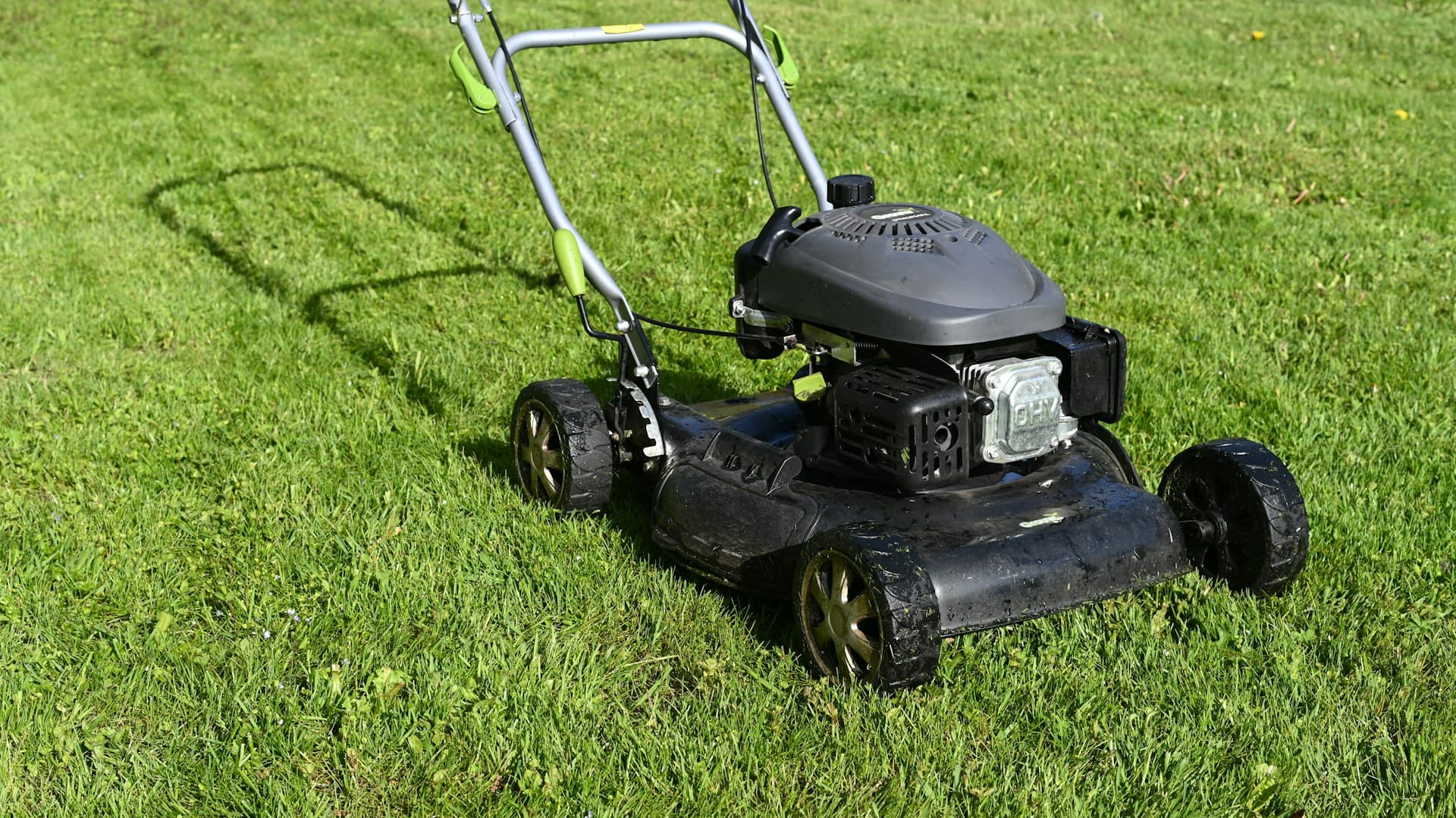
Lawn Mowing — Hand-Pushed Mower
Residential and commercial lawn mowing using hand-pushed rotary and cylinder mowers, including line trimmer (whipper snipper) edging and leaf blower cleanup. Covers projectile debris hazards (stones and metal ejected at up to 300 km/h — impact energy exceeding a .357 Magnum bullet), blade contact injuries (29 % of lawn mower injuries affect hands), noise exposure from petrol engines and power tools (85–95 dB(A)), hand-arm vibration from prolonged equipment use, manual handling on slopes and uneven terrain, fuel handling and storage (AS 1940:2017), UV radiation and heat stress during extended outdoor work (200 melanomas and 34,000 non-melanomas annually from occupational UV in Australia), snake and insect encounters, underground service strikes during edging, and exhaust fume inhalation. Lawn mowers account for 22 % of all lawn and garden equipment injuries, with 80 % occurring at residential properties. Pre-filled hazards, controls, and risk ratings.
A push-mower blade at 3,000 RPM ejects a stone, a bottle cap or a piece of wire fast enough to break a window, dent a parked car or take an eye out at 15 metres. The walk-around-and-pick-up sweep before starting is the most-skipped control in residential lawn maintenance — and the line trimmer hazard is the same with a wider radius and a public-liability cost the operator hasn't priced in. The Model Code of Practice on Managing Risks of Plant in the Workplace sets the broader plant-safety frame; a 15-metre exclusion zone, eye protection to AS/NZS 1337.1:2010, and a deck guard not bypassed cover the projectile column.
Cumulative noise across a contractor's day — push mower 85-95 dB(A), line trimmer 95-105, blower 85-100 — pushes well above the AS/NZS 1270:2002 eight-hour exposure standard. Class 5 muffs as the default rather than an upgrade is the practical reading; double protection (plugs plus muffs) on the line trimmer in particular. Hand-arm vibration from sustained line trimmer and blower use over a 30-minute continuous cap puts the operator into the action zone, and rotation across crew members beats individual stoicism.
Petrol handling is the third column most operators run loose on. Hot-engine refuelling has been known to ignite vapour around the cap — let the engine cool, refuel on bare ground in a AS 2906 container, and keep a fire extinguisher within reach. Australia carries the highest skin-cancer rate globally; an SPF 50+ regime, wide-brim hat and shade rotation across the daily route handle the UV column. White Card only where the work touches a construction site; routine residential mowing is not high-risk construction work even though the SWMS is still valuable. Walk-around, hearing on, helmet for line trimming — three habits that turn the trade from a claims pipeline into a steady income stream.
What's In Your SWMS
7 Hazards & Controls
Eye injuries including blindness (19 % of mower injuries affect eyes), facial lacerations, penetrating trauma to any body part, broken teeth, property damage to vehicles and windows.
Walk the mowing area before starting and remove all visible debris — stones, sticks, metal, glass, toys, hose fittings. Remove as many projectile hazards as practicable.
Use cylinder (reel) mower on clean, well-maintained lawns — cylinder mowers produce significantly fewer projectiles than rotary mowers. Use mulching mower with enclosed deck to contain debris.
Establish and maintain 15 m exclusion zone around mowing and line trimming operations. Stop equipment when bystanders, children, or animals enter the zone. Direct line trimmer discharge away from people, vehicles, and windows.
- Mower catcher/bag fitted at all times to contain debris discharge
- All manufacturer safety guards intact and correctly positioned on mower and line trimmer
- Mower discharge chute directed away from people, buildings, and vehicles
- Line trimmer guard correctly positioned to deflect debris from operator
- Sharp blades maintained — dull blades increase vibration and projectile risk
- Pre-mow site walk: systematically inspect and clear all debris from mowing area
- Stop mower and line trimmer when anyone enters 15 m exclusion zone
- Mow away from buildings, vehicles, and glass windows where possible
- Brief all workers on projectile hazards at pre-start
- Use warning signage at site entries: "Lawn Maintenance in Progress — Keep Clear"
- Reduce throttle/speed when mowing near hard surfaces, gravel edges, or garden beds where projectiles are more likely
High-impact safety glasses (AS/NZS 1337.1) mandatory; full face shield recommended for line trimmer operation; long pants and enclosed safety boots mandatory
12-Step Work Procedure
Equipment & PPE
Equipment (7)
- Hand-pushed rotary mower (petrol or electric)
Pre-use inspection: blade condition and tightness, oil level, fuel level, safety handle (dead-man switch) engagement, all guards intact, catcher fitted. Blade must stop within 3 seconds of releasing safety handle.
- Line trimmer / whipper snipper
Guard must be intact and correctly positioned. Use correct line thickness per manufacturer specification. Check bump-feed mechanism. 15 m debris radius — maintain exclusion zone.
- Leaf blower (backpack or handheld)
For post-mow cleanup of paths, driveways, and garden beds. Noise level 85–100 dB(A) — hearing protection required. Check air filter and fuel system before use.
- Approved fuel container (AS/NZS 2906:2001 compliant)
Metal or approved plastic safety container with self-closing lid and flame arrestor per AS/NZS 2906:2001 (joint AS/NZS designation; reconfirmed). Maximum 25 L for portable containers. Store upright in ventilated area away from ignition sources, not in direct sun. Carry spill absorbent material.
- Hand tools — rake, broom, shovel, garden bags
For manual cleanup and debris collection. Heavy-duty green waste bags or bins for clipping disposal.
- First aid kit
Stocked and checked. Must include: wound dressings for lacerations, eye wash for debris in eyes, burns dressings for exhaust/fuel burns, and pressure bandage for severe bleeding.
- Water and electrolyte drinks
Insulated water container. Minimum 1 L per worker per hour in hot conditions. Electrolyte supplements for extended outdoor work above 25 °C.
PPE (6)
- Safety glasses — high impact ratedAS/NZS 1337.1:2010
High impact rating minimum (resists 6 mm ball at 120 m/s / 432 km/h). Must be worn at all times during mowing, line trimming, and edging. Full wrap-around style preferred to prevent lateral debris entry. Tinted lens for UV protection in direct sun; clear lens for shaded conditions.
- Hearing protection — earmuffs or earplugsAS/NZS 1270:2002
Required for all petrol-powered equipment operation (85–95 dB(A) push mower, 95–105 dB(A) line trimmer, 85–100 dB(A) leaf blower). Class 3 minimum for push mower operation; Class 5 for sustained line trimmer or leaf blower use. Australian exposure standard: 85 dB(A) over 8 hours; every 3 dB increase halves permissible exposure time.
- Safety boots — steel/composite toe, non-slip soleAS/NZS 2210.3:2019
Steel or composite toe cap mandatory. Non-slip sole essential for wet grass and slopes. Enclosed ankle support. Lace-free or tucked-lace boots preferred to prevent entanglement with rotating equipment.
- Work gloves — vibration-dampeningAS/NZS 2161.3:2020
Anti-vibration padded gloves for prolonged mower and line trimmer use. Provides grip on wet equipment handles. Remove before refuelling to maintain dexterity. Do not wear loose-fitting gloves near rotating equipment.
- Long pants — heavy-duty work trousers
Mandatory during all mowing and line trimming. Protects legs from projectile debris, grass cuts, insect bites, and UV exposure. Close-fitting around ankles — avoid loose cuffs that could catch in equipment.
- Sun protection — SPF 50+ sunscreen, broad-brimmed hat, long sleeves
Broad-brimmed hat (minimum 7.5 cm brim) or hard hat with sun brim. SPF 50+ broad-spectrum water-resistant sunscreen applied 20 minutes before exposure, reapplied every 2 hours. UPF 45+ long-sleeve shirt. Australia has the highest skin cancer rate globally — 90 % of outdoor workers work without full sun protection.
Training & Emergency
Competency Requirements
- Lawn Mower and Power Equipment Operation Trainingtraining
Formal or on-the-job training in safe operation of push mowers, line trimmers, leaf blowers, and edgers. Training must cover: pre-start inspection, safe starting/stopping, operating technique, slope limits, exclusion zones, refuelling, and emergency shutdown. Training records must be maintained by PCBU. Unit of competency AHCMOM215 (Operate Commercial Lawnmowers) available through RTOs.
- General Construction Induction (White Card)
CPCCWHS1001 — Required only when lawn mowing is performed on active construction sites. Not required for routine residential or commercial grounds maintenance.
- First Aid Certificate
HLTAID011 — Provide First Aid. At least one worker in crew should hold current certificate. Critical for responding to blade contact injuries, snake bite, and heat stroke.
- Traffic Management / Traffic Controller
Required when mowing road verges, median strips, or nature strips adjacent to active traffic. Traffic controller ticket or traffic management plan may be required by council or road authority.
Emergency Procedures
BLADE CONTACT / AMPUTATION: Stop engine immediately. Apply direct pressure with clean cloth. Elevate injured limb. Call 000. For amputations: wrap severed part in damp clean cloth, seal in plastic bag, place on ice — do NOT freeze directly. Transport severed part with patient. Do NOT attempt to reattach.
PROJECTILE EYE INJURY: Do NOT rub or press on eye. Do NOT attempt to remove embedded objects. Cover both eyes loosely with clean dressing. Call 000 or transport to emergency department immediately. If chemical splash (fuel) in eyes: irrigate with clean water for 15 minutes.
SNAKE BITE: Keep victim calm and still. Apply pressure immobilisation bandage: firm bandage from bite site along entire limb toward body, then splint limb to restrict movement. Do NOT wash bite site, cut, suck, or apply tourniquet. Call 000 immediately. Note snake description if safely observed (do NOT try to catch or kill).
HEAT STROKE: Remove worker from sun immediately. Call 000. Move to cool shaded area. Remove outer clothing. Apply cool water or ice packs to neck, armpits, groin. Fan the casualty. Do NOT give fluids if unconscious or confused.
FUEL FIRE ON CLOTHING: Stop, drop, and roll. Smother flames with blanket or jacket. Cool burns with running water for 20 minutes. Call 000 for severe burns. Do NOT remove melted clothing stuck to skin.
Everything above, included in your SWMS document.
Get This TemplateWriting a SWMS from scratch?
That's 2-4 hours of research, formatting, and cross-referencing regulations.
We've done the starting work — pick your template, add your details, review.
Or just do this:
- Unlimited documents
- All 70+ templates
- Instant PDF & DOCX
- Cancel anytime
High-Risk Construction Work Categories
Under Australian WHS Regulations (WHS Act 2011 ss 19-22 (primary duty of care); WHS Reg Chapter 5 Part 5.1 - Plant; Chapter 4 Part 4.1 - Noise (Reg 56-58); Chapter 4 Part 4.2 - Hazardous Manual Tasks (Reg 60); Chapter 7 Part 7.1 - Hazardous Chemicals (Reg 328-378) (petrol); Chapter 6 Part 6.1 - Construction work; Reg 291 - HRCW (applies only when near active traffic or on an active construction site).), this work is classified as high-risk due to:
- Work on/near traffic or adjacent to road (Applicable when mowing road verges, median strips, nature strips, or properties adjacent to active roadways. Workers and equipment may be exposed to passing traffic. Hi-vis clothing and traffic management may be required.)
- Use of powered mobile plant (Hand-pushed rotary mowers are powered mobile plant under WHS regulations. Rotating blades operate at 3,000+ RPM and can eject projectiles at velocities up to 300 km/h. Line trimmers operate at 7,000–10,000 RPM with a projectile debris radius of 15 m.)
Australian Standards Referenced
National Guidance Documents
Who Needs This SWMS?
This template is designed for the following trades and roles performing lawn mowing — hand-pushed mower work.
Frequently Asked Questions
Do I need a SWMS for lawn mowing?
Routine residential and commercial lawn mowing is generally not classified as high-risk construction work under WHS Regulation 2017 Section 291 and does not legally require a SWMS. However, a SWMS becomes mandatory if mowing is performed on an active construction site, adjacent to active roadways (near-traffic category), or in other circumstances that trigger high-risk classification. Regardless of legal requirements, a SWMS is strongly recommended as best practice for any commercial lawn mowing operation — it demonstrates duty of care, provides hazard documentation, and protects your business in the event of an incident.
What qualifications do I need to operate a hand-pushed mower commercially?
There is no specific government licence required to operate a hand-pushed lawn mower in Australia. However, employers (PCBUs) have a legal obligation under the WHS Act to ensure all operators are competent through adequate training, instruction, and supervision. The unit of competency AHCMOM215 (Operate Commercial Lawnmowers) is available through registered training organisations for formal accreditation. All operators should have documented training records covering safe operation, pre-start checks, slope limits, exclusion zones, PPE requirements, and emergency procedures. A White Card is only required if mowing on active construction sites.
How dangerous are lawn mower projectiles?
Extremely dangerous. Rotary mower blades can eject stones, metal, and debris at velocities up to 300 km/h — impact energy that exceeds a .357 Magnum bullet. Objects can travel over 15 metres. Eye injuries account for 19 % of mower-related injuries and can result in permanent blindness. High-impact safety glasses (AS/NZS 1337.1, rated to 432 km/h) are mandatory for all mowing operations. A 15 m exclusion zone must be maintained around the mower during operation, and the mowing area should be thoroughly inspected and cleared of debris before starting.
Can I mow steep slopes with a push mower?
Push mowers are generally safe on slopes up to 15–20 degrees. Above 20 degrees, the risk of slips, loss of control, and mower run-over increases significantly. In wet conditions, reduce the safe angle by 5 degrees. Always mow across the slope (side-to-side) rather than up and down — this provides better stability and prevents the mower from rolling downhill toward the operator. Self-propelled mowers with good traction are recommended for moderate slopes. Slopes exceeding 20 degrees should be maintained with a dedicated slope mower, line trimmer, or professional slope management equipment.
What PPE is required for lawn mowing?
Minimum PPE for hand-pushed mowing includes: high-impact safety glasses (AS/NZS 1337.1), hearing protection (AS/NZS 1270 — Class 3 minimum for push mower, Class 5 for line trimmer), steel/composite toe safety boots with non-slip soles (AS/NZS 2210.3), anti-vibration work gloves, long pants, and comprehensive sun protection (SPF 50+ sunscreen, broad-brimmed hat, UPF 45+ long sleeves). A full face shield is recommended for line trimmer operation. Hi-vis clothing (AS/NZS 4602.1) is required when working near roadways.
What should I check before mowing a new property?
Before mowing any new property, conduct a thorough pre-mow site walk: remove all loose debris (stones, sticks, metal, glass, toys, hose fittings), identify and mark fixed hazards (sprinkler heads, tree stumps, garden taps, star pickets, wire), assess slope gradients, check for wasp or bee nests in garden beds and fence lines, look for snake activity in long grass (especially in warm months), locate underground service markers if edging near service entries, and note overhead power lines if relevant. Record all permanent site hazards in your site file for future visits.
How do I manage noise from lawn mowing equipment?
Petrol push mowers produce 85–95 dB(A), line trimmers 95–105 dB(A), and leaf blowers 85–100 dB(A). The Australian exposure standard is 85 dB(A) over 8 hours, with every 3 dB increase halving the permissible time (so a 95 dB(A) line trimmer allows only 47 minutes without protection). Controls include: using electric/battery equipment (10–15 dB quieter), maintaining equipment (sharp blades, clean mufflers), rotating workers between tasks, and mandatory hearing protection (Class 3 earmuffs minimum for mowing, Class 5 for line trimming). Also observe local council noise restrictions — typically 7 am to 6 pm weekdays.
What first aid should I carry for lawn mowing jobs?
Your vehicle first aid kit should include: wound dressings and pressure bandages for lacerations, eye wash solution for debris/fuel in eyes, burn dressings for exhaust/fuel burns, snake bite compression bandages and splints (essential in Australian conditions), antiseptic wipes, medical tape, scissors, and a CPR face mask. At least one worker in the crew should hold a current First Aid Certificate (HLTAID011). An EpiPen should be carried if any worker has known insect sting allergies.
Get Your Lawn Mowing — Hand-Pushed Mower SWMS
Pre-filled. Risk-rated. Ready in 5 minutes.
Get Your SWMS PDFNo credit card required. First SWMS is free.
