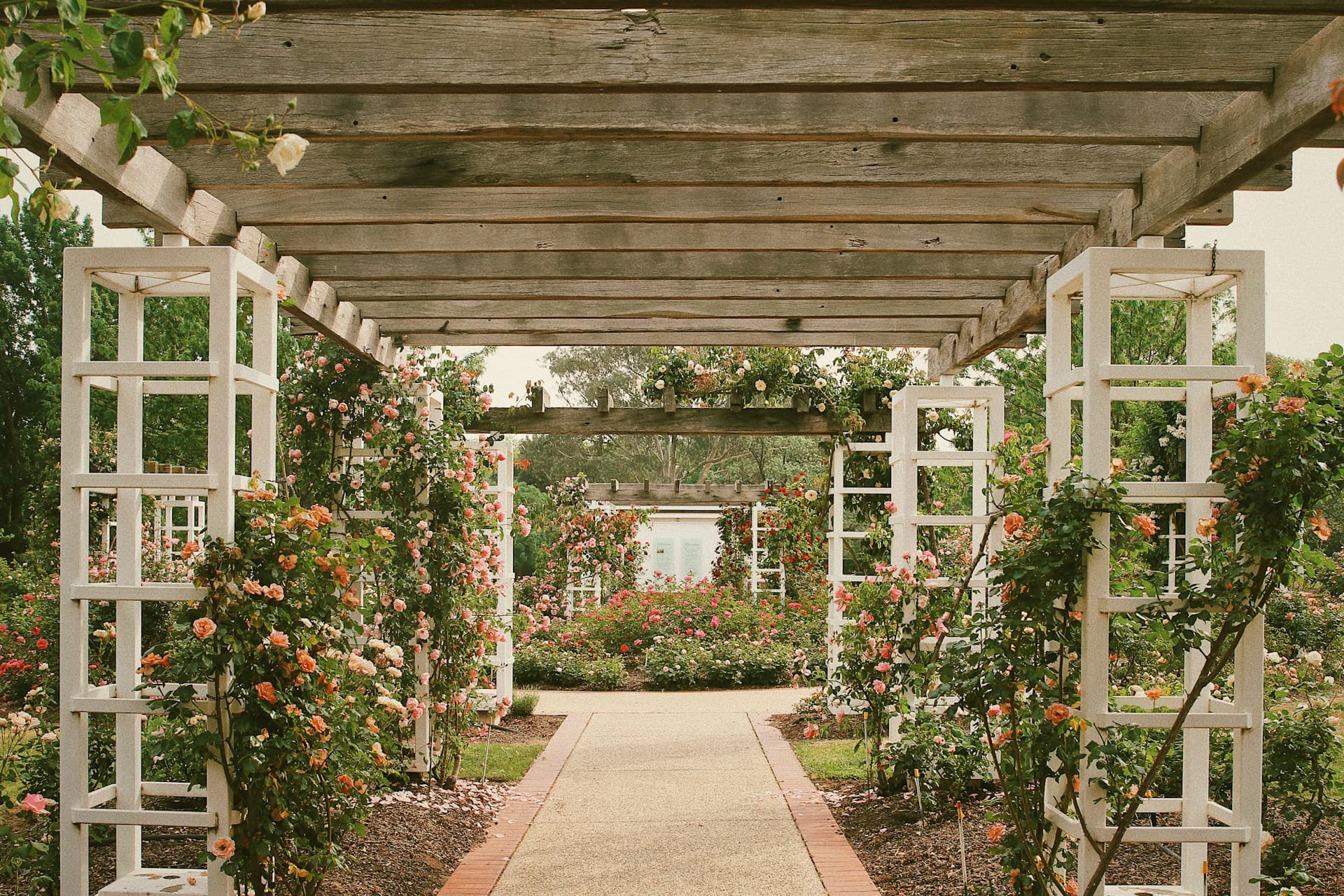
Pergola and Gazebo Construction
Construction, erection, and installation of timber and steel pergolas, gazebos, carports, and outdoor shade structures classified as NCC Class 10a non-habitable buildings. Covers excavation and footing installation (post holes 600–1,200 mm depth requiring Before You Dig Australia notification), concrete mixing and pouring for footings (minimum 32 MPa compressive strength designed to support compliance with AS 3600:2025), post erection and bracing, beam and rafter installation at heights of 2.4–3.6 m (triggering WHS fall protection requirements above 2 m — falls from height are the second-highest contributor to worker fatalities in Australia, with 29 fatal falls in 2023 — a ~71 % increase on the previous year per Safe Work Australia Key WHS Statistics), power tool operation (circular saws responsible for an estimated tens of thousands of hand injuries nationally per year; nail gun ricochets are a leading cause of eye injuries in residential construction), manual handling of heavy timber beams and steel members, treated timber hazards (CCA-treated timber contains arsenic compounds — cutting generates toxic dust requiring respiratory protection), electrical hazards from power tools and proximity to overhead powerlines, noise exposure, and UV/heat stress (86 % of construction workers exposed to hazardous solar UV levels per the Australian Workplace Exposure Study). Design is designed to support compliance with AS 1684.2:2021 (non-cyclonic) or AS 1684.3:2010 (cyclonic) for timber-framed construction. Building permit requirements vary by state — typically triggered above 2.4–3.6 m height or 15–25 m² floor area. Pre-filled hazards, controls, and risk ratings.
Pergola and gazebo permit thresholds are the trap that catches owner-builders the most. Each state writes the rules differently — what's exempt in one council kicks into a building-permit requirement in another, and what's a backyard project in coastal counties pulls cyclonic-region tie-down detailing under AS/NZS 1170.2:2021 and AS 1684. The first call before any post-hole goes in the ground is to the local council, not the timber yard. A non-compliant tie-down on a coastal pergola is exactly the failure post-cyclone insurance claims hinge on.
Footings carry the next decision. Post holes 600 to 1,200 mm deep get dug through whatever the property's history put under the lawn, and BYDA before any auger or shovel is the line between a clean hole and a struck comms cable. Concrete footings to AS 3600:2018 cure under load, and pH-12 wet concrete burns through cotton during the pour as readily as it does on a slab job — alkali-resistant gloves, knee pads, and prompt skin flushing on contact are the controls.
Beams and rafters at 2.4 to 3.6 metres put the owner-builder above the Model Code of Practice on Managing the Risk of Falls in Housing Construction physical-fall threshold of 2 metres, and a single ladder leaning on a post is not a control. Trestle scaffolding to AS/NZS 1576.1:2019, a AS/NZS 1891.1:2020 harness with a real anchor, or a hire EWP for the tall builds are the working options. CCA-treated timber dust during cutting brings a P2 respirator into the kit; burning offcuts is illegal because of the arsenic released. White Card on construction sites, BYDA awareness, and a current first aid ticket form the trade ticket every owner-builder on the job needs to hold. Permit first, BYDA second, harness third — that's the pre-build sequence that prevents the rebuild.
What's In Your SWMS
9 Hazards & Controls
Death, spinal cord injury (paraplegia/quadriplegia), traumatic brain injury, multiple fractures, internal organ damage. Even falls from 2–3 m can be fatal if head strikes hard surface.
Pre-fabricate and pre-assemble components at ground level where practicable. Pre-drill bolt holes and fit connection hardware before lifting beams into position. Minimise time spent working at height.
Use scaffolding (passive fall protection) instead of ladders for sustained work at height. Use elevated work platform (EWP) for short-duration overhead tasks.
Establish exclusion zone below overhead work area — prevent workers and public from walking under work at height. Barricade with safety tape and warning signage.
- Scaffold with guardrails (minimum 900 mm), mid-rail, and toe-boards for work above 2 m
- Temporary edge protection installed at leading edges during construction
- Fall arrest system with full-body harness and shock-absorbing lanyard where scaffolding is not practicable — anchor minimum 15 kN
- Secure ladders at top and base — 4:1 angle ratio, extend 1 m above landing
- Temporary bracing for posts and beams to prevent structural movement while workers are at height
- Fall protection plan documented before work commences above 2 m
- Workers trained in working at heights — scaffold use, harness fitting, rescue procedures
- Three points of contact when climbing ladders
- Do not overreach from scaffolding or ladders — reposition platform
- No work at height in strong winds (>40 km/h), wet conditions making surfaces slippery, or during lightning
- Toolbelt or tool tether to prevent dropped tools
- All workers below overhead work to wear hard hats
Hard hat mandatory; fall protection harness with shock-absorbing lanyard when working above 2 m without guardrails; safety boots with non-slip soles; safety glasses
10-Step Work Procedure
Equipment & PPE
Equipment (10)
- Circular saw — corded or cordless
Guard must move freely and return automatically. Set blade depth: lowest tooth maximum 3 mm below timber. Use sharp, appropriate blades for material type. Inspect before each use — guard function, blade condition, cord/battery. Tested and tagged per AS/NZS 3760:2022. Circular saws account for ~50,000 hand injuries nationally per year.
- Drop saw / compound mitre saw
Bench-mounted on stable surface. Guard must return to closed position when released. Blade guard in working order. Clamp workpiece before cutting. Keep hands clear of blade path. Ensure adequate workspace around saw.
- Nail gun — framing nailer
Sequential trigger mechanism ONLY — do not use contact trip (bump-fire) mode. Check air hose connections and pressure before use. Never carry with trigger depressed. Never point at any person. Nail gun ricochets are the leading cause of eye injuries in residential construction. Disconnect air supply before clearing jams.
- Drill / driver and impact driver
Cordless preferred for working at heights. Correct drill bit and driver bit for material (timber, steel, masonry). Secure workpiece before drilling. Remove chuck key before operating. Inspect batteries and charger condition.
- Post hole digger — petrol auger or manual
Two-person operation for petrol auger. Inspect auger teeth, shaft, and engine before use. Keep hands and clothing clear of rotating auger. Mark out all hole locations before commencing. Before You Dig Australia (BYDA) enquiry completed and utility plans reviewed. Adequate fuel ventilation. Ear protection mandatory.
- Scaffold or mobile scaffold platform
Required for work above 2 m. Erected on firm, level ground. Guardrails minimum 900 mm high with mid-rail and toe-board. Scaffold boards secured against displacement. Castor brakes locked on mobile scaffolds. Do not exceed maximum working load. Inspect before each use.
- Extension ladder and/or step ladder
Industrial-rated (120 kg minimum). Extend minimum 1 m above landing point. Secure at top and bottom — 4:1 angle ratio. Three points of contact when climbing. Ladders for access only — not as a sustained working platform above 2 m. Inspect for damage before each use. Compliant with AS 1892.1:2018.
- Concrete mixer or pre-mix concrete bags
Electric mixer: RCD-protected power supply. Manual mixing: use mortar box or wheelbarrow on stable ground. Pre-mix bags: 20 kg preferred (40 kg maximum — requires correct manual handling). Cement dust is corrosive — avoid inhalation and skin contact.
- Measuring and layout tools — tape measure, string line, builder's level, speed square
Accurate measuring critical for structural compliance. Check level calibration. String lines for post alignment. Builder's square for right angles at footing layout.
- First aid kit
Stocked and checked. Must include wound dressings, eye wash (minimum 500 mL for dust/debris), burns dressings for concrete burns, splints, pressure bandages. Located where all workers can quickly access. One first aider per 25 workers on high-risk sites.
PPE (7)
- Hard hat / safety helmetAS/NZS 1801:2024
Mandatory during overhead work, when materials are being lifted or installed at height, and during excavation. Type 1 minimum. Replace after any significant impact or every 3 years (UV degradation). Ensure brim does not obstruct vision when looking upward.
- Safety glasses — impact-ratedAS/NZS 1337.1:2010
Medium-impact rated minimum. Worn at ALL times during cutting, drilling, nailing, and concrete work. Side shields essential for nail gun operation — ricocheting nails are the leading cause of eye injuries in residential construction. Clear lens for general work; tinted for outdoor UV protection.
- Hearing protection — earmuffs or earplugsAS/NZS 1270:2002
Mandatory during power tool operation — circular saws, drop saws, nail guns, petrol auger all exceed 85 dB(A). Class 4–5 for petrol equipment, Class 3 minimum for electric tools. All workers within noise zone require hearing protection, not just the operator.
- Steel-cap safety bootsAS/NZS 2210.3:2019
Steel or composite toe cap mandatory on all construction sites. Penetration-resistant sole (protects against nails and screws in offcuts). Ankle support for uneven ground. Non-slip sole for scaffold and ladder work.
- Work gloves — leather or mechanic's styleAS/NZS 2161.3:2020 (mechanical risks); AS/NZS 2161.10.1:2024 (chemical — concrete/cement); AS/NZS 2161.1:2016 (general requirements)
Leather rigger gloves for timber handling (splinters, rough-sawn edges) — mechanical-risk standard. Waterproof, alkali-resistant gloves — long, tight-fitting at wrist — for concrete work (wet cement is highly alkaline pH 12-13 and causes chemical burns; cite is the chemical-resistance sub-part). Remove gloves before operating rotating power tools (entanglement risk). Note: the earlier "AS/NZS 2161.1:2020" cite was a fabricated year — AS/NZS 2161.1 current edition is :2016.
- P2 dust mask / respiratorAS/NZS 1716:2012
Mandatory when cutting treated timber (CCA contains arsenic — cutting generates toxic dust). Required during concrete mixing (cement dust). Required for prolonged timber cutting (wood dust is a known carcinogen). P2 minimum filtration standard.
- Sun protection — SPF 50+ sunscreen, hat, long sleeves
SPF 50+ broad-spectrum sunscreen applied 20 minutes before outdoor work. Reapply every 2 hours. Long-sleeved UPF-rated shirt. Hard hat brim or legionnaire-style attachment for neck protection. 86 % of construction workers are exposed to hazardous UV levels. Australia has one of the highest skin cancer rates globally.
Training & Emergency
Competency Requirements
- General Construction Induction (White Card)ticket
CPCCWHS1001 — Mandatory for all workers on construction sites in Australia. Valid nationally. Must be completed through accredited RTO before commencing work. Covers WHS legislative requirements, hazard identification, incident/emergency procedures, and PPE use.
- Working at Heights Trainingtraining
Required for all workers performing tasks above 2 m. Covers fall protection system selection, harness fitting, scaffold use, ladder safety, rescue procedures, and limitations. Training aligned with AS/NZS 1891.4:2025. Refresher training required — recommended every 2 years.
- Power Tool Operation Competencytraining
Documented training and demonstrated competency in safe operation of circular saws, drop saws, nail guns, and drills. Covers guard function, kickback prevention, nail gun sequential trigger operation, and emergency procedures. Workers must not operate tools they have not been trained on.
- Certificate III in Carpentry
CPC30220 — Nationally recognised qualification covering timber and non-timber construction. Recommended for lead carpenter on project. Duration: ~4 years via apprenticeship. Covers structural construction, working at heights, and tool competency. State-specific contractor licences may also be required (e.g. NSW: contractor licence for work >$5,000; VIC: registered builder for projects >$10,000).
- First Aid Certificate
HLTAID011 — At least one worker on site should hold current certificate. Essential for responding to fall injuries, lacerations, eye injuries, and concrete burns. One first aider per 25 workers on high-risk construction sites.
Emergency Procedures
FALL FROM HEIGHT: Call 000 immediately. Do NOT move the fallen person — assume spinal injury until medically assessed. Stabilise head and neck if trained. Check airway, breathing, circulation. Apply pressure to any bleeding wounds. Keep victim warm and still until paramedics arrive. Secure the area to prevent additional falls.
SEVERE LACERATION / AMPUTATION (saw or nail gun): Call 000. Apply direct pressure with clean dressing to control bleeding. Elevate injured limb if possible. If finger/hand amputated: wrap amputated part in clean damp cloth, place in sealed plastic bag, place bag on ice. Transport both patient and amputated part to hospital. Do NOT apply tourniquet unless trained and bleeding is life-threatening.
EYE INJURY (nail gun ricochet, debris): Do NOT rub eye or attempt to remove embedded object. Cover injured eye with rigid shield (bottom of paper cup). Call 000 for embedded objects. For dust/debris: flush with eye wash for minimum 15 minutes. Seek immediate medical attention for all eye injuries — nail gun injuries can cause permanent blindness.
CONCRETE BURN: Flush affected skin with clean running water for minimum 20 minutes. Remove contaminated clothing while flushing. Do NOT apply creams or neutralising agents. Cover with clean, non-adherent dressing. Seek medical attention — concrete burns can be deeper than they appear.
UNDERGROUND SERVICE STRIKE — GAS: Evacuate area immediately (minimum 50 m). Do not operate any electrical equipment, vehicles, or phones in vicinity. Call 000 and gas distributor emergency number. Barricade area. Do not attempt to repair.
UNDERGROUND SERVICE STRIKE — ELECTRICAL: Move away immediately without touching damaged cable or equipment. Call 000 and electricity distributor. Do not re-enter area until declared safe by utility provider.
Everything above, included in your SWMS document.
Get This TemplateWriting a SWMS from scratch?
That's 2-4 hours of research, formatting, and cross-referencing regulations.
We've done the starting work — pick your template, add your details, review.
Or just do this:
- Unlimited documents
- All 70+ templates
- Instant PDF & DOCX
- Cancel anytime
High-Risk Construction Work Categories
Under Australian WHS Regulations (WHS Act ss 19-22 (Primary duty of care); WHS Reg Chapter 4 Part 4.4 — Falls (Reg 78-79); WHS Reg Chapter 6 Part 6.1 — Construction Work; Reg 291 — HRCW; WHS Reg Chapter 4 Part 4.2 — Hazardous Manual Tasks (Reg 60); WHS Reg Chapter 4 Part 4.1 — Noise (Reg 56-58); WHS Reg Chapter 7 Part 7.1 — Hazardous Chemicals), this work is classified as high-risk due to:
- Work where there is a risk of a person falling more than 2 metres (Pergola beams and rafters installed at typical heights of 2.4–3.6 m above ground. Workers on scaffolding, ladders, or working at roof beam level are at risk of falls exceeding 2 m. Fall protection systems mandatory. Falls from height are the second-highest cause of construction fatalities in Australia.)
- Work that may involve structural alteration or demolition of a load-bearing structure (Applicable when attaching pergola ledger board to existing building structure. Fixing into load-bearing walls, removing fascia or cladding to install ledger, and ensuring structural integrity of attachment point. Temporary bracing required during construction to prevent structural collapse.)
Australian Standards Referenced
National Guidance Documents
- Safe Work Australia — Model Code of Practice: Managing the Risk of Falls at Workplaces
- Safe Work Australia — National Code of Practice: Prevention of Falls in Housing Construction
- Before You Dig Australia (BYDA) — Free Enquiry Service
- Safe Work Australia — Model Code of Practice: Construction Work
- SafeWork NSW — Wood Dust Health Hazards and Control
Who Needs This SWMS?
This template is designed for the following trades and roles performing pergola and gazebo construction work.
Frequently Asked Questions
Do I need a building permit to build a pergola in Australia?
Building permit requirements vary by state and territory. General thresholds: NSW — freestanding pergolas up to 25 m² (larger lots) or 15 m² (smaller lots) and maximum 3 m high may be exempt. Victoria — exempt if under 3.6 m high, under 20 m² floor area, and behind the front building wall. South Australia — permit required above 2.5 m height. Western Australia — permit required above 2.4 m height; open structures with lattice/shade cloth roofing may be exempt. ACT — unroofed structures under 3 m may not need approval. Tasmania — pergolas and trellises generally exempt. Always check with your local council before construction, as exemptions have specific conditions regarding setbacks, lot coverage, bushfire zones, and heritage overlays.
What fall protection is required for pergola construction?
Under WHS Regulation 2017, fall protection is mandatory when working at heights of 2 m or more. For pergola construction (typically 2.4–3.6 m beam height), this means: scaffolding with guardrails (minimum 900 mm), mid-rails, and toe-boards is the preferred control for sustained work at height. Personal fall arrest systems (full-body harness with shock-absorbing lanyard, anchor point minimum 15 kN breaking strength) are required where scaffolding is not practicable. Ladders may be used for brief access tasks only — not as a sustained working platform above 2 m. Workers must be trained in working at heights, including harness use and rescue procedures per AS/NZS 1891.4:2025. Administrative controls alone (training, procedures) are NOT sufficient above 2 m — physical fall prevention systems are mandatory.
Is CCA-treated timber safe for pergola construction?
CCA (Copper Chrome Arsenate) treated timber is widely used for outdoor construction and is structurally suitable for pergolas — H3 treatment for above-ground exposed members, H4 for in-ground posts. However, CCA contains arsenic and chromium compounds. Cutting, sanding, or drilling CCA-treated timber generates toxic dust that can cause nausea, respiratory irritation (acute), and increased risk of nasal and lung cancer with chronic occupational exposure. Control measures: wear a P2 respirator when cutting; cut outdoors only; collect and dispose of sawdust at a licensed waste facility; NEVER burn CCA offcuts (releases arsenic fumes). The safer alternative is ACQ (Alkaline Copper Quaternary) treated timber — arsenic-free with comparable durability. Naturally durable hardwoods (ironbark, blackbutt, spotted gum) are also an option where cost allows.
What are the footing requirements for a pergola?
Pergola footings are designed to support compliance with AS 3600:2025 (concrete structures) and AS 2870-2011 (residential slabs and footings). Minimum footing depth is typically 450 mm for clay soils and 300 mm for sandy soils, but standard practice for pergola posts is 600–1,200 mm depending on post height, soil type, and wind loading per AS/NZS 1170.2:2021. Minimum concrete strength: 32 MPa. In cyclonic regions (C & D), deeper footings and specific tie-down requirements apply per AS 1684.3:2010. Reactive soils (Class M, H1, H2, E) require careful footing design to accommodate soil movement. Class P sites (soft fill, collapsing soils) require geotechnical investigation. Before excavating: submit a Before You Dig Australia (BYDA) enquiry — BYDA referral is mandated by law in NSW for excavation near gas and electricity networks; in all states it is the recognised best practice before any post-hole excavation.
What PPE is needed for pergola construction?
Minimum PPE requirements: hard hat (AS/NZS 1801:2024) — mandatory during overhead work and material handling at height; impact-rated safety glasses with side shields (AS/NZS 1337.1:2010) — critical for nail gun use (ricochets are a leading cause of eye injuries in residential construction); hearing protection (AS/NZS 1270:2002) — mandatory during power tool operation; steel-cap safety boots (AS 2210.3:2019 — Australian-only) — penetration-resistant soles protect against nails in offcuts; work gloves — leather for timber handling per AS/NZS 2161.3:2020 (mechanical risks; remove when operating rotating power tools), alkali-resistant gloves per AS/NZS 2161.10.1:2024 for concrete work; P2 respirator (AS/NZS 1716:2012) — mandatory when cutting treated timber, mixing concrete, or in dusty conditions; sun protection — SPF 50+, hat, long sleeves; fall-protection harness (AS/NZS 1891.1:2020) selected and used per AS/NZS 1891.4:2025 when working above 2 m without guardrails.
Do I need to call Before You Dig before installing pergola posts?
Yes. NSW law (Gas and Electricity (Consumer Safety) Act 2017) mandates BYDA referral before excavation near gas and electricity networks; other states and territories treat BYDA as the recognised best-practice obligation under WHS and asset-protection duties. Pergola post holes typically run 600–1,200 mm deep, well below the ground surface where buried assets sit. Submit a free enquiry at byda.com.au — asset owners typically aim for a response within 2 business days, and plan validity is set by each asset owner (commonly up to 28 days). Infrastructure owners (electricity, gas, water, telecommunications) will respond with plans showing the location of their underground assets on or near your property. Substantive penalties apply under state WHS, utility-protection, and environmental-harm legislation if an unmarked service is struck — and striking an underground gas main or electrical cable can be fatal.
Get Your Pergola and Gazebo Construction SWMS
Pre-filled. Risk-rated. Ready in 5 minutes.
Get Your SWMS PDFNo credit card required. First SWMS is free.
