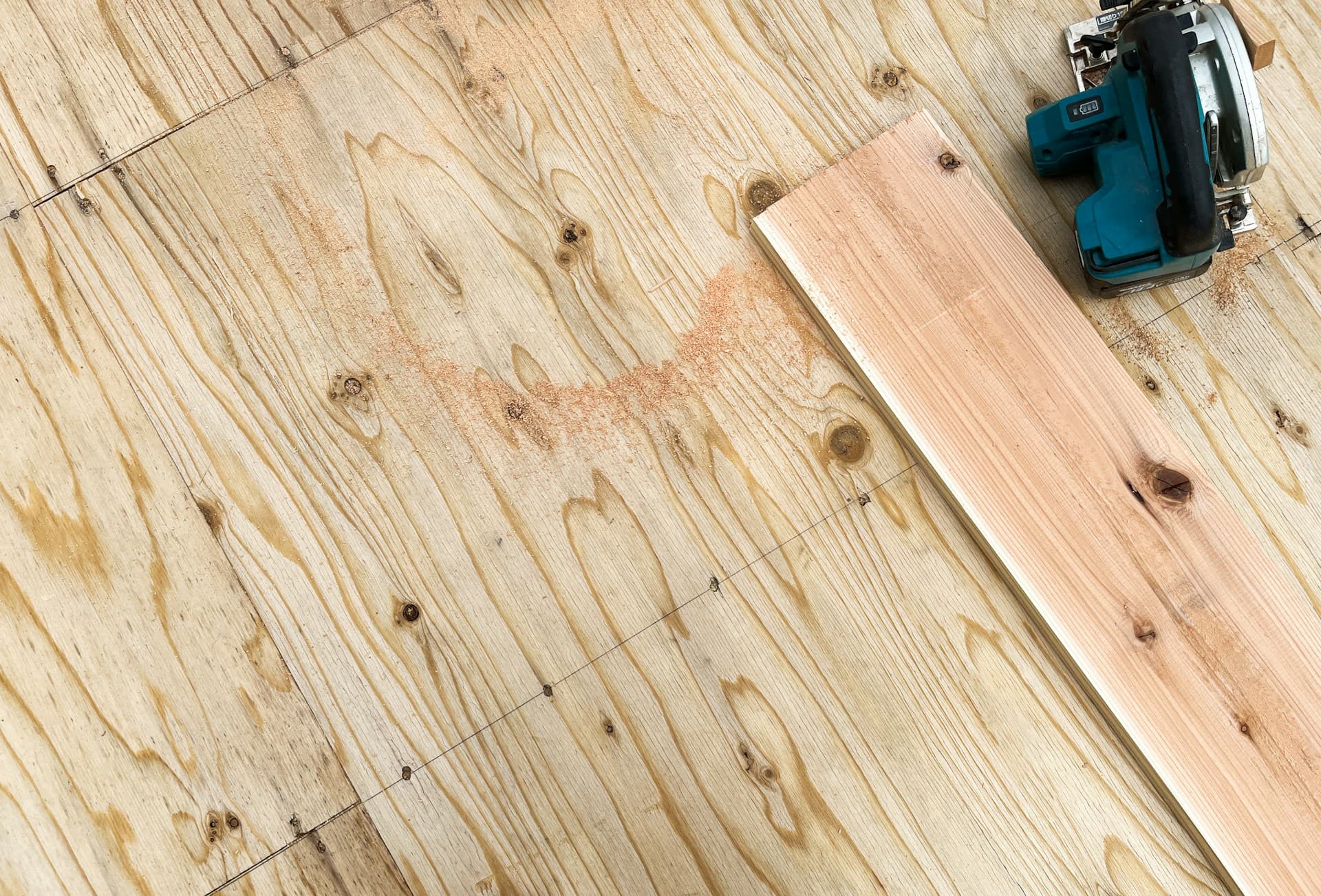
Timber Deck Construction
Construction of timber decking including post hole excavation, concrete footings, post installation, bearer and joist framing, decking board installation, and balustrade fitting. Covers residential and commercial decking. Designed to support compliance with AS 1684.2:2021 (Residential timber-framed construction — non-cyclonic areas) and the NCC 2022 Housing Provisions (Section 11 Safe Movement and Access). Pre-filled hazards, controls, and risk ratings.
Three things get a deck builder back on the job to fix work they've already invoiced: the wrong treatment grade on posts, burning offcuts, and a balustrade that doesn't pass certification. H3 treated timber to AS/NZS 1604.1:2021 is rated for above-ground work; H4 is required wherever timber contacts ground or stays wet, and using H3 on posts in concrete footings is a recurring premature-failure cause that shows up at the four-to-five-year mark when the post line starts going soft.
Burning offcuts is the second one. CCA-treated and copper-azole timber both release arsenic, chromium and copper compounds when burned; offcuts go to a licensed disposal facility, not the firepit. P2 dust mask during cutting, no inhalation of cut dust on the kneeling-and-mitering line, and a clean-up sweep with a HEPA-filtered vacuum before the next trade arrives are the practical controls.
The third — balustrades — is governed by the National Construction Code where the deck height clears 1 metre. Baluster spacing tight enough to reject a 125mm sphere, top rail height to the relevant occupant class, and the structural connection rated to the balustrade design load are what an inspector checks at handover. Falls during construction sit under the Model Code of Practice on Managing the Risk of Falls in Housing Construction once any worker is more than 2m up — perimeter scaffold or fall arrest, not "be careful". Post-hole excavation triggers BYDA before the auger goes in. Cert III in Carpentry under CPC30220, White Card, working-at-heights on tall decks, and the structural connection schedule from AS 1684 sit on the same drawing as the timber spec. Treatment grade decided at the timber yard, not at the post — that's the call that holds.
What's In Your SWMS
9 Hazards & Controls
Fractures, head injuries, spinal injuries, death
Build deck at ground level where design permits
Use scaffolding with guardrails instead of ladders for elevated work
Install temporary edge protection/guardrails before commencing work on elevated decks
- Install permanent balustrades progressively as work advances
- Use work platforms with guardrails for elevated sections
- Ensure all ladders are industrial-rated (120kg minimum) and secured
- Cover all floor openings or incomplete sections
- Complete working at heights training for elevated deck work
- Never work on incomplete framing - install all joists before walking on deck
- Maintain three-point contact on ladders at all times
- Do not work on deck during wet or icy conditions
- Pre-plan access and egress routes before starting work
Fall arrest harness when edge protection not feasible, safety boots with good grip
24-Step Work Procedure
Equipment & PPE
Equipment (15)
- Circular saw (skill saw)
For cutting bearers, joists, and decking boards. Must have functioning blade guard.
- Drop saw / mitre saw
For repetitive cuts to deck boards and framing. Set up on stable bench.
- Nail gun (framing nailer)
For fixing bearers and joists. Sequential trigger mode recommended.
- Screw gun / impact driver
For fixing decking boards. Battery-powered preferred for mobility.
- Post hole digger (manual or powered auger)
Manual for residential, powered earth auger for multiple posts or hard ground.
- Spirit level (1200mm+)
For checking level of bearers, joists, and decking.
- Laser level or string line
For setting deck height and bearer levels across span.
- Tape measure (8m)
For measuring dimensions and spacing.
- Chalk line
For marking straight lines for board alignment.
- Crowbar / pry bar
For levering deck boards tight and removing errors.
- Claw hammer
For hand nailing and adjustments.
- Sledgehammer / post driver
For driving posts or stakes.
- Concrete mixer or wheelbarrow
For mixing concrete footings.
- Ladder (step or extension)
For access to elevated work areas. Industrial rated (120kg minimum).
- First aid kit
Include wound dressings, eye wash, splinter removal tools.
PPE (7)
- Safety helmet (hard hat)AS/NZS 1801:2024
Required on construction sites and when overhead hazards present.
- Safety glassesAS/NZS 1337.1:2010
Essential - sawdust, wood chips, treated timber dust.
- Hearing protectionAS/NZS 1270:2002
Required when using power saws, nail guns, or impact drivers.
- Work gloves (leather or similar)AS/NZS 2161.3:2020
For handling rough timber, splinter and abrasion protection (mechanical risks part). Remove when operating power saws.
- Safety boots (steel cap)AS 2210.3:2019
Steel cap and puncture-resistant sole for dropped materials and nails. Note: AS-only (no longer joint NZ).
- High-visibility vest/shirtAS 4602.1:2024
Required on construction sites. Note: AS-only (no longer joint NZ).
- Dust mask (P2)AS/NZS 1716:2012
Essential when cutting treated timber - copper/arsenic dust is hazardous.
Training & Emergency
Competency Requirements
- Construction Induction Card (White Card)training
Required for all workers on construction sites
- Carpentry/Deck Construction Competencycertificate
Demonstrated ability to construct timber decking to design specifications. Trade qualification or equivalent experience.
- Power Saw Competencycertificate
Training in safe circular saw and drop saw operation
- Nail Gun Competencytraining
Training in safe nail gun operation, maintenance, and jam clearing
- Before You Dig Australia (BYDA) Awarenesstraining
Understanding of BYDA process, plan interpretation, and safe digging near services
- Working at Heights Training
Required if deck exceeds 2m above ground level
- First Aid Certificate
Recommended for at least one team member on site
Emergency Procedures
FALL FROM HEIGHT: Call 000 immediately. Do not move person if spinal injury possible. Keep person warm and calm. Clear area for emergency access.
SEVERE SAW LACERATION: Apply direct pressure to wound. Elevate if limb injury. Call 000 immediately. Do not attempt to reattach severed tissue - wrap in clean damp cloth and keep with patient.
UNDERGROUND SERVICE STRIKE (Electricity): Do not touch equipment or worker if in contact with cable. Call 000 and power distributor emergency line. Keep others 8m away.
UNDERGROUND SERVICE STRIKE (Gas): Evacuate area immediately. Do not operate any electrical switches. Call 000 and gas emergency line (1800 GAS LEAK / 1800 427 532).
TREATED TIMBER IN EYES: Irrigate with clean water for minimum 20 minutes. Seek medical attention - advise treated timber exposure.
Everything above, included in your SWMS document.
Get This TemplateWriting a SWMS from scratch?
That's 2-4 hours of research, formatting, and cross-referencing regulations.
We've done the starting work — pick your template, add your details, review.
Or just do this:
- Unlimited documents
- All 70+ templates
- Instant PDF & DOCX
- Cancel anytime
High-Risk Construction Work Categories
Under Australian WHS Regulations (291 - High Risk Construction Work (risk of falling >2m, excavation near services)), this work is classified as high-risk due to:
- Risk of a person falling more than 2 metres (Applies to elevated decks where work surface or deck level exceeds 2m above ground. Requires fall protection controls.)
- Excavation work (post holes) (Post holes typically 450-600mm deep. Risk of striking underground services (electricity, gas, water, telecommunications).)
- Work near underground electric or gas infrastructure (Before You Dig Australia (BYDA) enquiry mandatory before any excavation to identify underground services.)
Australian Standards Referenced
Who Needs This SWMS?
This template is designed for the following trades and roles performing timber deck construction work.
Frequently Asked Questions
Do I need a SWMS for building a timber deck?
Yes, if the deck construction involves excavation near underground services or working at heights exceeding 2m, it is classified as high-risk construction work under WHS Regulation 2017. A SWMS must be prepared before work commences.
At what height do balustrades become mandatory on a deck?
Under the National Construction Code (NCC), balustrades are required on decks where the fall height exceeds 1 metre above the floor level below. The minimum handrail height is 1000mm for decks up to 4m above ground.
What H-class treatment is required for deck timber?
For above-ground external applications (decking, bearers, joists), H3 treatment is the minimum requirement. For ground contact or in-ground use (posts, bearers near ground), H4 treatment is required. Always check treatment stamps on timber.
Is BYDA (Dial Before You Dig) required for deck post holes?
Yes. Before You Dig Australia enquiry is mandatory before any excavation in all states. Even shallow post holes (450-600mm) can strike underground services. Failure to check can result in prosecution if services are struck.
Can I burn treated timber offcuts?
No. Treated timber (CCA, ACQ, LOSP) must never be burned. Burning releases toxic chemicals including arsenic and copper compounds. Offcuts must be disposed of at an appropriate waste facility that accepts treated timber.
What PPE is required for cutting treated timber?
A P2 dust mask is mandatory when cutting treated timber to prevent inhalation of preservative-laden sawdust. Safety glasses, work gloves, and long sleeves should also be worn. Hands must be washed before eating or drinking.
What is the maximum span for deck joists?
Joist spans depend on timber species, section size, and joist spacing. For 90x45mm treated pine at 450mm centres, typical span is approximately 1.5m. For hardwood, spans can be greater. Always refer to AS 1684 span tables or engineering specifications.
What qualifications do I need to build a deck?
No specific licence is required for residential deck construction in most states. However, a White Card (Construction Induction Card) is required on construction sites. Carpentry trade qualification or equivalent experience is recommended. Working at heights training is required for elevated decks over 2m.
Get Your Timber Deck Construction SWMS
Pre-filled. Risk-rated. Ready in 5 minutes.
Get Your SWMS PDFNo credit card required. First SWMS is free.
