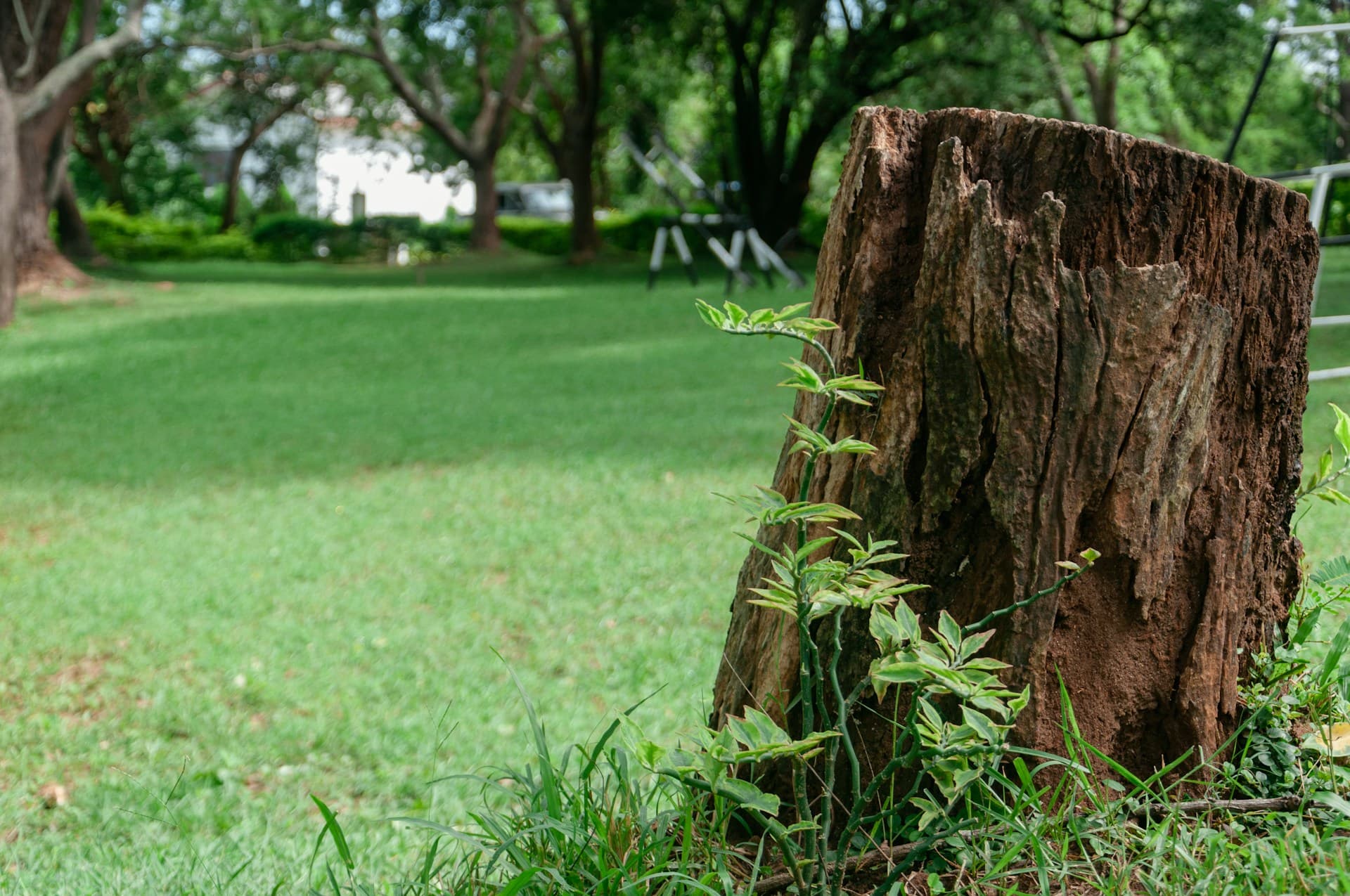
Stump Grinding and Removal
Stump grinding and removal operations using walk-behind and self-propelled stump grinders. Comprehensive controls for powered mobile plant operation, projectile debris hazards (rocks, wood chips, soil ejected at high velocity), underground service strike risks including gas, water, electrical, and telecommunications (BYDA (Before You Dig Australia, formerly Dial Before You Dig) mandatory), noise exposure (100-110 dB(A)), hand-arm and whole-body vibration hazards, kickback from grinding wheel contact with hardened materials, dust inhalation risks including crystalline silica (WES 0.05 mg/m³), manual handling of heavy equipment, and trip hazards from surface roots and uneven terrain. All stump grinding work requires AHCARB206 competency (operate stump grinding machines) with minimum 10 hours operating experience, pre-work BYDA (Before You Dig Australia, formerly Dial Before You Dig) clearance confirmation, site assessment including exclusion zones and debris containment, and comprehensive emergency procedures for underground service strikes. Pre-filled hazards, controls, and risk ratings.
Stump grinder projectile debris travels 15 metres or more from the cutting wheel — rocks, wood chunks, soil and the occasional grinder tooth ejected at speeds that turn a scattered onlooker into a casualty. Physical mesh or plywood debris screens at 1.8 to 2.4 metres around the work zone reduce that scatter to roughly three metres, and a five-metre exclusion enforced for everyone else covers the gap. The Model Code of Practice on Managing Risks of Plant in the Workplace drives the broader frame.
Underground service strikes during below-grade grinding are the second risk column — gas, electrical, comms or water sitting within the typical 150 to 300mm grinding depth. BYDA enquiry plus hand-excavation 10 centimetres around the stump before the wheel goes in catches what the plans miss. A cable strike during grinding turns the operator's machine into a conductive path to live mains; if a strike does occur, the immediate response is engine off, eight-to-ten metre clearance from the machine, and a call to 000 and the distributor before approach.
The two hazards operators underestimate inside the cutting envelope are silica and noise. Australian soils run 5 to 25 percent crystalline silica content, and a single eight-hour day grinding without water suppression and respiratory protection puts the operator well above the SafeWork Australia respirable crystalline silica WES of 0.05 mg/m³. Water suppression cuts the dust by half to three-quarters; P2 or P3 respiratory protection covers the residual. Grinder noise at 100 to 110 dB(A) puts hand-arm and whole-body vibration alongside the hearing dose; Class 5 muffs to AS/NZS 1270:2002, a 2-to-3 hour continuous-grind cap with a 30-minute break, and rotation across operators where the day runs long. AHCARB206 stump grinder operation is the unit of competency; AHCMOM213 chainsaw for any pre-cut roots, White Card on construction sites and current first aid round out the qualifications.
What's In Your SWMS
8 Hazards & Controls
Eye injuries and blindness from rock/debris impact, facial lacerations and disfigurement, traumatic brain injury from head impact, skull fracture, penetrating chest injuries from debris, rib fractures, internal bleeding from blunt trauma, spinal injuries, death from severe head/chest trauma
Where possible, use professional grinding service - eliminates operator exposure to projectiles. Rent equipment with experienced operator.
Use professional stump grinding contractor (likely to have better containment systems and insurance). Reduces operator exposure.
Establish exclusion zone minimum 3m radius around stump. Establish debris containment screens/barriers 1.8-2.4m height surrounding stump area. Deploy ground spotters to monitor zone and warn of flying debris.
- Debris containment screens (mesh or plywood) positioned around stump perimeter at minimum 3m distance - deflect projectiles and contain to 3m zone instead of 15m+ scatter
- Deflector shields on grinder discharge area (optional on professional models) redirect projectiles downward or sideways instead of at operator height
- Positioning of operator to side of stump (not directly in line with wheel) - reduces direct projectile impact risk
- Walk-behind grinders allow operator positioning offset from wheel - self-propelled units with operator cabin provide shield
- Pre-work site inspection to identify rocks, metal objects, hard soil crusts - remove where possible before grinding
- Clearing surface vegetation and loose debris before commencing grinding reduces projectile generation
- Water suppression system (spray nozzles) reduces dust and may dampen projectile ejection (minor effect)
- AHCARB206 competency required - includes hazard identification and projectile management
- Establish exclusion zone minimum 3m radius - mark with barriers, cones, and signage
- Brief ground crew on exclusion zone - no personnel within zone during grinding
- Operator wears face shield (polycarbonate, 2mm+ thickness) - critical PPE for eye protection
- Operator wears hard hat with brim or integrated face protection
- Ground crew member monitoring hazard zone continuously during grinding - watching for unexpected projectiles
- Pre-work site assessment to identify rocks, metal in soil around stump - remove before grinding where safe
- Brief public/property owner on exclusion zone hazards - prevent unauthorized entry
- Document any projectile incidents (eye injury, facial cuts, debris impact on property) for future risk management
- Hearing protection (double protection) allows operator to hear warning shouts from spotters
Face shield (AS/NZS 1337.1, polycarbonate 2mm+) or safety glasses. Hard hat with brim (AS/NZS 1801). High-visibility clothing. Long-sleeved shirt and long trousers for skin protection. Steel cap boots for foot protection.
13-Step Work Procedure
Equipment & PPE
Equipment (9)
- Walk-behind stump grinder (petrol-powered, 10-35 horsepower)
Compact petrol-powered unit with rotating grinding wheel (500-1500 rpm). Operator controls hydraulic positioning and wheel depth. Typical grinding width 12-18 inches. Suitable for stumps under 30cm diameter. Requires AHCARB206 competency. Daily inspection of wheel condition, wear, teeth sharpness, guards, hydraulic hoses for leaks, engine fuel/oil levels, and emergency stop function.
- Debris containment screens and barriers (1.8-2.4m height)
Portable mesh or plywood screens positioned around stump perimeter (minimum 3m from grinding wheel) to contain ejected debris and projectiles. Deflect chips, rocks, and soil from flying beyond containment zone. Reduces projectile impact range from 15m+ to 3m zone. Height adequate to protect worker from debris splash.
- Hand tools (shovel, mattock, rake)
Shovel for clearing loose soil and debris. Mattock for breaking up hardened soil around stump. Rake for clearing grinding debris and smoothing final excavation. Assists with site preparation and post-grinding cleanup.
- Backfill material (soil, topsoil, mulch)
Clean soil, topsoil, or mulch for backfilling stump excavation after grinding. Volume depends on stump size (typically 150-300mm depth excavation). Prevents trip hazards from holes. Local source or supplier.
- BYDA (Before You Dig Australia, formerly Dial Before You Dig) confirmation and underground service plans
Documentation from DBYD call (minimum 7 days before work) showing location of underground gas, water, electrical, telco services. Plans prevent accidental strikes during stump grinding. Contact DBYD at 1100 (NSW) or state-specific number.
- First aid kit (comprehensive)
Include sterile dressings, compression bandages, tourniquets for severe bleeding (kickback injuries can cause arterial bleeding), eye wash (for dust/debris), burn treatment (from hot machinery), ice packs for vibration injuries. Position accessible to operator.
- Fire extinguisher (dry chemical, minimum 2kg)
For petrol-powered equipment fire risk. Check charge status before each use. Know location and operation. Position minimum 5m from work area.
- Warning and hazard signage
High-visibility signs: "Stump Grinding in Progress - Projectile Debris Hazard - Do Not Enter", "Loud Noise Area - Hearing Protection Required", "Keep Clear - Exclusion Zone". Position at perimeter of exclusion zone (minimum 3m radius).
- Hearing protection station or central supply
Store Class 5 earmuffs/earplugs in weatherproof container at work area. Double hearing protection (earplugs + earmuffs) optional for high-exposure sites. Ensure proper fit and seal before operation.
PPE (9)
- Hard hat (industrial safety helmet)AS/NZS 1801:2024
Hard hat with brim or integrated eye/face protection for protection against projectile debris (rocks, hardened wood chips, soil ejected from grinding wheel). Minimum impact rating for industrial use. Secure chin strap to prevent loss in windy conditions.
- Face shield and safety glassesAS/NZS 1337.1:2010
High-impact polycarbonate face shield (minimum 2mm thickness) or safety glasses for eye protection against projectile debris. Face shield preferred for grinding operations due to ejection velocity (30+ mph). Anti-fog coating recommended for humid climates.
- Hearing protection (double protection earplugs + earmuffs)AS/NZS 1270:2002
MANDATORY for stump grinder operation (100-110 dB(A)). Double protection required: foam earplugs inserted properly (90% of insertion depth) + Class 5 earmuffs ensuring complete seal. Combined protection provides 35-40 dB attenuation, reducing exposure to safe levels. Single protection insufficient for continuous exposure. Class selected per AS/NZS 1269 risk-assessment process.
- P2 particulate respiratorAS/NZS 1716:2012
MANDATORY for stump grinding due to dust inhalation hazard. Crystalline silica in soil (WES 0.05 mg/m³ 8-hour TWA) requires particulate respiratory protection. P2 or P3 rated respirator (P2 ≥94%, P3 ≥99.95% of respirable particles per AS/NZS 1716:2012). Fit-test required per AS/NZS 1715:2009. P2 is the AS/NZS classification (not interchangeable with U.S. N95 or European FFP2). Vapour cartridge (A1 or combined) optional if fuel odour present.
- Steel cap bootsAS 2210.3:2019
Steel cap for foot protection against dropped grinder components, rocks, or stump fragments. Oil-resistant sole for slippery surfaces from water suppression. Anti-static rating optional if refueling near machinery. Ankle support for uneven ground. AS 2210.3:2019 is the Australian-only re-designation; supersedes the joint AS/NZS form.
- Anti-vibration glovesAS/NZS 2161.3:2020
Vibration-dampening gloves for walk-behind grinder operators to reduce hand-arm vibration exposure. AS/NZS 2161.3:2020 covers mechanical risks (including vibration test methodology). Note: AS/NZS does not currently include a dedicated anti-vibration sub-part — internationally, EN ISO 10819:2013 is the dedicated test method for anti-vibration gloves. Gel padding or foam inserts reduce transmission of vibration (500-1500 rpm grinding wheel generates significant vibration). Glove vibration-attenuation is limited (typically 10-20% reduction).
- High-visibility clothingAS 4602.1:2024
Hi-vis vest or hi-vis shirt (Class D minimum for daytime) for visibility to ground crew and public. AS 4602.1:2024 (Australian-only re-designation; supersedes AS/NZS 4602.1:2011); material requirements per AS/NZS 1906.4:2023. Essential for site safety and communication with spotters.
- Long trousers and long-sleeved shirt
Heavy-duty cotton or synthetic work clothing for abrasion, scratch, and projectile protection. Full-leg and full-arm coverage. Tuck trousers into boots to prevent debris entry. Material should not be loose or dangling (entanglement risk with moving equipment).
- Sun protection (hat, sunscreen, UV sleeves)
Wide-brim hat or sun-protective cap (minimum 7.5cm brim all around). SPF 50+ broad-spectrum sunscreen applied before work and reapplied every 2 hours. UPF 50+ rated long sleeves optional for extended work in high-UV areas. Sunglasses with UV protection if not wearing helmet face shield.
Training & Emergency
Competency Requirements
- Stump Grinding Machine Operation (AHCARB206 / AHCARB212 or equivalent)ticket
Mandatory for any worker operating a stump grinding machine. Unit of competency AHCARB206 - Operate stump grinding machines from a Registered Training Organisation (RTO). Per the AHC training-package lineage for stump grinding, AHCARB212 is the related current-release stump-grinder unit — verify current status at training.gov.au and use the current code. Covers stump grinder safety, operation techniques, hazard identification, emergency procedures, and equipment maintenance. Note that the broader AHCARB scope spans: AHCARB202 (Fell small trees), AHCARB204 (Climbing techniques), AHCARB205 (Operate chainsaws); these are separate from stump grinding. Minimum 10 hours operating experience required (industry recommendation; not a regulated minimum). Typical training duration 2-3 days. Operator must hold current competency before solo operation.
- BYDA (Before You Dig Australia, formerly Dial Before You Dig) Awareness and Underground Service Locationtraining
Mandatory awareness training: understanding of BYDA (Before You Dig Australia, formerly Dial Before You Dig) system, how to request service location marking, interpretation of service marking colours and symbols, safe depth limits and approach distances. No formal certification required, but all workers must understand DBYD procedures before starting work. Training typical 1-2 hours.
- Construction Induction Card (White Card) - CPCCWHS1001
CPCCWHS1001 - Prepare to work safely in the construction industry (supersedes legacy CPCWHS1001). Required only if work is on construction sites. Most stump grinding is on residential properties or grounds, not construction sites. Check whether SWMS is being conducted on registered construction site (active building works). If construction site, White Card required for all workers.
- Chainsaw Operation Competency (AHCMOM213 or AHCARB205)
Required only if stump grinding work includes cutting surface roots with chainsaw. AHCMOM213 - Operate and maintain chainsaws (current AHCMOM unit) or AHCARB205 - Operate and maintain chainsaws (current AHCARB-stream unit) per training.gov.au. Covers chainsaw safety, maintenance, operation technique. Required if cutting roots is part of scope. If stump grinding only (no root cutting), not required.
- First Aid Certificate (HLTAID011 or equivalent)
Recommended for stump grinding operations given projectile injury hazards and underground service strike risks. First aid certification enables rapid response to severe bleeding, head injuries, heat stroke. Current certification (within 3 years) recommended. Provider: registered First Aid training organisation.
- Noise and Hearing Protection Awareness
Recommended training on noise hazards from stump grinders (100-110 dB(A)), hearing loss risks, proper use of double hearing protection (earplugs + earmuffs), fit-testing, and early symptom recognition. Training typical 1-2 hours. Helps workers understand importance of compliance with hearing protection requirements.
Emergency Procedures
GAS PIPE STRIKE - FIRE/EXPLOSION HAZARD: If stump grinding wheel strikes gas pipe (detected by hissing, strong gas odour, or marked service): STOP engine immediately. Turn off all ignition sources. Evacuate minimum 50m upwind. Call 000 + gas emergency line. Do NOT attempt repair or continue work. Gas leak is life-threatening emergency - fire/explosion risk extremely high. Await utility response with specialized equipment.
ELECTRICAL CABLE STRIKE - ELECTROCUTION HAZARD: If wheel strikes electrical cable (sparks visible, arcing sound): STOP engine, maintain 8-10m distance from hazard. Assume cable is live. Call 000 + electricity distributor. Do NOT touch grinder, cable, or water around cable. Wait for distributor to de-energise before approaching.
WATER MAIN RUPTURE: If wheel strikes water main (water erupts from excavation): STOP engine, evacuate (flooding, hazard). Call 000 + water utility. Allow water to disperse. Utility will locate and repair main.
OPERATOR STRUCK BY PROJECTILE (Face/Eye): If flying debris strikes operator: STOP work, move to safe area. If eye struck with object embedded: do NOT remove object, cover eye, call 000 (eye emergency). If bleeding: apply gentle pressure. If vision lost or severe pain: call 000 immediately.
OPERATOR THROWN BY KICKBACK: If grinder kickback throws operator or operator loses footing: Check responsiveness and consciousness. Call 000 if unconscious or severe pain. Do NOT move if head/neck/back injury suspected. If stable: move to safe location, monitor for shock, apply ice for bruising. Reassess periodically.
HEAT EXHAUSTION: If operator shows weakness, dizziness, nausea during hot weather: Move to shade immediately, remove excess clothing, cool skin with cold water spray or ice packs on neck/armpits/groin. Provide cool (not cold) fluids if conscious. Monitor continuously.
HEAT STROKE - LIFE-THREATENING EMERGENCY: If operator shows confusion, loss of consciousness, hot dry skin (not sweating), extremely high temperature: Call 000 immediately. Move to shade, remove all excess clothing, apply aggressive cooling: water spray/immersion and ice packs to neck, armpits, groin. Do NOT give fluids if confused. Continue cooling until paramedics arrive. Heat stroke mortality 10-50% if untreated.
CRUSHED HAND OR FOOT FROM GRINDER: If operator hand or foot caught in grinder wheel or run over by self-propelled unit: Call 000 immediately for serious crush injury. Do NOT attempt to extract limb. Apply direct pressure if bleeding, tourniquet if severe arterial bleeding. Stabilize and support injured limb. Transport to hospital immediately if ambulance delayed.
Everything above, included in your SWMS document.
Get This TemplateWriting a SWMS from scratch?
That's 2-4 hours of research, formatting, and cross-referencing regulations.
We've done the starting work — pick your template, add your details, review.
Or just do this:
- Unlimited documents
- All 70+ templates
- Instant PDF & DOCX
- Cancel anytime
High-Risk Construction Work Categories
Under Australian WHS Regulations (Reg 291 (Chapter 6 Part 6.1) - High Risk Construction Work (powered mobile plant near services); Chapter 4 Part 4.2 - Hazardous Manual Tasks (Reg 60); Chapter 4 Part 4.1 - Noise (Reg 56-58); Chapter 7 Part 7.1 - Hazardous Chemicals (Reg 328-378) - crystalline silica; Chapter 4 Part 4.7 - Electrical safety in workplaces and energised electrical work), this work is classified as high-risk due to:
- Involves use of powered mobile plant (Walk-behind petrol-powered stump grinder (10-35 horsepower) with rotating grinding wheel (500-1500 rpm). Self-propelled stump grinder (tracked or wheeled, 15-60 horsepower) with rotating grinding wheel and operator-controlled hydraulic positioning. All operators require AHCARB206 competency (operate stump grinding machines) with minimum 10 hours operating experience.)
- Work below ground level and excavation (Stump grinding below ground level creates excavation, exposing underground services (gas, water, electrical, telco). BYDA (Before You Dig Australia, formerly Dial Before You Dig / DBYD) enquiry mandatory before any excavation; submit BYDA request to allow asset-owner response time (typically 2 working days; plans are valid for a period set by each asset owner, typically up to 28 days). Risk of catastrophic injury or death from gas leak or electrical strike during grinding.)
- High noise and vibration exposure (Stump grinder generates 100-110 dB(A) noise and significant hand-arm and whole-body vibration. Cumulative exposure exceeds Australian exposure standard. Hand-arm vibration syndrome (HAVS) and noise-induced hearing loss are occupational health risks.)
Australian Standards Referenced
National Guidance Documents
- Safe Work Australia - Guide to Managing Risks of Tree Work (March 2023)
- Safe Work Australia - Hand-Arm Vibration Guide
- Safe Work Australia - Crystalline Silica Workplace Exposure Standard
- Safe Work Australia - Managing Noise and Preventing Hearing Loss at Work
- Safe Work Australia - How to Manage Work Health and Safety Risks - Electrical Hazards
- Before You Dig Australia (BYDA) - Safe Excavation Practices (formerly Dial Before You Dig / DBYD)
Who Needs This SWMS?
This template is designed for the following trades and roles performing stump grinding and removal work.
Frequently Asked Questions
Is BYDA (Before You Dig Australia, formerly Dial Before You Dig) check mandatory before stump grinding?
YES - BYDA (Before You Dig Australia, formerly Dial Before You Dig) check is MANDATORY for any stump grinding work. Underground services (gas, water, electrical, telco) may be present near stumps, and grinding below ground level creates strike risk. You MUST call Dial Before You Dig minimum 7 days before work: call 1100 in NSW or state-specific number in other states. Request utilities mark service locations on site with paint/flags. Do NOT commence grinding without DBYD confirmation and visible service markings. Failure to call DBYD is breach of safety regulations and criminal negligence if service strike causes injury or property damage.
What exclusion zone is needed for stump grinding?
Exclusion zone of minimum 3m radius around stump required during grinding operations. Establish exclusion zone with physical barriers: install mesh screens or plywood debris containment at 3m perimeter (height 1.8-2.4m) to contain projectile ejection. Install warning signage at zone perimeter: "Stump Grinding - Projectile Hazard - Do Not Enter", "Noise Hazard - Hearing Protection Required". Mark zone boundaries with high-visibility tape. No personnel allowed within exclusion zone during grinding - only ground spotter outside zone. Debris containment reduces projectile scatter from 15+ meters to 3m zone, protecting bystanders and property.
What is crystalline silica risk during stump grinding?
Stump grinding generates significant crystalline silica dust from soil (5-25% quartz content in typical Australian soils). Inhaled silica particles cause silicosis (progressive lung scarring), increased lung cancer risk, and COPD. Exposure standard: WES (Workplace Exposure Standard) 0.05 mg/m³ 8-hour time-weighted average. A single 8-hour grinding day unprotected can generate 10-20x daily exposure limit. CRITICAL CONTROLS: (1) MANDATORY P2 or P3 particulate respirator (AS/NZS 1716) fit-tested and fit-checked daily - proper insertion critical. (2) Water suppression system (spray nozzles) during grinding reduces dust generation 50-70%. (3) Limit continuous grinding to 2-3 hours maximum, then 30-minute break (reduces cumulative exposure). (4) Baseline and annual respiratory function tests (spirometry) for workers with regular exposure.
How deep should I grind the stump?
Typical grinding depth is 150-300mm below surrounding ground level. This depth: (1) Ensures complete stump removal above ground level (no stub/lip), (2) Allows sufficient topsoil/mulch coverage for lawn regrowth, (3) Prevents trip hazards from stump stub. Measure grinding depth periodically during work using ruler or marked stick from ground level to deepest point. Deeper grinding (400+ mm) may be required for construction sites (to avoid subsidence), but increases excavation volume and labour. Check with client on depth requirements before starting. Avoid grinding deeper than necessary into underground service zone - maintain minimum 150mm clearance above confirmed service locations.
What causes stump grinder kickback and how do you prevent it?
Stump grinder kickback occurs when grinding wheel strikes hard object (rock, hardened soil, metal) at speed, causing sudden deflection and reactive force. Wheel may jump sideways or recoil, potentially throwing grinder or causing operator loss of control. PREVENTION CONTROLS: (1) Pre-work site inspection to identify and remove accessible rocks, hard soil crusts, and metal from grinding area (hand-excavate 10cm depth around stump). (2) Operator firm grip on grinder handles and stable stance (feet apart, knees bent) ready to absorb lateral forces. (3) Position operator to side of stump, not directly in line with wheel rotation. (4) Proper operator training in AHCARB206 competency covers kickback recognition and response. (5) Emergency stop button accessible - operator knows location and operation. (6) Ground spotter monitoring - watching for unexpected impacts or loss of operator control.
What competency is required to operate stump grinders?
AHCARB206 (Operate stump grinding machines) or equivalent competency is MANDATORY for any worker operating stump grinding equipment. Competency requires: (1) Minimum 10 hours operating experience with stump grinder on-the-job, (2) Formal training from Registered Training Organisation (RTO) covering safety, operation techniques, hazard identification, maintenance, emergency procedures. Typical training duration 2-3 days or 20-30 hours. Operator must hold current competency certification before solo operation - documented evidence required. New operators must be supervised by experienced operator for first 10 hours. If competency cannot be demonstrated, hire professional contractor to perform grinding.
What if I hit a gas pipe during stump grinding?
Gas pipe strike is LIFE-THREATENING EMERGENCY - potential explosion and fire hazard. If stump grinder wheel strikes gas pipe (detected by hissing sound, strong gas smell): (1) STOP engine immediately - turn off fuel supply if accessible. (2) Turn off ALL ignition sources: no smoking, no hot work, no sparks, no electrical switches (static spark risk). (3) EVACUATE ALL PERSONNEL minimum 50m away from area, upwind (away from gas odour). (4) Call 000 immediately. (5) Contact gas utility emergency line (phone number on gas service pipe access marker). (6) Do NOT attempt to repair or re-pressurize gas line - utility emergency response only. (7) Maintain evacuation perimeter and continuous monitoring - do not allow personnel to approach. Gas leak is serious incident requiring regulatory reporting.
Can I grind stump near underground power cable?
Grinding near electrical cables is high-risk and requires strict controls: (1) MANDATORY BYDA (Before You Dig Australia, formerly Dial Before You Dig) check before starting work - request electrical service marking (red paint/flags). (2) Only proceed if hand-exposure confirms cable location (hand-excavate 10cm depth around stump, visually confirm cable position and depth). (3) Maintain minimum 1m horizontal clearance from marked cable location - do NOT grind directly above cable. (4) If cable is very shallow (less than 200mm depth), grinding depth must be limited to avoid contact. (5) Request electricity distributor on-site if uncertain about cable depth or safety clearance - distributor can hand-expose cable if needed. (6) If cable strike occurs: STOP engine, assume cable is live and energised, maintain 8-10m distance, call 000 and distributor emergency line, wait for de-energisation before approaching. Cable strike can cause electrocution and is serious incident.
Get Your Stump Grinding and Removal SWMS
Pre-filled. Risk-rated. Ready in 5 minutes.
Get Your SWMS PDFNo credit card required. First SWMS is free.
