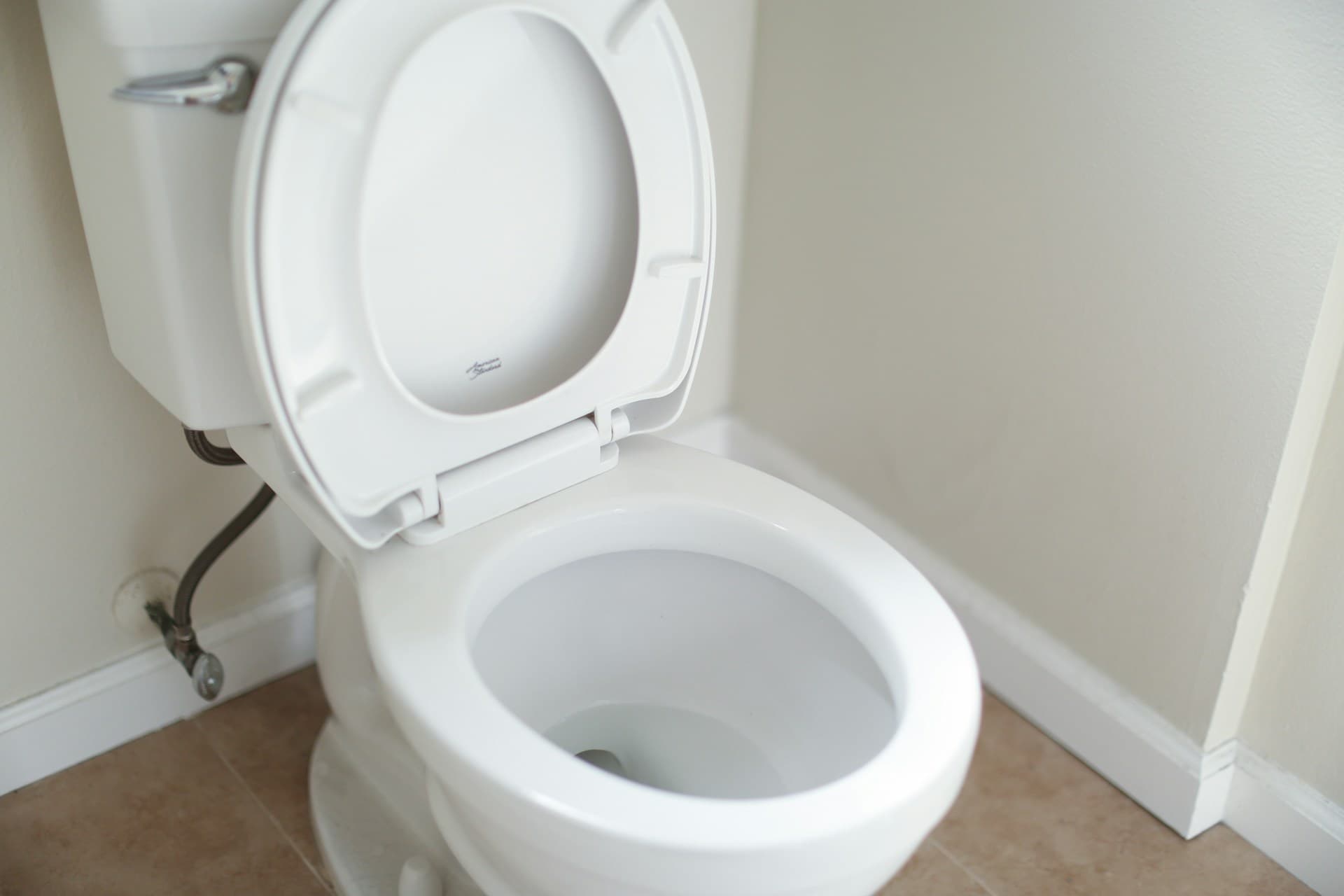
Toilet Installation
Installation of toilet suites including removal of existing toilets, installation of close-coupled, wall-hung, and in-wall cistern models, connection to sewer/waste water services, connection to water supply, silicone sealing, and compliance with AS/NZS 3500.2. Covers hazards specific to toilet installation: manual handling of heavy ceramic suites (25-45kg), exposure to raw sewage and biological hazards during old toilet removal and waste connection, silica dust from drilling bolt holes into concrete/tiled floors, slips and trips in wet bathroom environments, sharp ceramic and tile edges causing lacerations, and chemical exposure from adhesives and sealants. Pre-filled hazards, controls, and risk ratings.
The wax seal under an old pan holds back what ten or twenty years of household drainage has settled into the pan connector. The moment a plumber breaks that seal is the highest single biohazard exposure on a domestic call-out — Hepatitis A and B, Leptospirosis, E. coli, Cryptosporidium and Giardia all circulate in raw sewage, and in some catchments needle-stick risk gets added to the mix. Eye and face protection at the disconnect, full nitrile, chemical-resistant outer gloves and biohazard coveralls aren't padding the document — they're the only protection against splashback before the new pan goes on.
The other hazard column on this work is structural and quieter. Wall-hung toilets carry their load through an in-wall steel frame; mounting one to plasterboard alone is a recurring failure pattern where the porcelain pulls out of the wall in the first year, takes the cistern with it, and arrives at warranty as a builder's fault rather than a plumber's. The frame goes in during rough-in, lands on stud or block, and the toilet hangs off it — installation has to assume that frame is present and verified, and stop work where it isn't. Drilling bolt holes for a floor-mount pan into a ceramic-on-concrete substrate puts respirable crystalline silica in the breathing zone (WES 0.05 mg/m³); a wet-cut tile hole saw or an SDS bit on on-tool extraction is the working pair.
Compliance sits on AS/NZS 3500.2:2021 for the waste connection, 3500.1:2021 for the supply, AS/NZS 4020:2018 for any product contacting potable water, and the state plumbing licence that signs it off. The pedestal lift itself runs 25–45kg into a tight bathroom, often onto bolts the plumber can't see while crouching, so a second set of hands and a knee-pad rest are the practical controls. The post-install flush and leak check before pickup is where the customer-facing call-back gets killed off before it lands.
What's In Your SWMS
7 Hazards & Controls
Back strain and herniated discs, shoulder injuries, wrist and hand injuries from awkward grip, crushed toes if suite dropped, laceration from sharp porcelain edges
Request supplier deliver and pre-stage toilet suite in bathroom when feasible. Use modular/lightweight toilet designs (under 20kg component weight) where code compliant.
Split-style toilet where pan and cistern are separate lightweight components instead of heavy close-coupled model.
- Two-person lift mandatory for any toilet suite over 20kg - never solo lift heavy suites
- Mechanical lifting (hoisting strap) for wall-hung cisterns to reduce arm and back load
- Transport toilet suite on wheeled trolley from vehicle to bathroom entrance
- Use toilet carrier bag with handles to stabilize suite during final positioning
- Correct lifting technique: bend knees, keep back straight, grip near center of gravity
- Take breaks between old toilet removal and new suite installation to avoid fatigue-related injuries
- Plan bathroom access route before delivery - clear obstacles and doorways
- Notify supervisor before handling any suite over 20kg
- Use manufacturer lifting points if marked on suite
Steel cap boots (protect toes if suite dropped). Work gloves for grip. Knee pads for kneeling during installation.
16-Step Work Procedure
Equipment & PPE
Equipment (15)
- Cordless drill-driver
For drilling bolt holes into concrete or tile floors. Hammer function not required. Use appropriate masonry bit for concrete, spade bit for tile.
- SDS rotary hammer drill
For drilling into hardened concrete floors. Dust extraction attachment mandatory for silica control. Hearing protection required.
- Tile hole saw (carbide tipped)
For creating clean holes through glazed tile without cracking. Use with water spray to control dust and prevent thermal shock to tile.
- Flexible hose connector (toilet water supply)
Braided stainless steel hose with isolation valve. Check for kinks and twists before installation. Common sizes: 10mm or 12mm.
- Adjustable wrench and spanner set
For tightening bolts on cistern, pedestal, and water supply connections. Avoid over-tightening which can crack porcelain.
- Silicone caulking gun
For applying sanitary silicone around toilet base and between wall and pedestal. Caulk gun with integral trigger and smooth plunger reduces hand fatigue.
- Grout sponge and finishing tools
For smoothing and finishing silicone beads. Wet sponge for water-based products. Clean tools regularly to prevent silicone buildup.
- Bucket, rags, and sponges
For cleaning up excess adhesive, silicone, and washdown. Absorbent rags for drying floor after disconnect of old toilet.
- Toilet flange bolts and washers
Stainless steel or brass bolts with plastic caps to prevent corrosion. Standard size: M8 x 25mm or 5/16" x 1" (US). Some cisterns use different mounting hardware.
- Wax ring or rubber flange seal
Creates watertight seal between toilet outlet and soil pipe flange. Many modern toilets use rubber or rubber-wax blend seals. Keep backup rings on site.
- Floor levelling shims or compound
For adjusting toilet height on uneven bathroom floors. Plastic shims or self-levelling compound used to prevent rocking and stress on porcelain.
- Step ladder or platform
For accessing high wall-hung cisterns during installation. Minimum 4-step ladder for bathroom height work. Ensure stability and footing.
- Safety cable or strapping (for wall-hung cisterns)
Backup support cable for wall-hung and in-wall cisterns. Prevents catastrophic failure if mounting bolts fail. (Note: BS EN 1527 cite previously here was wrong-scope — that standard is for sliding door hardware. Manufacturer-specified backup cable strength is the relevant spec.)
- Wet/dry vacuum cleaner
For cleaning up water spills, removing waste water from old toilet pan, and drying work area. Essential for hygiene when removing old toilets connected to live sewage.
- First aid kit
Include wound dressings for ceramic cuts, burn cream for thermal injuries, eye wash, and gloves. Sharp ceramic edges require proper wound care.
PPE (7)
- Safety glasses (impact rated)AS/NZS 1337.1:2010
MANDATORY during drilling, tile cutting, and fastening. Impact-rated for tile and ceramic fragments, dust particles.
- P2 dust maskAS/NZS 1716:2012
Required when drilling concrete or removing silica-containing grout. Mandatory if floor contains engineered stone (silica dust hazard). Minimum P2 rated for respirable crystalline silica.
- Chemical-resistant gloves (nitrile)AS/NZS 2161.10.1:2024
Required when handling silicone sealants, adhesives, and cleaning products. Chemical/microorganism risks part (AS/NZS 2161.10.1:2024); general requirements per AS/NZS 2161.1:2016. Nitrile gloves sufficient for most bathroom chemicals. Change if breakthrough occurs.
- Disposable latex or nitrile glovesAS/NZS 2161.10.1:2024
For handling old toilet (potential sewage contamination — biological hazard), waste connections, and when basic hygiene is required. Chemical/microorganism risks per AS/NZS 2161.10.1:2024. Double glove for extra protection when removing old toilets.
- Safety footwear (steel cap, puncture-resistant sole)AS 2210.3:2019
Steel cap protects from dropped porcelain toilet suites (25-45kg). Puncture-resistant sole for sharp tile edges and embedded glass. Water-resistant for wet bathroom environment. Note: AS-only (no longer joint NZ).
- High-visibility vestAS 4602.1:2024
For visibility if working in multi-unit buildings or where other trades may be on site. Makes location obvious in bathrooms and corridors. Note: AS-only (no longer joint NZ). AS/NZS 1906.4:2023 covers the retroreflective material; AS 4602.1:2024 covers the garment.
- Knee pads or kneeling mat
For comfort during toilet installation (significant kneeling time to secure bolts and seal base). Thick foam pads reduce contact pressure and improve work quality. Note: no AS/NZS standard specifically for knee pads — AS/NZS 2161 is the glove standard family and was previously mis-cited here.
Training & Emergency
Competency Requirements
- Construction Induction Card (White Card)training
Required for all workers on construction sites. CPCWHS1001.
- Plumbing Licence (state-specific)licence
Licensed plumber required in all Australian jurisdictions. Underpinned by Certificate III in Plumbing (CPC32420). Toilet installation is restricted plumbing work in all states.
- Certificate III in Plumbing (CPC32420)certificate
Nationally recognised trade qualification. Covers sanitary plumbing and water services required for toilet installation.
- Hepatitis A, B and Tetanus (TDaP) Vaccinations
Strongly recommended for workers with regular sewage exposure. Check vaccination records - Hepatitis B requires series of 3 doses; Tetanus booster every 10 years; Hepatitis A single dose usually sufficient.
- Cable Avoidance Training or Electrical Awareness
Training in use of cable detectors and electrical hazard awareness recommended for workers drilling floors. Internal company training acceptable if covering detection methods and limitations.
- First Aid Certificate
HLTAID011 Provide First Aid. Recommended for lead plumber on site given injury hazards (ceramic cuts, electrical hazards). Critical if working alone.
Emergency Procedures
SEWAGE SPLASH IN EYES: Flush eyes with clean water for 15 minutes. Seek immediate medical attention. Report as biological exposure incident.
DEEP CERAMIC CUT: Apply direct pressure with clean cloth. If bleeding does not stop after 10 minutes of pressure, seek medical attention. If contaminated with sewage, treat as biological exposure.
ELECTRICAL SHOCK: Do NOT touch person if still in contact with power source. Isolate power at switchboard if safe. Call 000 immediately. Commence CPR if unconscious and no breathing/pulse.
CHEMICAL BURN FROM SEALANT: Remove contaminated clothing. Flush skin with water for 10 minutes. Do NOT apply creams or ointments. Cover with clean dressing. Seek medical attention for significant burns.
SLIP ON WET FLOOR: If conscious, assess for injuries. If injury present, do not move - call 000. If conscious and no apparent injury, assist to sit down. Apply first aid as appropriate.
Everything above, included in your SWMS document.
Get This TemplateWriting a SWMS from scratch?
That's 2-4 hours of research, formatting, and cross-referencing regulations.
We've done the starting work — pick your template, add your details, review.
Or just do this:
- Unlimited documents
- All 70+ templates
- Instant PDF & DOCX
- Cancel anytime
High-Risk Construction Work Categories
Under Australian WHS Regulations (Chapter 6 Part 6.1 - Construction Work; Reg 291 - High Risk Construction Work; 1 September 2024 Crystalline Silica Substances Regulation 2024), this work is classified as high-risk due to:
- Work on or near energised electrical installations (Drilling bolt holes through tiles and concrete for toilet pedestal or in-wall cistern mounting creates risk of contact with concealed electrical cables. Cable detection required before drilling.)
- Work in confined spaces (Bathroom spaces can be confined with restricted ventilation. Risk of biological hazard exposure from sewage connections and exposure to solvent fumes from adhesives and silicone sealants in poorly ventilated areas.)
Australian Standards Referenced
National Guidance Documents
Who Needs This SWMS?
This template is designed for the following trades and roles performing toilet installation work.
Frequently Asked Questions
When does a toilet swap need more than a plumber's standard induction?
A like-for-like toilet replacement in an occupied home is plumbing work outside the high-risk construction work categories defined by the Model Code of Practice on Construction Work — no SWMS legally mandatory. A SWMS becomes essential when the work is part of a wider job: a bathroom strip-out where the wall framing comes out and an in-wall cistern frame goes in, a new build, or a commercial fit-out where the toilet sits inside an HRCW envelope. On the wider job the toilet SWMS captures the biohazard disconnect on the old pan, the silica drilling for floor-mount fixings, and the in-wall frame verification before a wall-hung unit goes on — none of which sit on a standard plumbing induction.
Do you need a licence to install toilets in Australia?
Yes. Toilet installation is regulated plumbing work in all Australian states and territories. You need a plumbing licence underpinned by Certificate III in Plumbing (CPC32420). In NSW, a licence is required for work over $5,000. Apprentices may only work under direct supervision of a licensed plumber.
What are the biological hazards when removing an old toilet?
Old toilets connected to active sewage systems present exposure to raw human waste containing waterborne pathogens. Risks include Hepatitis A and B, Typhoid, Gastroenteritis, Cryptosporidium, and Legionella. Workers with regular sewage exposure should be vaccinated against Hepatitis A and B and have current Tetanus protection. Double glove during removal and wash hands thoroughly with soap and water (alcohol sanitizer ineffective).
Is wet drilling mandatory for toilet bolt holes?
Yes. Wet drilling is mandatory since 1 September 2024 for all concrete drilling in construction in Australia. Bathroom floors typically contain concrete with 50-60% silica by weight. If floor contains engineered stone (kitchen island or vanity), silica content is 20-95%. Continuous water suppression eliminates silica dust risk. Use cordless drill with water spray or portable pump for on-tool water delivery. Wear P2 respirator during all concrete drilling.
Why does the in-wall frame matter for wall-hung toilets?
Wall-hung toilets transfer their entire load — the porcelain bowl, the cistern, plus user weight — through a steel frame inside the wall cavity. Mounting the unit to plasterboard alone is a recurring failure pattern: the porcelain pulls out within a year, takes the cistern with it, and arrives at warranty as a builder's fault rather than a plumber's. The frame goes in during rough-in, lands on stud or block, and the toilet hangs off it. AS/NZS 3500.2:2021 governs the waste connection downstream of the frame. Practical workflow: confirm the frame is present and verified before the bowl arrives on site, and stop the install where it isn't — the back-charge from going ahead is bigger than the rebooked visit.
How do you safely handle a 40kg toilet suite?
Two persons are required to safely handle toilet suites over 20kg. Correct lifting technique: bend knees, keep back straight, hold near center of gravity, and keep load close to body. Transport heavy suites on wheeled trolley from vehicle to bathroom entrance. Use toilet carrier bag with handles to stabilize suite during final positioning. Take breaks between old toilet removal and new suite installation to avoid fatigue-related injuries.
What is a wax ring and why is it important?
A wax ring (or modern rubber seal) creates a watertight and airtight seal between the toilet outlet and the soil pipe flange. It prevents sewage leaks and odors escaping into the bathroom. The ring is pressed firmly around the toilet outlet nose before positioning on the floor. If ring is hardened, warm gently with warm water to restore pliability. Keep backup rings on site - installation is impossible if ring is damaged during handling.
Can you use an old wax ring again?
No. Always use a new wax ring. Old rings lose their sealing properties, may have debris embedded, and cannot provide reliable seal. This is a false economy - risk of sewage leaks, bad odors, and expensive callbacks far exceeds cost of new ring. Modern rubber seals are reusable (if undamaged), but wax rings should never be reused.
When is cable scanning required before drilling toilet bolt holes?
Cable scanning is MANDATORY before EVERY drill point for toilet bolt holes. Standard residential wiring runs through concrete slabs and under bathroom floors. Modern bathroom circuits are 20A. Metal drill bits conduct electricity directly to worker. 240V domestic supply contact can cause cardiac arrest. Use electromagnetic cable locator and non-contact voltage detector at each drill location. Mark detected cables. If scanning inconclusive, assume cables present and isolate circuit at switchboard.
What are the fire risks with silicone sealants in bathrooms?
Fire risk from silicone sealants is minimal in bathroom environment. However, some adhesives and sealants are flammable before cure. Ventilate bathroom during and after application (24-hour cure period). Keep sealant containers sealed when not in use. Most silicone sealants release acetic acid during cure - maintain ventilation. Risk is primarily from other sources (electrical) rather than sealants themselves.
How long does silicone sealant take to cure around a toilet?
Typical silicone sealant requires 24 hours for full cure. Surface tack occurs within 2-3 minutes (safe to flush), but sealant remains soft for several hours. Customer should not be aggressive with cleaning around base for at least 24 hours. Some premium sealants cure faster (12 hours). Always follow manufacturer curing time on sealant tube. Bathroom should remain well-ventilated during cure period.
Do toilets require ventilation in Australia?
Toilet rooms do not require separate mechanical ventilation in Australian Building Standards if they have an openable window providing natural ventilation. However, modern bathroom exhaust fans improve air quality and reduce odor. Ventilation is mandatory when installing toilet in bathroom shared with bathing facilities (AS/NZS 3500.2). All bathrooms should have windows or exhaust fans for moisture control.
Get Your Toilet Installation SWMS
Pre-filled. Risk-rated. Ready in 5 minutes.
Get Your SWMS PDFNo credit card required. First SWMS is free.
