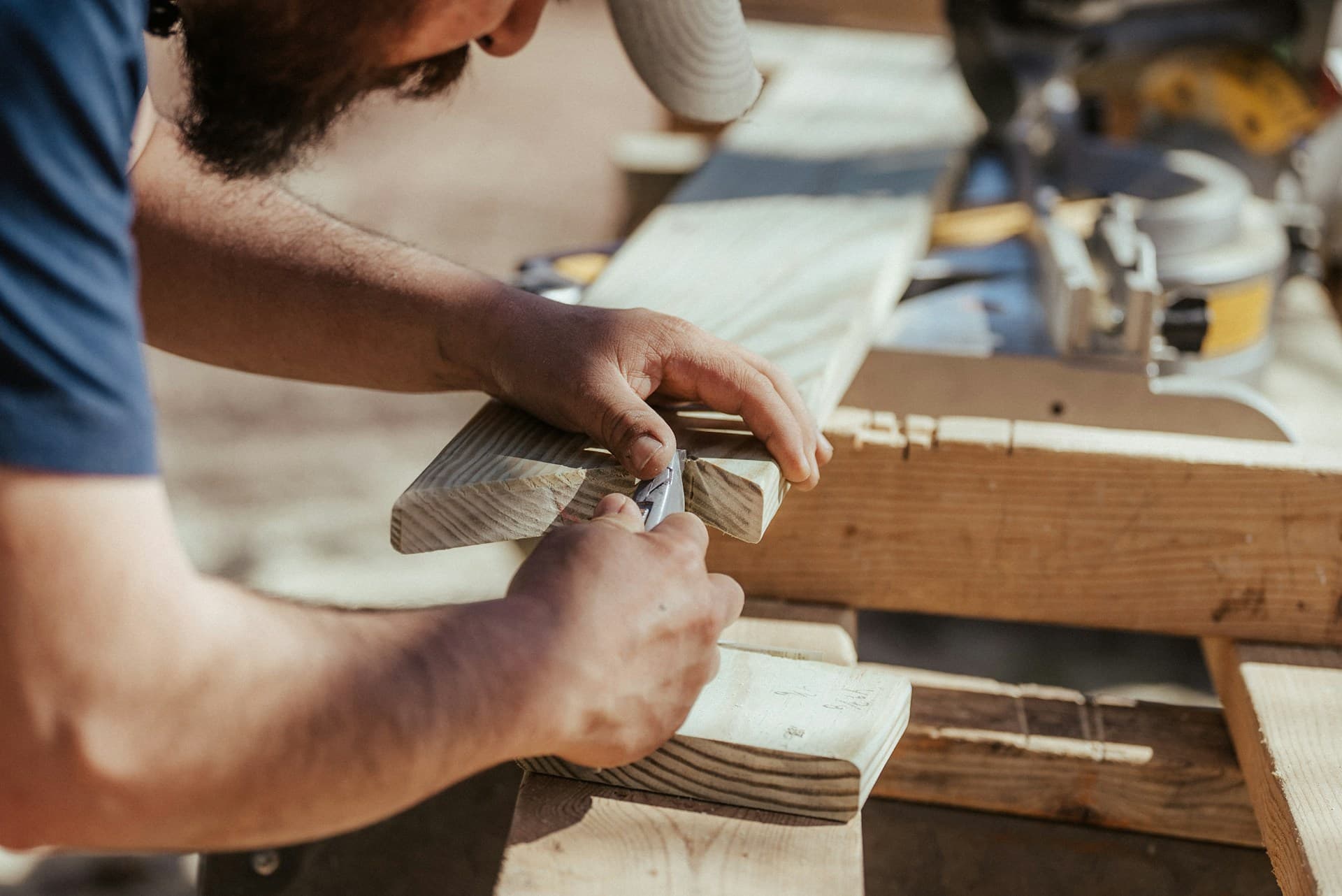
Deck Restoration, Sanding, and Oiling
Restoration and refinishing of timber decks including surface preparation, pressure washing, sanding (belt, orbital, and edging sanders), and application of deck oils, stains, and protective coatings. Covers the critical hazard of wood dust inhalation — hardwood dust is classified IARC Group 1 carcinogen (causes nasal and paranasal sinus adenocarcinoma) with an Australian WES of 1 mg/m³ TWA for hardwood and 5 mg/m³ for softwood. CCA-treated pine decking generates arsenic, chromium, and copper dust when sanded — requiring specific respiratory protection and waste disposal procedures. Also covers noise exposure from power sanders (80–95 dB(A)), hand-arm vibration syndrome (HAVS) from sustained sander use (vibration range 1.39–10.90 m/s²), chemical exposure from deck oils and stains containing volatile organic compounds (VOCs), spontaneous combustion risk from oil-soaked rags (linseed oil and tung oil products — a critical fire hazard), isocyanate exposure from two-pack polyurethane coatings (respiratory sensitiser — WES 0.02 mg/m³, can cause permanent airway sensitisation), flammability of oil-based products (AS 1940:2017), fall risk from elevated decks exceeding 2 m, pressure washer injection injuries during pre-sand cleaning, manual handling of heavy floor sanders (50–80 kg), and electrical hazards from power tools. Pre-filled hazards, controls, and risk ratings.
Linseed oil rags balled in a bucket overnight start fires after the crew has gone home. That's the after-hours combustion mechanism that catches deck restorers more often than the trade expects — the heat of polymerisation in concentrated oil-soaked cotton can self-ignite at room temperature, and the documented response is sealed metal containers with tight-fitting lids for any rag used on linseed or tung oil products. AS 1940:2017 covers the storage and handling of flammable and combustible liquids; the rag-disposal step belongs on the SWMS, not in oral tradition.
Sanding old deck timber pulls in two separate respiratory hazards. Hardwood dust is a Group 1 carcinogen for sinonasal cancer, with SafeWork Australia exposure standards on wood dust that on-tool HEPA dust extraction is built around. CCA-treated pine — common in older decks — releases arsenic, chromium and copper compounds in the cut and sanding dust, requiring a higher PPE bar (P2 minimum, full-coverage clothing, washdown protocol) and a licensed disposal pathway for the offcuts. The sander dust on a CCA deck is not generic timber dust.
Two-pack polyurethane finishes carry isocyanates — irreversible airway sensitisation, with the worker's career-end risk attached to a single high-exposure event. The Model Code of Practice on Spray Painting and Powder Coating requires supplied-air respirators for spray application of isocyanate systems; brush and roller work with two-pack still calls for an A-class organic-vapour respirator with a P3 prefilter to AS/NZS 1716:2012. Single-pack water-based products are the substitution decision. White Card, deck or floor sanding competency, RPE fit-test, working at heights for elevated decks above 2 metres, and a current first aid sit at the day's start. Rag-bin metal-lidded, dust extraction running, product class checked before opening — three habits that keep this trade out of insurance claim files.
What's In Your SWMS
8 Hazards & Controls
Nasal and paranasal sinus cancer (adenocarcinoma — long latency period of 5–30+ years), occupational asthma, chronic respiratory conditions, nasal mucosal changes (cuboidal metaplasia, dysplasia), allergic dermatitis, eye irritation.
Use chemical deck strippers instead of sanding for coating removal where practicable. Consider deck replacement if condition is too poor for restoration (eliminates extensive sanding).
Use hand planes for initial levelling instead of heavy sanding (generates coarser shavings instead of fine dust). Use wet-sanding techniques where product system allows (suppresses airborne dust).
Erect temporary dust barriers around work area to contain dust. Notify neighbours of dust generation schedule. Position work with wind carrying dust away from workers and occupied areas.
- Dust extraction connected to ALL sanders — HEPA-filtered vacuum preferred (captures fine carcinogenic particles)
- Empty dust collection bags when half full — overfull bags reduce suction efficiency
- Local exhaust ventilation (LEV) selected and maintained per the SWA Code of Practice on hazardous chemicals — capture-velocity guidance per general industrial ventilation references (note: AS/NZS 2243.8:2014 is the laboratory-fume-cupboard standard, not the right cite for industrial LEV during sanding)
- Vacuum cleanup with HEPA filter — never sweep dry sanding dust (creates airborne cloud)
- P2 respirator mandatory for ALL sanding work — hardwood dust is a Group 1 carcinogen
- Fit-test respirators per AS/NZS 1715 — annual fit testing for tight-fitting respirators
- Do not eat, drink, or smoke in sanding area — wood dust contaminates food
- Wash hands and face after sanding and before breaks
- Change dust-contaminated clothing before leaving site
- Health monitoring recommended for workers with regular hardwood dust exposure
- Maintain dust accumulation below 3.2 mm on surfaces — above this level, fire and explosion risk increases
- Clean up sanding dust at end of each day — do not allow accumulation
P2 respirator (minimum) — fit-tested per AS/NZS 1715; dust-sealed safety glasses/goggles; long sleeves and trousers; hearing protection during sanding
10-Step Work Procedure
Equipment & PPE
Equipment (10)
- Belt sander — hand-held or floor model
Aggressive material removal — used for heavy restoration and paint/coating stripping. Hand-held: 5–10 kg. Floor model (drum sander): 50–80 kg — requires two-person handling. Maintain constant motion when operating — pausing causes gouging. Check belt tension, tracking, and condition before use. Dust bag or extraction port connected to vacuum. Tested and tagged per AS/NZS 3760:2022.
- Random orbital sander
Primary sander for deck restoration — less aggressive than belt sander, produces smoother finish with fewer swirl marks. Vibration range: 1.39–10.90 m/s² (model dependent — check specifications). Use appropriate grit sequence (60 → 80 → 120). Dust extraction port connected to vacuum. Multiple grit discs required.
- Edging / detail sander
For perimeter edges, corners, railings, and between boards. Smaller, lighter than main sanders. Higher risk of control loss at deck edges on elevated decks. Dust extraction where available.
- Dust extraction system — HEPA-filtered vacuum or dust collection bag
HEPA-filtered vacuum preferred (captures fine particles including carcinogenic hardwood dust). Connect to sander dust extraction ports. Empty collection bags when half full — overfull bags reduce suction and increase airborne dust. For CCA-treated timber: HEPA filtration mandatory to contain arsenic dust.
- Pressure washer for pre-sand cleaning
Maximum 1,200 PSI for general hardwood decks; 500–600 PSI maximum for softwood (cedar, pine). Fan-tip nozzle — never pencil jet on timber. Maintain minimum 300 mm distance from surface. Allow 24–48 hours drying time before sanding. High-pressure injection injury risk — see pressure washing SWMS for full controls. Operation per AS 4233.1:2013 (AS-only re-designation; Amd 1:2020).
- Deck oil, stain, or protective coating products
All products must have current Safety Data Sheets (SDS) on site. Check VOC content, flash point, and health hazard information. Oil-based products are flammable — store per AS 1940:2017. Two-pack polyurethane products contain isocyanates — additional respiratory protection required. Natural oil products (containing linseed oil) have SPONTANEOUS COMBUSTION risk with rags.
- Application tools — lambswool applicator, roller, brush, pad applicator
Lambswool applicator preferred for even deck oil application. Long-handle roller for large areas. Brush for edges, railings, and detail work. Pad applicator for stain. Use lint-free cloths for wiping excess oil.
- Metal container with airtight lid for oil-soaked rags
CRITICAL FIRE SAFETY EQUIPMENT. Oil-soaked rags (especially linseed oil products) undergo exothermic oxidation and can spontaneously ignite. ALL oil-soaked rags, cloths, applicator pads, and waste must be placed IMMEDIATELY into a metal container filled with water and sealed with an airtight lid. Never leave oil-soaked materials in piles, in plastic bags, or unattended.
- RCD-protected power supply / portable RCD
Mandatory for all corded power tools. 30 mA trip rating. Test RCD before each use (push test button). Industrial-rated extension leads — inspect for damage. Keep electrical connections away from wet areas (especially post-pressure-wash).
- First aid kit with eye wash
Stocked and checked. Must include eye wash (minimum 500 mL — for dust and chemical splash), wound dressings, burns dressings (friction burns from sanders, chemical burns from coatings). First aid information for wood dust exposure and chemical contact.
PPE (7)
- P2 respirator / half-face respirator with particulate filterAS/NZS 1716:2012
P2 minimum for ALL deck sanding work — hardwood dust is IARC Group 1 carcinogen (WES 1 mg/m³). Half-face respirator with P2 particulate filters for sustained sanding. Fit-tested per AS/NZS 1715. For CCA-treated timber: P2 minimum with sealed fit (arsenic dust). For two-pack polyurethane application: half-face with organic vapour + particulate cartridge (Type A1P2). For spray coating application: full-face supplied-air respirator.
- Safety glasses — impact-rated with dust sealAS/NZS 1337.1:2010
Dust-sealed safety glasses or goggles mandatory during sanding. Prevents wood dust particles entering eyes. Impact-rated for debris. Tinted for outdoor UV protection. Clear lens for indoor/shaded work.
- Hearing protection — earmuffs or earplugsAS/NZS 1270:2002
Mandatory during all power sanding — sanders produce 80–95 dB(A). Class 3 minimum. Belt sanders and floor sanders louder than orbital sanders. Hearing protection required for ALL workers within noise zone, not just operator.
- Work gloves — vibration-dampening for sanding, chemical-resistant for oilingAS/NZS 2161.3:2020 (mechanical / vibration-dampening); AS/NZS 2161.10.1:2024 (chemical risks for deck oils and coatings)
Anti-vibration gloves during sanding reduce HAVS exposure by 20–64 % (greatest reduction with orbital sanders) per AS/NZS 2161.3:2020 (mechanical risks). Chemical-resistant nitrile gloves to AS/NZS 2161.10.1:2024 for handling deck oils, stains, and coatings — check SDS for specific glove material requirements. General glove requirements per AS/NZS 2161.1:2016. Waterproof gloves for pressure washing. Remove gloves before operating rotating tools where entanglement is possible.
- Safety boots — steel/composite toe, non-slip soleAS 2210.3:2019
Non-slip sole essential on timber decking (especially after pressure washing and oiling). Steel or composite toe for dropped equipment protection. Enclosed footwear — no open-toed shoes on construction sites. AS 2210.3:2019 is the AS-only re-designation (no longer joint NZ).
- Long-sleeved shirt and long trousers
Minimises skin contact with wood dust (especially CCA-treated timber dust containing arsenic). Protects against UV exposure during outdoor work. Minimises skin contact with deck oils and chemical coatings. Close-fitting — loose clothing can catch in rotating sander parts.
- Sun protection — SPF 50+ sunscreen, hat
SPF 50+ broad-spectrum sunscreen on exposed skin. Broad-brimmed hat or cap compatible with hearing protection and respirator. Reapply sunscreen every 2 hours. Outdoor deck work typically in direct sun.
Training & Emergency
Competency Requirements
- Deck/Floor Sanding Competencytraining
Documented training in safe operation of belt sanders, orbital sanders, and edging sanders. Must cover: correct grit sequence, dust extraction operation, sanding technique (maintaining motion, grain direction), equipment inspection and maintenance. Certificate III in Flooring Technology (MSF30822 — current; supersedes MSF30813) or equivalent industry training recommended. At minimum, supervised practical experience with documented competency assessment.
- Chemical Handling Training — Deck Oils and Coatingstraining
Training in safe handling of deck oils, stains, and coatings. Must cover: SDS interpretation, VOC hazards, PPE selection, spill management, and CRITICAL: spontaneous combustion risk and oil-soaked rag disposal procedures. Additional isocyanate awareness training required if using two-pack polyurethane products.
- Respiratory Fit Testingtraining
Annual fit testing per AS/NZS 1715 for tight-fitting respirators used during sanding. Must be performed by accredited tester. Required when changing mask size, model, or brand, or if significant facial changes occur. Workers must be trained in correct donning, seal checking, and maintenance of respirators.
- General Construction Induction (White Card)
CPCCWHS1001 — Required if deck restoration is performed on active construction sites or as part of a building project.
- Working at Heights Training
Required ONLY if deck is elevated more than 2 m above ground level. Covers fall protection systems, temporary barriers, and rescue procedures.
- First Aid Certificate
HLTAID011 — At least one worker should hold current certificate. Critical for chemical exposure response, burns treatment, and fall injury management.
Emergency Procedures
SPONTANEOUS COMBUSTION OF OIL-SOAKED RAGS: If rags are warm or smoking: IMMEDIATELY immerse in water in metal container and seal lid. If fire has ignited: use fire extinguisher if safe to do so. DO NOT throw burning rags outdoors (fire spreads). If fire has spread beyond containment: evacuate building, call 000. Stay upwind of smoke. Notify property owner.
WOOD DUST IN EYES: Flush with eye wash or clean running water for minimum 15 minutes. Do not rub eyes. Seek medical attention if irritation persists or if CCA-treated timber dust (contains arsenic).
CHEMICAL EXPOSURE FROM COATINGS: Skin contact: wash with soap and water for 15 minutes, remove contaminated clothing. Eye contact: flush with water for 15 minutes, seek medical attention. Inhalation: move to fresh air, rest, seek medical attention if symptoms persist. Isocyanate exposure: seek immediate medical attention even if symptoms seem mild — sensitisation can develop.
PRESSURE WASHER INJECTION INJURY: This is a SURGICAL EMERGENCY. Call 000 immediately. Skin can be breached at pressures as low as ~100 PSI (consumer pressure washers commonly operate well above this), and the wound may appear minor while internal tissue damage is devastating — ~30 % of high-pressure injection injuries ultimately require amputation. Do NOT apply ice or compressive dressings. Transport urgently to emergency department with surgical capability.
FALL FROM ELEVATED DECK: Call 000. Do NOT move the fallen person — assume spinal injury until medically assessed. Check airway and breathing. Apply pressure to bleeding wounds. Keep warm and still until paramedics arrive.
Everything above, included in your SWMS document.
Get This TemplateWriting a SWMS from scratch?
That's 2-4 hours of research, formatting, and cross-referencing regulations.
We've done the starting work — pick your template, add your details, review.
Or just do this:
- Unlimited documents
- All 70+ templates
- Instant PDF & DOCX
- Cancel anytime
High-Risk Construction Work Categories
Under Australian WHS Regulations (WHS Act 2011 ss 19-22 (primary duty of care); WHS Reg Chapter 3 Part 3.1 Reg 49 - Airborne contaminants; Reg 50 - Monitoring airborne contaminant levels; Chapter 4 Part 4.1 - Noise (Reg 56-58); Chapter 4 Part 4.2 - Hazardous Manual Tasks (Reg 60); Chapter 7 Part 7.1 - Hazardous Chemicals (Reg 328-378); Chapter 7 Part 7.2 - Lead (Reg 392-438) where pre-1970 deck coatings may contain lead.), this work is classified as high-risk due to:
- Work with, or near, substances that may be harmful to health (Hardwood dust is an IARC Group 1 carcinogen (WES 1 mg/m³). CCA-treated timber dust contains arsenic and chromium. Deck oils and stains contain VOCs. Two-pack polyurethane coatings contain isocyanates (respiratory sensitiser, WES 0.02 mg/m³). Linseed oil products have spontaneous combustion risk.)
Australian Standards Referenced
National Guidance Documents
- Safe Work Australia — Workplace Exposure Standards for Airborne Contaminants
- SafeWork NSW — Wood Dust Health Hazards and Control
- Safe Work Australia — Guide to Handling Isocyanates
- Safe Work Australia — Guide to Measuring and Assessing Hand-Arm Vibration
- Better Health Victoria — CCA-Treated Timber Safety
Who Needs This SWMS?
This template is designed for the following trades and roles performing deck restoration, sanding, and oiling work.
Frequently Asked Questions
Is wood dust really carcinogenic?
Yes. The International Agency for Research on Cancer (IARC) classifies hardwood dust as Group 1 — carcinogenic to humans. The specific cancer type is adenocarcinoma of the nasal cavities and paranasal sinuses, with a long latency period (typically 5–30+ years between exposure and diagnosis). The Australian Workplace Exposure Standard is 1 mg/m³ (8-hour TWA) for hardwood dust and 5 mg/m³ for softwood dust. Common Australian decking hardwoods (spotted gum, merbau, blackbutt, ironbark, jarrah) all generate carcinogenic dust when sanded. Power sanding without adequate dust extraction can easily exceed the WES within minutes. P2 respirators, dust extraction on all sanders, and HEPA vacuum cleanup are essential controls.
What special precautions are needed for sanding CCA-treated decks?
CCA (Copper Chrome Arsenate) treated timber contains arsenic (up to 37 % of treatment), chromium (up to 45 %), and copper (up to 25 %). Sanding CCA-treated decking generates toxic dust containing these compounds. Arsenic is associated with increased lung cancer risk; hexavalent chromium is associated with nasal cancer. Required controls: P2 respirator minimum (consider P3 for heavy sanding); HEPA-filtered dust extraction on all sanders; dust-sealed goggles; long sleeves and trousers; wash all exposed skin thoroughly after work; launder work clothing separately. NEVER burn CCA dust or offcuts (releases arsenic fumes). Dispose of all CCA sanding dust at a licensed waste facility — not in general waste or green waste. Contact your local council or EPA for specific disposal requirements.
Why are oil-soaked rags a fire risk?
Oil-soaked rags (particularly those soaked with products containing linseed oil, boiled linseed oil, or tung oil) undergo spontaneous combustion. These "drying oils" undergo exothermic oxidation as they cure — they generate heat as a chemical byproduct of the drying process. When oil-soaked rags are bunched together, piled up, or placed in an enclosed space, they act as thermal insulators that trap this heat. The temperature can rise to ignition point (~120 °C) without any external flame or spark. Fires from spontaneous combustion have destroyed homes and buildings, and typically occur hours after work is completed — often overnight. Prevention: ALL oil-soaked rags must be placed IMMEDIATELY into a metal container filled with water and sealed with an airtight metal lid. Alternatively, spread rags flat on a non-combustible surface outdoors to dry completely. Never leave oil-soaked rags in piles, plastic bags, rubbish bins, vehicles, or enclosed spaces.
What pressure should I use to wash a timber deck?
Using too much pressure damages timber — it raises grain, splinters the surface, and can require significantly more sanding to repair. Recommended pressures: softwood (cedar, pine): 500–600 PSI maximum; general hardwood (merbau, spotted gum, blackbutt): 1,000–1,200 PSI; composite decking: under 3,100 PSI with fan-tip nozzle minimum 200 mm (8 inches) distance. General rule: start at the lowest effective pressure and increase gradually. Always use a fan-tip nozzle (15° or 25°) — never a pencil jet (0°) on timber. Maintain at least 300 mm (12 inches) distance between nozzle and surface. Work with the grain. After washing, allow 24–48 hours of drying time before sanding with electrical equipment.
What PPE is needed for deck sanding and oiling?
For sanding: P2 respirator (minimum, fit-tested — hardwood dust is IARC Group 1 carcinogenic), dust-sealed safety glasses or goggles, hearing protection (Class 3+ earmuffs — sanders produce 80–95 dB), anti-vibration gloves, long sleeves and trousers (minimises skin contact with carcinogenic dust), safety boots. For CCA-treated timber: upgrade to P3 respirator consideration for heavy sanding. For oiling/staining: chemical-resistant nitrile gloves, safety glasses, P2 respirator for oil-based products, half-face respirator with organic vapour + particulate cartridge (A1P2) for two-pack polyurethane or spray application. For pressure washing pre-clean: face shield, waterproof boots, waterproof clothing, hearing protection.
What are isocyanates and why are they dangerous?
Isocyanates are chemical compounds found in two-pack polyurethane coatings and some premium deck finishes. They are one of the most significant occupational respiratory sensitisers — meaning they can permanently alter your airways so that even tiny future exposures trigger severe asthma-like reactions. Sensitisation can occur from a single high exposure or from prolonged low-level exposure. Once sensitised, there is no cure — the affected worker may be permanently unable to work around isocyanates. The Australian WES is 0.02 mg/m³ (8-hour TWA) and 0.07 mg/m³ (short-term 15-minute). Symptoms include nose, throat, and eye irritation, coughing, wheezing, shortness of breath, and chest tightness. If using two-pack polyurethane products: brush/roller application with half-face respirator (A1P2 cartridge) minimum; spray application requires full-face supplied-air respirator. The safest approach is to substitute single-pack oil-based or water-based deck coatings, which do not contain isocyanates.
Get Your Deck Restoration, Sanding, and Oiling SWMS
Pre-filled. Risk-rated. Ready in 5 minutes.
Get Your SWMS PDFNo credit card required. First SWMS is free.
