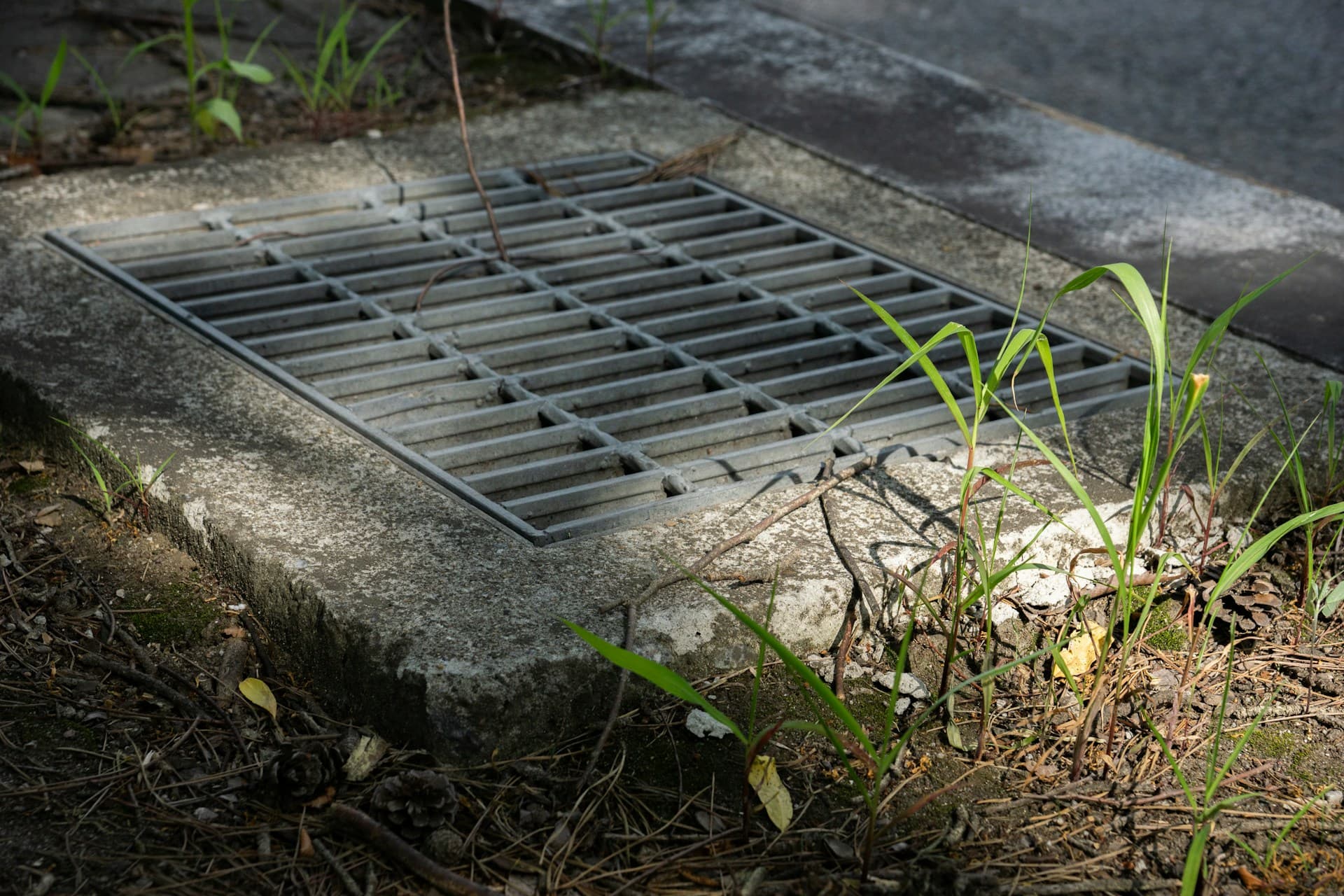
Drainage Installation
Installation of stormwater drainage, subsoil drainage, agricultural drainage (ag pipe), and French drains for residential and light commercial sites. Covers trench excavation, pipe bedding and laying, gravel packing, backfill compaction, inspection pit installation, and system testing. Includes controls for trench collapse, underground services strike (BYDA mandatory), manual handling in trenches, powered plant operation (mini excavators, plate compactors), wet/muddy conditions, confined space entry for deep pits, and noise/vibration from compaction equipment. Compliant with AS/NZS 3500.2, AS/NZS 3500.3, and WHS Excavation Work Code of Practice. Pre-filled hazards, controls, and risk ratings.
The BYDA referral that landed at 4pm yesterday names two utilities — Telstra comms and a mid-pressure gas main — running roughly under the line of the proposed soakaway. The crew arrives at 7am with a 1.8-tonne mini excavator, a plate compactor, gravel and ag pipe on the back of the truck, and the first hour belongs to verification: mark the BYDA corridor in spray paint, hand-dig the top 500mm with a shovel and post-hole digger, expose the cable and the gas line by sight, and only then lower the bucket into the trench. The annual underground service strikes recorded in Australia are heavily concentrated in that first 500mm of dig where the tickets said "verified".
The trench itself runs the rest of the risk profile. One cubic metre of soil weighs roughly 1.5 tonnes, and collapse is fatal at waist-deep — not just at the deeper trenches that obviously trigger the Model Code of Practice on Excavation Work. AS 4744.1:2025 - Steel shoring and trench lining - Design (supersedes AS 4744.1-2000) covers shoring and trench support — battering, benching, trench shields and hydraulic props — chosen against soil class, weather and adjacent loads on the day. Manual handling of slotted ag pipe, geotextile rolls and 7–20mm screened drainage gravel adds the predictable back-and-knee column on top of the collapse risk; pipe and gravel get lowered with a sling and the operator stays out of the trench during machine movement.
The drainage code itself is AS/NZS 3500.3:2025 for stormwater and 3500.2:2021 for sanitary; AS/NZS 2566.2:2002 sets the buried pipe install method, including lift thicknesses (150–300mm depending on equipment) that determine whether the backfill compacts properly or settles into a future call-back. AS/NZS 4058:2007 covers precast concrete pipes where used. White Card, state plumbing or drainage licence, mini excavator competency under RIIMPO320F, BYDA awareness and confined-space entry where a deep pit goes in are the operator-side baseline. The job that gets re-mobilised because someone clipped a comms cable in the first half-hour is the one this whole sequence is designed to prevent.
What's In Your SWMS
7 Hazards & Controls
Crush injuries, fractures, spinal injuries, asphyxiation from burial, death
Minimise excavation depth through drainage design optimisation. Consider trenchless methods (directional drilling) for crossings where practicable.
Use wider, shallower trench profiles with battered sides where space permits to reduce wall height.
Establish 2m exclusion zone from trench edge. Position stockpiled soil minimum 1m from trench edge. Barricade and sign open excavations.
- Install trench shoring, shields, or boxes for trenches ≥1.5m deep or in unstable ground (must comply with AS 4744.1 and be designed by competent person)
- Batter trench walls to angle of repose (maximum 45° for standard soils) or bench in stepped profile
- Install dewatering pump if groundwater present — discharge to sump point minimum 10m from excavation
- Provide safe entry/exit points (ladder or ramp) within 9m travel distance in any direction
- Prepare SWMS before work commences for all trenches ≥1.5m depth (high-risk construction work)
- Competent person to inspect trench walls daily and after rainfall, vibration, or any ground disturbance
- Brief all workers on trench collapse warning signs: visible cracks, bulging walls, soil slumping, water seepage
- Stop work immediately if instability observed — evacuate trench and reassess before re-entry
Safety helmet (AS/NZS 1801), safety boots with steel cap and mid-sole (AS/NZS 2210.3), high-visibility clothing (AS/NZS 4602)
16-Step Work Procedure
Equipment & PPE
Equipment (11)
- Drainage pipe (PVC, slotted ag pipe, concrete)
Size 65-300mm depending on application. Slotted ag pipe for subsoil drainage, solid PVC for stormwater. AS/NZS 1254, AS/NZS 4058.
- Drainage fittings (bends, junctions, end caps, connectors)
Match material and diameter to main pipe. Include inspection openings at direction changes.
- Geotextile filter fabric
Non-woven, 100-200 g/m². Wrap around gravel pack for subsoil and French drains to prevent soil migration.
- Drainage gravel (7-20mm screened aggregate)
Clean, single-size aggregate for pipe bedding and surround. Minimum 75mm bed, 100mm surround.
- Mini excavator (1-3 tonne)
For trench excavation. Pre-start inspection daily. ROPS/FOPS fitted. Competent operator required.
- Plate compactor (walk-behind)
For backfill compaction. 85-95 dB(A) at operator position. Hearing protection mandatory. Anti-vibration gloves recommended.
- Laser level and receiver
For establishing and verifying pipe gradient. Accuracy ±1mm per 10m. Essential for runs exceeding 10m.
- Spirit level (1200mm)
For checking pipe gradient on individual pipe lengths. Use in conjunction with laser level for accuracy.
- Measuring tape (30-50m) and string line
For trench layout, depth checks, and alignment verification.
- Hand tools (shovels, mattock, rake, pipe cutter)
Pointed shovel for excavation, square shovel for bedding, ratchet pipe cutter for PVC. Deburr all cut ends.
- Safety barriers, fencing, and signage
Temporary fencing minimum 2m from trench edge. Warning signs for open excavation. Secure from public access overnight.
PPE (7)
- Safety helmet (hard hat)AS/NZS 1801:2024
Mandatory when working near excavation plant or in trenches. Chin strap required if fall risk present.
- High-visibility clothing (Class D/N)AS 4602.1:2024
Day/night compliant if working near roadways or mobile plant. Minimum Class D for all drainage sites.
- Steel cap safety boots with ankle supportAS 2210.3:2019
Waterproof with anti-slip sole for wet/muddy conditions. Steel mid-sole for puncture protection in trenches.
- Work gloves (leather or nitrile)AS/NZS 2161.1:2016 (general); AS/NZS 2161.10.1:2024 (chemical protection - for PVC cement handling)
Leather for manual handling and pipe work. Nitrile for wet conditions and PVC solvent cement handling.
- Hearing protection (earplugs or earmuffs)AS/NZS 1270:2002
Mandatory when operating plate compactors, rammers, or mini excavators (85-95 dB(A) at operator position).
- Safety glasses or gogglesAS/NZS 1337.1:2010
Impact-rated for protection against soil particles, gravel chips, and pipe cutting debris.
- Sunscreen (SPF 50+) and hydration
SPF 50+ broad spectrum applied every 2 hours. Minimum 500mL water per hour in hot conditions. Wide-brim hat when hard hat not required.
Training & Emergency
Competency Requirements
- General Construction Induction (White Card)training
Mandatory for all personnel on construction sites in all Australian states. CPCCWHS1001.
- Plumbing/Drainage Licencelicence
Certificate III in Plumbing (CPC32420) or Certificate II in Drainage (CPC20720). State-specific licence class required for drainage work. Tradesperson, Supervisor, or Contractor level as applicable.
- Plant Operator Competency (Mini Excavator)ticket
Competency in excavator operation required (RIIMPO320F or equivalent). Verify operator competency for specific machine class being used.
- Before You Dig Australia (BYDA) Awarenesstraining
Awareness of BYDA process, plan interpretation, and safe excavation near services. Free resources available at www.byda.com.au. Briefed at site induction.
- Confined Space Entry Training
Required if work involves entry into drainage pits, sump pits, or chambers meeting confined space definition. RIIWHS202E or equivalent. Refresher every 2 years.
- First Aid Certificate
HLTAID011 - Provide First Aid. At least one person on site should hold current certificate. Recommended for all drainage crews due to remote/isolated work locations.
- Excavation and Trenching Competency
RIICCM210E - Install trench support. Recommended for personnel involved in shoring installation or work in trenches ≥1.5m depth.
Emergency Procedures
Trench collapse or engulfment: Call 000 immediately. Do NOT enter collapsed trench. Begin careful excavation from sides to free buried worker. Maintain airway clearance as priority.
Underground electrical cable strike: Do NOT touch cable or equipment. Evacuate area minimum 8m. Call 000 and electricity distributor. If operator is in plant, remain in seat until power is confirmed isolated.
Gas main strike: Evacuate all personnel upwind immediately. No ignition sources (phones, vehicles). Call 000 and gas authority emergency line. Do NOT attempt to seal or repair leak.
Worker overcome in confined space: Do NOT enter pit to rescue. Activate rescue plan — use tripod and winch to extract. Call 000. Commence CPR if not breathing once removed from space.
Flooding of trench: Evacuate all workers from trench immediately. Activate dewatering pumps. Do not re-enter until water level is controlled and trench walls re-inspected.
Everything above, included in your SWMS document.
Get This TemplateWriting a SWMS from scratch?
That's 2-4 hours of research, formatting, and cross-referencing regulations.
We've done the starting work — pick your template, add your details, review.
Or just do this:
- Unlimited documents
- All 70+ templates
- Instant PDF & DOCX
- Cancel anytime
High-Risk Construction Work Categories
Under Australian WHS Regulations (291 - High Risk Construction Work), this work is classified as high-risk due to:
- Work in or on trench deeper than 1.5 metres (Stormwater and sewer drainage trenches commonly exceed 1.5m depth for adequate fall and cover. Shoring, battering, or benching required per WHS Excavation Work Code of Practice.)
- Use of powered mobile plant (Mini excavators (1-3 tonne) used for trench excavation. Plate compactors and rammers used for backfill compaction.)
- Work in confined spaces (Deep inspection pits, sump pits, and access chambers may meet confined space definition. Atmospheric hazards possible from stagnant water and organic decomposition.)
- Work on or near pressurised gas mains or piping (Trench excavation may encounter existing underground gas mains. BYDA enquiry mandatory before any ground disturbance.)
- Work on or near energised electrical installations (Underground electrical cables may be present in excavation zones. Hand excavation required within 500mm of located services.)
Australian Standards Referenced
National Guidance Documents
- Safe Work Australia - Model Code of Practice: Excavation Work
- Safe Work Australia - Model Code of Practice: Confined Spaces
- Safe Work Australia - Model Code of Practice: Managing the Risks of Plant in the Workplace
- Safe Work Australia - Hazardous Manual Tasks Code of Practice
- Before You Dig Australia (BYDA) - Mandatory Notification Service
Who Needs This SWMS?
This template is designed for the following trades and roles performing drainage installation work.
Frequently Asked Questions
Do I need a SWMS for drainage installation work?
A SWMS is required if the drainage work involves any high-risk construction activity as defined by WHS Regulations. This includes trenches deeper than 1.5 metres, use of powered mobile plant (mini excavators), work near pressurised gas mains, or work on energised electrical installations. Even for shallow drainage trenches, a SWMS is strongly recommended as best practice and may be required by principal contractors on construction sites.
Is a Before You Dig (BYDA) enquiry mandatory before installing drainage?
Yes. Before You Dig Australia (BYDA) enquiry is mandatory before any ground disturbance in all Australian states. Contact BYDA at least 2 business days before excavation by calling 1100 or visiting www.byda.com.au (free service). Over 20,000 underground utility strikes occur annually in Australia. Penalties for non-compliance include fines up to $22,000 (individual) and $44,000 (company) in NSW, plus potential criminal charges.
At what depth does a drainage trench become high-risk construction work?
Under WHS Regulations, any trench deeper than 1.5 metres is classified as high-risk construction work. This requires a written SWMS, trench support systems (shoring, battering, or benching), safe entry/exit provisions within 9 metres, daily inspection by a competent person, and additional controls for ground instability. Trenches under 1.5m still require risk assessment and safe work practices.
What licensing is required for drainage installation in Australia?
Drainage work generally requires a plumbing/drainage licence. Minimum qualification is Certificate III in Plumbing (CPC32420) or Certificate II in Drainage (CPC20720). Specific licence classes vary by state — NSW requires a Tradesperson Certificate or Contractor Licence, Victoria requires Practitioner registration, Queensland requires a Restricted or General Plumber/Drainer licence. Self-employed plumbers must hold a Contractor or Proprietor licence in most states.
What are the main methods to prevent trench collapse in drainage work?
Three approved methods under the WHS Excavation Work Code of Practice: (1) Benching — cutting horizontal steps in trench walls with each face not exceeding 1m vertical and overall slope maximum 45°; (2) Battering — sloping trench walls back to the angle of repose (maximum 45° for standard soils); (3) Shoring — installing trench boxes, shields, or hydraulic props designed by a competent person to comply with AS 4744.1. The choice depends on soil type, trench depth, available space, and groundwater conditions.
What is the correct gradient for stormwater drainage pipes?
Standard design gradients per AS/NZS 3500.3: roof drains minimum 1:100 (1% fall), surface and channel drains 1:100 to 1:50 (1-2% fall). Sanitary drainage per AS/NZS 3500.2: typically 1:40 to 1:60 depending on pipe size. Gradients less than 1:200 may cause sediment deposition and blockages. Gradients exceeding 1:5 (20%) require energy dissipation. Always verify gradient with laser level during installation — tolerance typically ±1%.
Do I need confined space entry procedures for drainage pits and chambers?
If a drainage pit, sump, or chamber meets the WHS definition of a confined space (enclosed or partially enclosed, not designed for continuous human occupancy, and presenting risk of atmospheric hazard or engulfment), then full confined space entry procedures are required. This includes atmospheric monitoring (4-gas detector), written entry permit, trained standby person, rescue equipment (tripod, winch, harness), and forced ventilation. Design systems to avoid entry where possible.
What PPE is required for drainage installation work?
Essential PPE includes: safety helmet (AS/NZS 1801), high-visibility clothing (AS/NZS 4602), steel cap safety boots with anti-slip soles (AS/NZS 2210.3), work gloves (AS/NZS 2161), hearing protection (AS/NZS 1270) for compaction equipment, and safety glasses (AS/NZS 1337). Additional PPE may include P2 dust mask for dry conditions, sunscreen SPF 50+, and full-body harness for confined space entry.
Can I use mechanical excavation near underground services?
No. Mechanical excavation must not be used within 500mm of any located underground service. Hand excavation (pot-holing) is required to expose and confirm the exact location of services before mechanical excavation continues. If service location is uncertain, use vacuum excavation (non-destructive digging) or ground-penetrating radar to verify. Always refer to BYDA plans and physically locate services before commencing any mechanical digging.
What training do operators need for mini excavators on drainage sites?
Mini excavator operators require competency training (RIIMPO320F - Conduct civil construction excavator operations, or equivalent). All workers on construction sites require a General Construction Induction (White Card). Operators should be verified as competent on the specific machine class being used. Daily pre-start inspections are mandatory. Some states require additional plant operator licensing — check with your state WHS regulator.
Get Your Drainage Installation SWMS
Pre-filled. Risk-rated. Ready in 5 minutes.
Get Your SWMS PDFNo credit card required. First SWMS is free.
