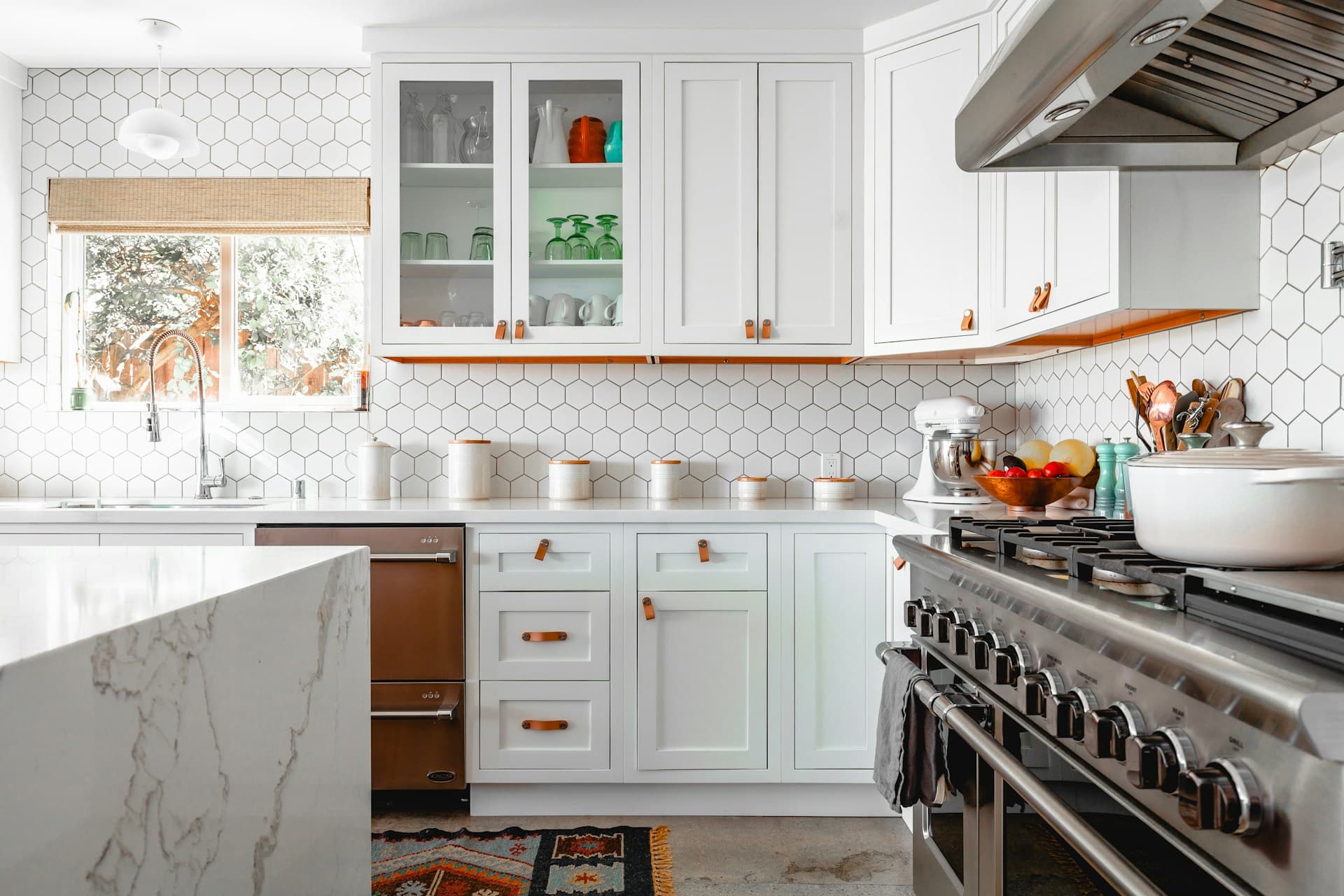
Kitchen Cabinet Installation
Installation of kitchen cabinetry including wall cabinets, base cabinets, benchtops, and appliance integration. Covers manual handling of heavy components, power tool operations, electrical isolation for appliance connections, stone benchtop handling, and working at heights for wall cabinet mounting. Designed to support compliance with AS 4386:2018 (cabinetry) and AS/NZS 3000:2018 with Ruling 1:2024 (electrical work performed by licensed electricians). Pre-filled hazards, controls, and risk ratings.
The 1 July 2024 engineered stone ban reshaped what a kitchen install looks like. New benchtops in engineered stone are off the table; existing engineered stone in renovating kitchens still gets templated, scribed and modified on site, and the silica hazard during that template-and-scribe step is exactly what the ban was responding to. Natural stone substitution (granite, marble, dolomite) is the recommended path forward — but natural stone runs its own respirable silica profile when cut, and wet cutting with on-tool extraction stays as the working control regardless.
Manual handling is the trade's most common claim category. Stone benchtops at 80 to 150 kilos per piece sit in suction-cup lifters that need to be load-rated and inspected before each lift; a failed cup during a wall installation sends the slab into the cabinets, the splashback, and occasionally the operator. Cabinet jacks for wall units beat the "I'll just hold it with the impact driver" technique that produces shoulder claims at a steady rate on every busy fit-out crew. The Model Code of Practice on Hazardous Manual Tasks drives the lifting plan rather than personal preference.
Appliance integration brings electrical work into the picture. Oven, cooktop, dishwasher and rangehood circuits sit under AS/NZS 3000:2018, and the cabinet maker who isolates and reconnects a circuit without an unrestricted electrical licence is operating outside their authorisation. The plumber on the dishwasher waste connection is bound by AS/NZS 3500.2. White Card, Cert III in Cabinet Making (or trade equivalent), silica awareness training, and the cable-and-pipe locator pass before drilling for wall anchors are what closes the qualifications gap. The cabinet day that runs to plan is the one where the templating pass was signed off the week before — same as it was before the ban.
What's In Your SWMS
7 Hazards & Controls
Back strain, muscle tears, shoulder injuries, knee injuries, crush injuries from dropped components
Use pre-assembled modular cabinets to reduce on-site handling. Specify factory-cut benchtops to avoid on-site manoeuvring of full slabs.
Use lightweight cabinet materials (melamine/ply instead of solid timber) where design permits
- Cabinet lift/jack devices for wall cabinet installation
- Suction cup lifters for stone benchtops (rated for load weight)
- Trolleys for moving heavy components within the work area
- Temporary support brackets to hold wall cabinets during securing
- Two-person minimum lift for wall cabinets exceeding 25kg
- Team lift with minimum 3 workers for stone benchtops exceeding 50kg
- Plan lift path and cabinet sequence before starting
- Regular rest breaks during repetitive lifting (every 30 minutes)
- Correct lifting technique training: bend knees, straight back, neutral spine
- Coordinated lift communication: count of three before lifting
Steel cap safety boots, cut-resistant gloves when handling components
15-Step Work Procedure
Equipment & PPE
Equipment (12)
- Cordless drill/driver and impact driver
For cabinet assembly, wall mounting, and hardware installation. Check battery charge before use.
- Circular saw or track saw
For cutting benchtops, panels, and trim. Guard must be functional. Use appropriate blade for material.
- Jigsaw
For sink cutouts, cooktop cutouts, and curved cuts in benchtops and panels.
- Laser level
For establishing cabinet height lines and ensuring level installation.
- Spirit level (600mm and 1200mm)
For checking plumb and level during installation.
- Cabinet clamps and G-clamps
For holding cabinets together during joining and for securing workpieces during cutting.
- Step ladder or platform ladder (AS/NZS 1892 compliant)
For wall cabinet installation. Industrial rating. Non-slip feet. Do not exceed rated load.
- Suction cup lifters for stone benchtops
Rated for benchtop weight. Check suction before each lift. Essential for stone and solid surface benchtops.
- Temporary cabinet support brackets or jacks
For supporting wall cabinets during installation before final securing to wall.
- Stud finder and cable detector
For locating wall studs for secure mounting and detecting concealed wiring/pipes.
- Dust extraction/vacuum system
HEPA-filtered for stone cutting. Connect to power tools during benchtop cutting operations.
- First aid kit
Include wound dressings, eye wash, burn treatment, and adhesive strips for lacerations.
PPE (7)
- Safety glasses or gogglesAS/NZS 1337.1:2010
Essential during all cutting, drilling, and routing operations. Impact-rated for power tool use.
- Hearing protectionAS/NZS 1270:2002
Required when operating circular saws, routers, and impact drivers in enclosed spaces.
- Cut-resistant glovesAS/NZS 2161.3:2020
For handling raw cabinet components, sheet metal edges, glass panels, and stone benchtops. Remove when operating power tools.
- Steel cap safety bootsAS 2210.3:2019
Essential - heavy cabinets and benchtops create crush risk to feet.
- P2 respirator/dust maskAS/NZS 1716:2012
Required during all cutting operations, especially stone benchtop cutting. P2 minimum for silica-containing materials.
- Safety helmet (hard hat)AS/NZS 1801:2024
Required on active construction sites and when working below others installing wall cabinets.
- High-visibility vestAS 4602.1:2024
Required on construction sites with multiple trades.
Training & Emergency
Competency Requirements
- Construction Induction Card (White Card)training
Required for all workers on construction sites
- Certificate III in Cabinet Making (MSF30322) or equivalent experiencecertificate
Trade qualification or demonstrated competency in kitchen cabinet installation. Includes power tool operation, benchtop fitting, and appliance integration.
- Power Tool Operation Trainingtraining
Competency in circular saw, jigsaw, router, and drill operation. Tool-specific training completed before use.
- Manual Handling Trainingtraining
Training in safe lifting techniques, team lift coordination, and use of mechanical aids for heavy components.
- Electrical Safety Awarenesstraining
Understanding of electrical isolation, lock-out/tag-out, and working near live circuits. Only licensed electricians to make electrical connections.
- Silica Awareness Trainingtraining
Required for workers cutting or handling natural stone benchtops. Includes engineered stone ban awareness (1 July 2024).
- First Aid Certificate
Recommended for at least one team member on site
Emergency Procedures
ELECTRIC SHOCK: Do not touch the person if still in contact with electrical source. Isolate power at switchboard. Call 000. Begin CPR if not breathing.
SEVERE LACERATION: Apply firm direct pressure with clean dressing. Elevate injured limb. If arterial bleeding (bright red, pulsing), apply tourniquet above wound. Call 000.
CRUSH INJURY (DROPPED CABINET/BENCHTOP): Call 000 for serious crush injuries. Do not remove heavy object if pinning a limb - wait for emergency services. Control bleeding.
SILICA DUST EXPOSURE (COUGHING/BREATHING DIFFICULTY): Move to fresh air immediately. Remove contaminated clothing. Seek medical attention if symptoms persist.
FALL FROM LADDER: Do not move the person if spinal injury suspected. Call 000. Keep person still and warm. Monitor breathing.
Everything above, included in your SWMS document.
Get This TemplateWriting a SWMS from scratch?
That's 2-4 hours of research, formatting, and cross-referencing regulations.
We've done the starting work — pick your template, add your details, review.
Or just do this:
- Unlimited documents
- All 70+ templates
- Instant PDF & DOCX
- Cancel anytime
High-Risk Construction Work Categories
Under Australian WHS Regulations (291 - High Risk Construction Work), this work is classified as high-risk due to:
- Work on/near energised electrical installations (Connecting rangehoods, under-cabinet lighting, and appliances near live kitchen circuits. Electrical isolation required.)
- Work at height (>2m) with risk of fall (Wall cabinet installation requires working from ladders or platforms at heights of 1.2-2.4m.)
Australian Standards Referenced
Who Needs This SWMS?
This template is designed for the following trades and roles performing kitchen cabinet installation work.
Frequently Asked Questions
What are the main hazards when installing kitchen cabinets?
The main hazards include manual handling injuries from heavy cabinets and benchtops (wall cabinets 20-40kg, stone benchtops 50-200kg+), power tool injuries (circular saws, routers, jigsaws), electrical hazards from working near live circuits, silica dust from stone benchtop cutting, lacerations from sharp edges, falls from height during wall cabinet installation, and slips/trips in active renovation areas.
How many people are needed to install wall cabinets safely?
A minimum of two workers is required for wall cabinet installation. One worker positions and holds the cabinet while the other secures it to the wall. For cabinets exceeding 25kg, mechanical aids (cabinet jacks or temporary support brackets) should be used to reduce the manual handling load.
Can I install an engineered stone benchtop?
No. Engineered stone has been banned in Australia since 1 July 2024 for manufacture, supply, processing, and installation. Engineered stone contains more than 90% crystalline silica and causes incurable silicosis. Import of engineered stone was also banned from 1 January 2025. Alternatives include natural stone (granite, marble), laminate, timber, or solid surface materials.
What electrical work can a cabinet installer do?
Cabinet installers cannot make electrical connections. All electrical work including connecting rangehoods, under-cabinet lighting, and appliances must be performed by a licensed electrician. Cabinet installers should isolate kitchen circuits (with electrician verification) before commencing work near electrical points and use a cable detector before drilling into walls.
What PPE is required for kitchen cabinet installation?
Essential PPE includes safety glasses during cutting and drilling, hearing protection for power tool use, cut-resistant gloves for handling components (removed when operating power tools), steel cap safety boots, and P2 respirator for stone benchtop cutting. Hard hat and hi-vis are required on active construction sites.
What Australian Standard covers kitchen cabinet installation?
AS 4386:2018 (Cabinetry in the Built-In Environment) covers minimum construction and installation requirements for kitchen cabinetry. AS/NZS 3000:2018 (Wiring Rules) applies to electrical connections for appliances and lighting. AS/NZS 1892 covers portable ladder requirements for working at height.
How heavy are stone benchtops and how should they be handled?
Natural stone benchtops typically weigh 50-200kg+ depending on material and size. Granite weighs approximately 27kg per square metre at 20mm thickness. A team lift with minimum 3 workers is required for benchtops exceeding 50kg. Suction cup lifters rated for the load weight are essential for safe handling.
What qualifications do kitchen cabinet installers need?
Installers should hold a Certificate III in Cabinet Making and Timber Technology (MSF30322) or equivalent trade experience. A White Card (Construction Induction) is required for work on construction sites. Additional training in manual handling, power tool safety, and silica awareness is also required.
Do I need a SWMS for kitchen cabinet installation?
A SWMS is required under WHS Regulations for high-risk construction work, which includes working at heights for wall cabinet installation and work near energised electrical installations. Even when not legally required, a SWMS is best practice for managing the multiple hazards present during kitchen installations.
What is the safe way to use a ladder for wall cabinet installation?
Use an industrial-rated step ladder or platform ladder (AS/NZS 1892 compliant) positioned on a stable, level surface. Maintain three-point contact when climbing. Never stand on the top two rungs. Have a second worker stabilise the ladder and pass tools. Use cabinet support brackets so you are not supporting cabinet weight while on the ladder.
Get Your Kitchen Cabinet Installation SWMS
Pre-filled. Risk-rated. Ready in 5 minutes.
Get Your SWMS PDFNo credit card required. First SWMS is free.
